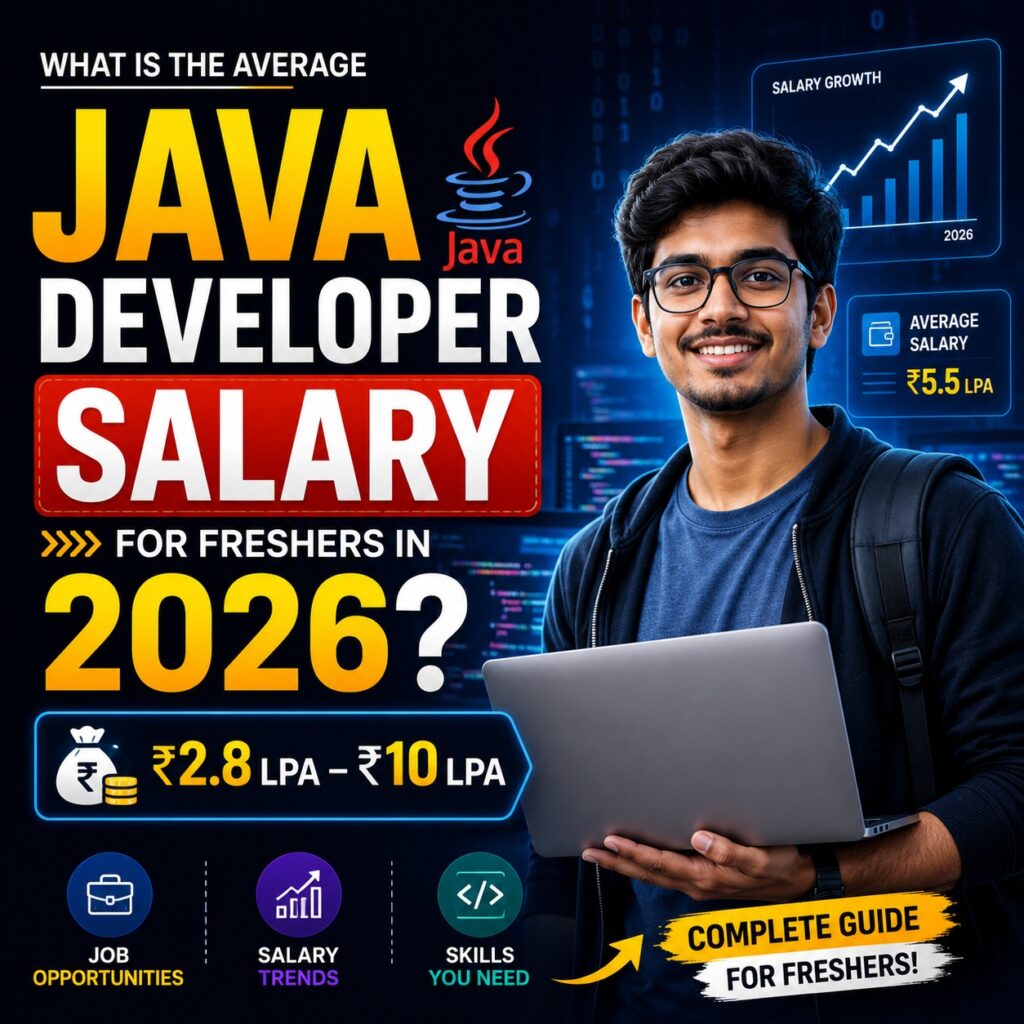
What Is the Average Java Developer Salary for Freshers in 2026?

Choosing a career in software development is no longer limited to engineering graduates alone. In 2026, students from Arts, Commerce, Science, and even non-technical backgrounds are entering the tech industry through practical skill-based learning. One role that continues to attract fresh graduates is Java development. With businesses relying heavily on enterprise applications, cloud platforms, fintech systems, and backend technologies, Java developers remain in high demand across industries.
If you are curious about the Java Developer Salary for Freshers and wondering whether learning Java is still worth it in 2026, the answer is yes — especially for beginners looking for stable, high-growth career opportunities.
In cities like Chennai, where the IT ecosystem continues to grow rapidly, companies are actively hiring entry-level Java developers with practical coding knowledge and project experience. Whether you are a college student, a career switcher, or someone restarting after a gap, learning Java can open doors to software development, web applications, automation, and cloud-based careers.
Let’s break down the salary trends, skill expectations, and opportunities available for freshers in 2026.
Why Java Still Dominates the Software Industry in 2026
Many programming languages rise and fade with trends, but Java continues to stay relevant year after year. Large enterprises, banking systems, healthcare platforms, e-commerce applications, and Android-based solutions still depend on Java because of its reliability, scalability, and security.
Here are a few reasons why Java remains a strong career choice:
- Used by top global companies for enterprise applications
- Strong demand in banking, fintech, and cloud computing
- Huge community support and learning resources
- Compatible with AI, automation, and big data technologies
- Excellent long-term career growth
According to recent hiring reports from leading job platforms, Java remains one of the top 5 most in-demand programming languages in India for backend development roles in 2026.
What Is the Average Java Developer Salary for Freshers in 2026?
The average Java Developer Salary for Freshers in India depends on several factors such as skill level, certifications, internship experience, project exposure, and location.
Here’s a general salary breakdown for freshers in 2026:
| Experience Level | Average Annual Salary |
| Beginner Fresher | ₹2.8 LPA – ₹4.2 LPA |
| Skilled Fresher with Projects | ₹4.5 LPA – ₹6 LPA |
| Certified Java Developer | ₹5 LPA – ₹7 LPA |
| Product-Based Company Entry Role | ₹6 LPA – ₹10 LPA |
Freshers who understand frameworks like Spring Boot, Hibernate, REST APIs, and database management often receive higher salary packages compared to candidates with only theoretical knowledge.
In Chennai, startup companies and IT service firms are increasingly looking for job-ready developers rather than degree-based qualifications alone. This creates more opportunities for learners from diverse educational backgrounds.
Factors That Influence Java Fresher Salaries
Not every fresher receives the same package. Employers evaluate practical skills, communication, and problem-solving abilities before making offers.
1. Practical Project Experience
Candidates who build real-world projects stand out during interviews. Even simple applications like:
- Student management systems
- E-commerce mini projects
- Banking applications
- REST API integrations
can improve hiring chances significantly.
2. Knowledge of Modern Java Frameworks
Companies rarely hire developers based only on core Java knowledge today. They expect familiarity with tools and frameworks such as:
- Spring Boot
- Hibernate
- Maven
- Git & GitHub
- MySQL
- Microservices basics
This directly impacts the Java Developer Salary for Freshers because companies value productivity from day one.
3. Internship Experience
Even a 2–3 month internship can make a fresher profile stronger. Recruiters prefer candidates who understand real workplace environments and agile development methods.
4. Communication and Problem Solving
Technical knowledge matters, but communication skills often decide final selection rounds. Developers who explain logic clearly and work in teams tend to receive better opportunities.
Salary Comparison: Service Companies vs Product Companies
Service-Based Companies
Examples include large IT outsourcing firms that work on client projects.
Expected Fresher Salary:
₹3 LPA – ₹5 LPA
Advantages:
- Easier entry for beginners
- Good learning environment
- Exposure to multiple domains
Product-Based Companies
These companies develop their own software products or platforms.
Expected Fresher Salary:
₹6 LPA – ₹10 LPA
Advantages:
- Higher salaries
- Faster career growth
- Better exposure to advanced technologies
However, product companies usually expect stronger coding and problem-solving skills.
Is Java a Good Career Option for Non-Technical Students?
Absolutely. One major shift happening in 2026 is the rise of skill-based hiring. Companies are focusing more on practical ability than educational background alone.
Students from:
- B.Com
- B.Sc
- BA
- Diploma backgrounds
- Career break candidates
are successfully entering software careers through structured training and hands-on practice.
The key is choosing practical learning instead of only theoretical courses.
Skills Freshers Should Learn to Increase Salary Potential
If your goal is to improve your Java Developer Salary for Freshers prospects, focus on mastering these areas:
Core Technical Skills
- Core Java
- OOP concepts
- Collections framework
- Exception handling
- JDBC
Advanced Skills
- Spring Boot
- REST APIs
- Hibernate
- Database connectivity
- GitHub collaboration
Additional Skills
- Problem-solving
- Aptitude basics
- Interview preparation
- Resume building
Recruiters in Chennai increasingly prefer candidates who can demonstrate projects during interviews rather than simply listing technologies on resumes
Do you want to start from scratch and develop coding skills that are ready for the workforce? Getting your first software job more quickly can be greatly aided by hands-on training, real-world projects, and placement-focused mentoring.
How Chennai Is Becoming a Strong Hub for Java Careers
Chennai continues to be one of India’s major IT destinations, with strong hiring demand in software development, fintech, healthcare technology, and enterprise solutions.
For freshers, Chennai offers:
- Growing startup opportunities
- IT parks and MNC hiring
- Affordable learning ecosystem
- Strong placement networks
This is why many students search for Java Training in Chennai to gain practical experience and improve employability before graduation.
Companies in Chennai are also hiring developers for hybrid and remote-friendly roles, making it easier for beginners to start their careers.
Common Mistakes Freshers Make While Learning Java
Many beginners spend months learning but still struggle to get interviews. Here are some common mistakes to avoid:
Learning Only Theory
Watching tutorials alone is not enough. Build projects consistently.
Ignoring Databases
Backend development requires SQL knowledge alongside Java.
No GitHub Portfolio
Recruiters increasingly check GitHub profiles before interviews.
Skipping Mock Interviews
Interview confidence matters as much as coding knowledge.
Not Updating Skills
Modern Java development includes frameworks and APIs, not just basic syntax.
Avoiding these mistakes can improve both job opportunities and the overall Java Developer Salary for Freshers in competitive hiring markets.
Future Scope of Java Developers Beyond 2026
Java development is evolving alongside cloud computing and AI-integrated applications. The future scope remains strong because Java is widely used in:
- Cloud-native applications
- Banking systems
- Enterprise software
- SaaS platforms
- Big data tools
- Android backend systems
Industry experts predict steady demand for Java developers over the next decade due to enterprise digital transformation projects worldwide.
Freshers who continue upgrading their skills can move into roles such as:
- Full Stack Developer
- Backend Engineer
- Software Architect
- DevOps Engineer
- Cloud Developer
FAQs
1. What is the starting Java Developer Salary for Freshers in India?
The average starting salary usually ranges between ₹2.8 LPA and ₹6 LPA depending on skills, projects, certifications, and company type.
2. Can non-engineering students become Java developers?
Yes. Many companies now hire based on practical coding skills rather than academic background alone.
3. Which skills improve fresher salary packages in Java development?
Skills like Spring Boot, REST APIs, SQL, GitHub, and project development can significantly improve salary opportunities.
4. Is Java difficult for beginners to learn?
Java has a structured syntax, which actually helps beginners understand programming fundamentals more clearly with proper guidance and practice.
5. Does Java still have demand in 2026?
Do you want to start from scratch and develop coding skills that are ready for the workforce? Getting your first software job more quickly can be greatly aided by hands-on training, real-world projects, and placement-focused mentoring.
Conclusion
Java continues to be one of the safest and most rewarding career paths for beginners entering the software industry in 2026. With the right combination of practical skills, projects, and consistent learning, freshers can secure strong entry-level salaries and long-term career growth.
For students and job seekers looking to build real-world coding expertise, choosing industry-focused Java Training in Chennai can provide the hands-on experience employers expect today. At Infycle Technologies, learners gain practical exposure, project-based training, and career guidance designed to help beginners become confident software professionals in a competitive job market.