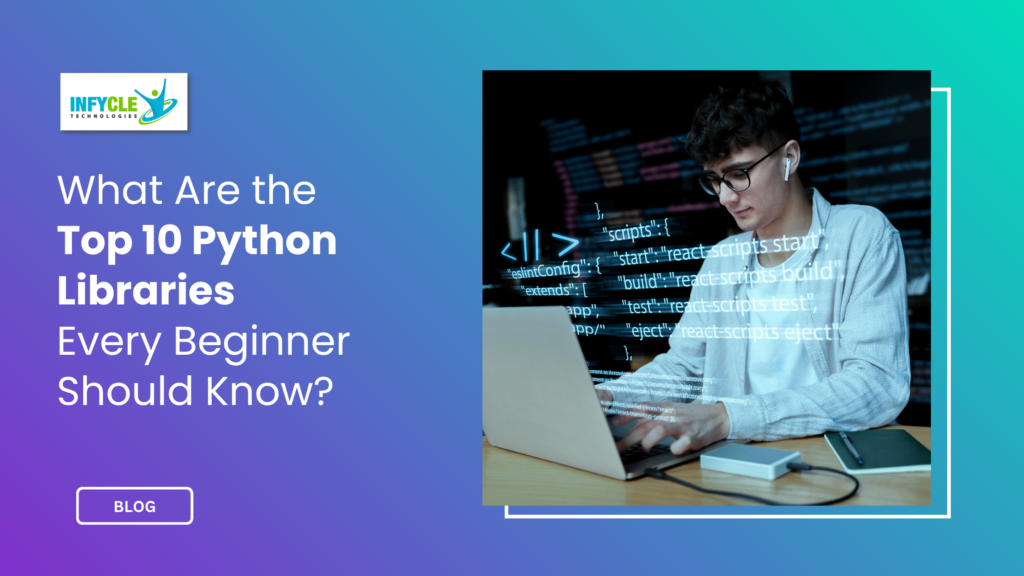
What Are the Top 10 Python Libraries Every Beginner Should Know?
Python has become one of the most beginner-friendly programming languages in the world, but what truly makes it powerful are its libraries. Whether you want to build websites, analyze data, create AI applications, or automate daily tasks, Python already has ready-to-use tools that simplify the work.
For students and freshers in Chennai, learning the right Python Libraries can make a huge difference in how quickly they become job-ready. Many companies in 2026 are looking for candidates who can build practical projects instead of only understanding theory. That’s why beginners from Arts, Commerce, Science, and Engineering backgrounds are now actively exploring Python as a career skill.
If you are planning to start your coding journey, understanding these libraries will help you move beyond basic syntax and work on real applications confidently. From automation to data science and web development, the demand for Python skills continues to rise across industries.
In this blog, we’ll explore the top Python Libraries every beginner should know, why they matter, and how they are used in real-world projects.
Why Python Libraries Matter for Beginners
One reason Python remains popular in 2026 is its massive ecosystem of libraries. Instead of writing complex code from scratch, developers can use pre-built modules to complete tasks faster and more efficiently.
For beginners, this means:
- Faster learning curve
- More hands-on projects
- Better understanding of real-world applications
- Easier transition into internships and jobs
- Opportunity to explore multiple career paths
According to recent developer surveys, Python continues to rank among the top three most-used programming languages globally, especially in AI, data science, cybersecurity, and automation.
1. NumPy – The Foundation of Data Processing

NumPy is one of the most important Python Libraries for numerical computing. It helps developers work with arrays, matrices, and mathematical operations efficiently.
Why beginners should learn NumPy:
- Faster calculations compared to regular Python lists
- Essential for data science and machine learning
- Used heavily in analytics and AI projects
Real-world example:
Companies use NumPy for financial analysis, recommendation systems, and predictive modeling.
If you’re aiming for data-related careers, NumPy is usually the first library recruiters expect you to know.
2. Pandas – Simplifying Data Analysis
Pandas helps organize, clean, and analyze data easily. It is widely used in business analytics and reporting.
What makes Pandas beginner-friendly?
- Easy handling of Excel and CSV files
- Simple commands for filtering and sorting data
- Great for visualization preparation
Students from Commerce and Business backgrounds often find Pandas useful because it connects well with reporting and analytics concepts.
Common uses:
- Sales analysis
- Customer reports
- Excel automation
- Data cleaning
3. Matplotlib – Visualizing Data Clearly
Learning data visualization is important because companies value professionals who can explain insights visually.
Matplotlib allows users to create:
- Bar charts
- Pie charts
- Line graphs
- Scatter plots
This is one of the Python Libraries that helps beginners transform raw numbers into understandable visuals.
Industry relevance in 2026
Businesses increasingly rely on dashboards and visual reporting tools. Knowing visualization libraries gives candidates an edge during interviews.
4. Seaborn – Beautiful Statistical Graphics
While Matplotlib handles basic graphs, Seaborn makes visualizations more attractive and easier to understand.
Why beginners love Seaborn:
- Cleaner designs with less code
- Better statistical charts
- Useful for machine learning projects
Many beginner data science projects now use Seaborn because presentation quality matters in portfolios.
5. Flask – Build Web Applications Easily
Flask is a lightweight web framework that helps beginners create websites and APIs quickly.
What can you build with Flask?
- Portfolio websites
- Login systems
- Small business applications
- REST APIs
For fresh graduates in Chennai looking for freelance opportunities, Flask can help create client-ready projects faster.
Beginner advantage
Flask has a simple structure, making it easier to understand compared to larger frameworks. If you want practical exposure to these tools instead of only theoretical learning, joining hands-on programs that focus on real projects can accelerate your growth. Many students searching for Best Software Training In chennai now prefer courses that include mini-projects, GitHub practice, and placement-focused mentoring.
6. Django – The Full-Stack Powerhouse
Django is another powerful framework among modern Python Libraries, widely used for large-scale web applications.
Why Django is valuable:
- Built-in security features
- Faster development process
- Scalable architecture
Companies using Django:
Popular startups and enterprise platforms use Django for backend development because it handles heavy traffic efficiently.
Beginners who want to become full-stack developers often move from Flask to Django after learning the basics.
7. TensorFlow – Enter the AI World
Artificial Intelligence continues to dominate the tech industry in 2026, and TensorFlow remains one of the most recognized AI frameworks.
What TensorFlow helps with:
- Machine learning
- Deep learning
- Image recognition
- AI chatbots
Even beginners can start with simple models before moving into advanced AI applications.
Industry trend
AI-related job openings have grown significantly over the past few years, especially in automation and analytics sectors.
8. Scikit-learn – Machine Learning Made Simple
One of the simplest Python libraries for understanding machine learning principles is scikit-learn.
Why it’s beginner-friendly:
- Simple syntax
- Pre-built algorithms
- Great documentation
Skills you can build:
- Prediction models
- Recommendation systems
- Data classification
- Customer segmentation
For students exploring data science careers in Chennai, this library often becomes the starting point for portfolio projects.
9. Beautiful Soup – Web Scraping Simplified
Beautiful Soup helps collect information from websites automatically.
Real-world applications:
- Price tracking
- Job listing extraction
- Market research
- Competitor analysis
Freelancers and digital marketers increasingly use scraping tools to automate repetitive online tasks.
Important note:
Beginners should also learn ethical scraping practices and respect website policies.
10. OpenCV – Computer Vision for Beginners
OpenCV introduces beginners to image processing and computer vision.
Interesting projects you can build:
- Face detection systems
- Motion tracking
- QR code scanners
- Object recognition
With AI and automation expanding rapidly, computer vision skills are becoming more valuable across industries.
How Beginners Should Learn Python Libraries Effectively
Learning multiple tools together can feel overwhelming. The smarter approach is to learn step by step.
Recommended beginner roadmap:
- Start with Python basics
- Learn NumPy and Pandas
- Practice visualization using Matplotlib
- Build simple projects with Flask
- Explore machine learning libraries gradually
Best learning strategy:
- Build mini-projects consistently
- Upload projects to GitHub
- Practice coding daily
- Focus on understanding logic instead of memorizing syntax
Students who practice consistently for 2–3 months often gain enough confidence to start internships or freelance projects.
Why Python Skills Are Growing Rapidly in Chennai
Chennai has become a growing hub for software development, analytics, and AI-based startups. Companies increasingly seek professionals who understand practical Python tools instead of only academic concepts.
This shift has encouraged many learners from non-technical backgrounds to explore coding careers. The flexibility of Python Libraries makes it easier for beginners to build applications without needing years of programming experience.
Whether you’re a college student, career switcher, or job seeker with an employment gap, Python offers accessible entry points into modern technology careers.
Frequently Asked Questions
1. Which Python Libraries should beginners learn first?
Beginners should start with NumPy and Pandas because they help build a strong foundation in data handling and logical programming.
2. Are Python Libraries difficult for non-technical students?
No. Many Python Libraries are beginner-friendly and designed to simplify coding tasks. With practical learning, even Arts and Commerce students can understand them.
3. Which Python library is best for AI beginners?
TensorFlow and Scikit-learn are commonly recommended for beginners interested in machine learning and artificial intelligence.
4. How long does it take to learn important Python Libraries?
With consistent practice, beginners can understand the basics of popular libraries within 2–4 months, depending on learning speed and project practice.
5. Do companies expect freshers to know Python Libraries?
Yes. Many recruiters now prefer candidates who can work with practical Python Libraries instead of only understanding basic programming theory.
Conclusion
Learning Python is no longer limited to software engineers alone. From business analytics to artificial intelligence, Python skills are opening career opportunities for students and freshers from every educational background.
The key is not trying to learn everything at once. Start with beginner-friendly libraries, build practical projects, and focus on consistency. Over time, these skills can help you move toward data science, automation, web development, or AI-related careers.
If you are looking for practical, project-based Python Training in Chennai, programs offered by Infycle Technologies can help you gain real-world exposure, hands-on coding experience, and industry-ready skills that align with current hiring trends.