Can Non-IT Students Learn DevOps? Beginner’s Guide
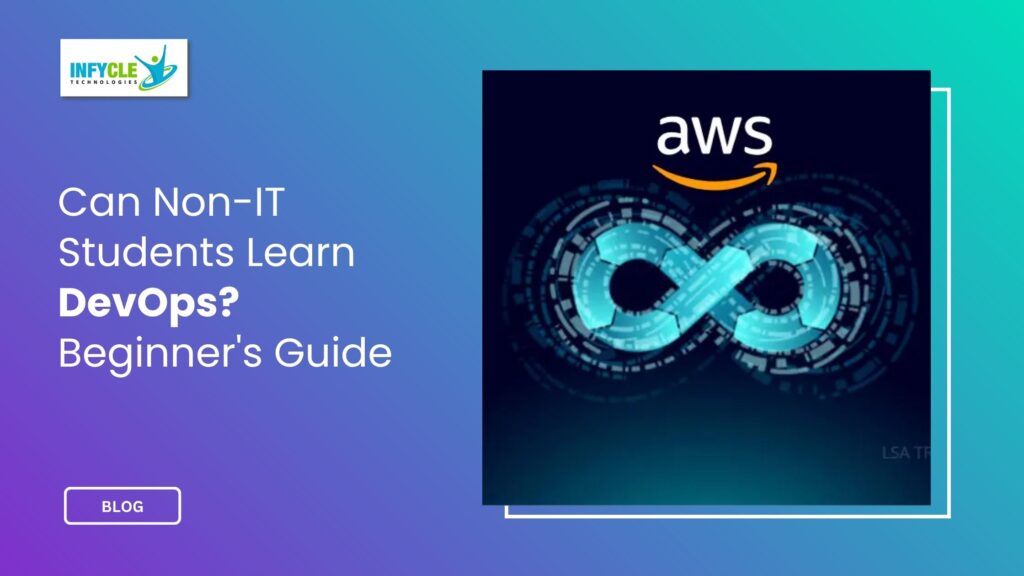
Choosing a career in technology can feel overwhelming when you don’t come from an IT background. Many students from Arts, Commerce, Science, and other non-technical fields often assume that software careers are only for Computer Science graduates. Fortunately, that assumption is no longer true. The rapid growth of cloud computing, automation, and digital transformation has created new opportunities for learners from diverse educational backgrounds. Today, companies value practical skills and problem-solving abilities just as much as academic qualifications. This has led many students to ask an important question: Can Non-IT Students Learn DevOps?
The answer is yes.
Across CITY and other major technology hubs, learners from non-technical backgrounds are successfully transitioning into cloud and DevOps careers through structured training, hands-on practice, and industry-focused learning. Whether you’re a college student, fresh graduate, freelancer, or career changer, DevOps offers a practical pathway into one of the most in-demand technology fields of 2026.
Let’s explore what DevOps is, why it matters, and how beginners can start learning it successfully.
What Exactly Is DevOps?
DevOps is a combination of software development (Dev) and IT operations (Ops). It focuses on improving collaboration, automation, and software delivery processes.
Instead of working in isolated teams, organizations use DevOps practices to:
- Automate repetitive tasks
- Deploy applications faster
- Improve software quality
- Reduce operational issues
- Enhance collaboration between teams
Popular DevOps tools include:
- AWS Cloud Services
- Docker
- Kubernetes
- Jenkins
- Git & GitHub
- Terraform
- Linux
The good news is that beginners don’t need to master all these tools at once.
Can Non-IT Students Learn DevOps Without Coding Experience?
This is one of the most common concerns among beginners.
Many people believe DevOps requires advanced programming skills. While coding knowledge is helpful, it is not a requirement to start learning.
In reality, many successful cloud professionals began with little or no programming experience. The key is following a structured learning path.
When asking whether Non-IT Students Learn DevOps, it’s important to understand that DevOps is a skill-based career rather than a degree-based career. Employers increasingly look for practical knowledge, certifications, projects, and problem-solving capabilities.
Students from Commerce, Arts, BBA, BCom, BSc, and even diploma backgrounds can build DevOps skills with the right training approach.
Why DevOps Is a Smart Career Choice in 2026
The demand for cloud and automation professionals continues to grow globally.
Industry reports indicate that organizations are investing heavily in:
- Cloud migration projects
- Infrastructure automation
- Continuous Integration and Continuous Deployment (CI/CD)
- Containerization technologies
- Platform engineering
This demand has created a significant need for DevOps Engineers, Cloud Engineers, Site Reliability Engineers, and Automation Specialists.
For beginners, DevOps offers:
High Career Growth
DevOps professionals work across industries including:
- Banking
- Healthcare
- Retail
- Manufacturing
- E-commerce
- Technology
Diverse Career Opportunities
Learning DevOps can lead to roles such as:
- DevOps Engineer
- Cloud Engineer
- Site Reliability Engineer
- Release Engineer
- Infrastructure Engineer
- Cloud Administrator
Continuous Learning Environment
Technology evolves rapidly, making DevOps an exciting field for learners who enjoy problem-solving and innovation.
Learning Roadmap for Non-IT Students
If you’re wondering how Non-IT Students Learn DevOps successfully, the answer lies in following a step-by-step roadmap.
Step 1: Understand Basic Computer Concepts
Start with:
- Operating systems
- Networking basics
- Internet fundamentals
- File management
These concepts create a strong foundation.
Step 2: Learn Linux Fundamentals
Linux is widely used in cloud environments.
Focus on:
- Basic commands
- User management
- File permissions
- Process management
Step 3: Learn Cloud Computing Basics
Cloud knowledge is essential for modern DevOps careers.
Popular platforms include:
- AWS
- Microsoft Azure
- Google Cloud
Many beginners start with AWS due to its extensive industry adoption.
Step 4: Learn Version Control
Git and GitHub help teams manage and track code changes.
Important concepts include:
- Repositories
- Commits
- Branches
- Pull Requests
Step 5: Learn CI/CD Concepts
Continuous Integration and Continuous Deployment help automate software delivery.
Tools include:
- Jenkins
- GitHub Actions
- Azure DevOps
Step 6: Learn Containers and Kubernetes
Containerization has become a standard practice in modern software development.
Key technologies:
- Docker
- Kubernetes
These tools help deploy and manage applications efficiently.
Common Challenges Beginners Face
While Non-IT Students Learn DevOps successfully every year, beginners often face certain challenges.
Fear of Technical Concepts
Many learners assume they are not “technical enough.”
The reality is that technical skills are learned, not inherited.
Information Overload
There are countless tutorials and resources available online.
A structured learning plan prevents confusion and keeps progress steady.
Lack of Hands-On Practice
Watching videos alone isn’t enough.
Building projects and practicing in cloud environments is essential.
Ready to Build Cloud Skills?
If you’re looking for guided learning, hands-on labs, and real-world projects, enrolling in a structured training program can accelerate your progress significantly. Learning from experienced trainers helps beginners avoid common mistakes and gain practical confidence faster.
How Training Institutes Help Beginners Transition Faster
A quality training program provides:
- Industry-relevant curriculum
- Practical cloud labs
- Project-based learning
- Expert mentorship
- Interview preparation
- Placement assistance
Many students in CITY choose professional training because it shortens the learning curve and provides exposure to real-world DevOps workflows.
When evaluating programs, focus on practical learning rather than theory-heavy courses.
Skills Employers Look for in Entry-Level DevOps Candidates
Recruiters typically look for:
- Cloud fundamentals
- Linux knowledge
- Basic scripting skills
- Git and version control
- CI/CD understanding
- Problem-solving abilities
- Project experience
Interestingly, employers often prioritize demonstrated skills over academic background.
That’s another reason why Non-IT Students Learn DevOps successfully and secure opportunities in the technology sector.
Frequently Asked Questions
1. Can Non-IT Students Learn DevOps without programming knowledge?
Yes. Basic coding knowledge is helpful but not mandatory when starting. Many beginners first learn Linux, cloud computing, and automation concepts before moving into scripting.
2. How long does it take to learn DevOps?
Most beginners can build a solid foundation within 4 to 8 months through consistent learning and hands-on practice.
3. Is DevOps difficult for Arts or Commerce students?
No. With structured guidance and practical learning, students from Arts, Commerce, and Science backgrounds can learn DevOps successfully.
4. What is the best starting point for beginners?
Start with Linux fundamentals, cloud computing basics, networking concepts, and Git version control before moving to advanced DevOps tools.
5. Is AWS DevOps a good career option in 2026?
Yes. Cloud adoption continues to grow worldwide, making AWS DevOps one of the most in-demand career paths in technology.
Conclusion
DevOps is no longer limited to Computer Science graduates. Students from non-technical backgrounds can build successful careers in cloud computing and automation by following a structured learning roadmap, gaining practical experience, and continuously improving their skills.
For those looking to gain hands-on expertise, professional Aws Devops Training in Chennai can provide the guidance, projects, and industry exposure needed to become job-ready. As a Best Software Training Institute in Chennai, Infycle Technologies helps learners build practical cloud and DevOps skills that align with current industry requirements and future career opportunities.