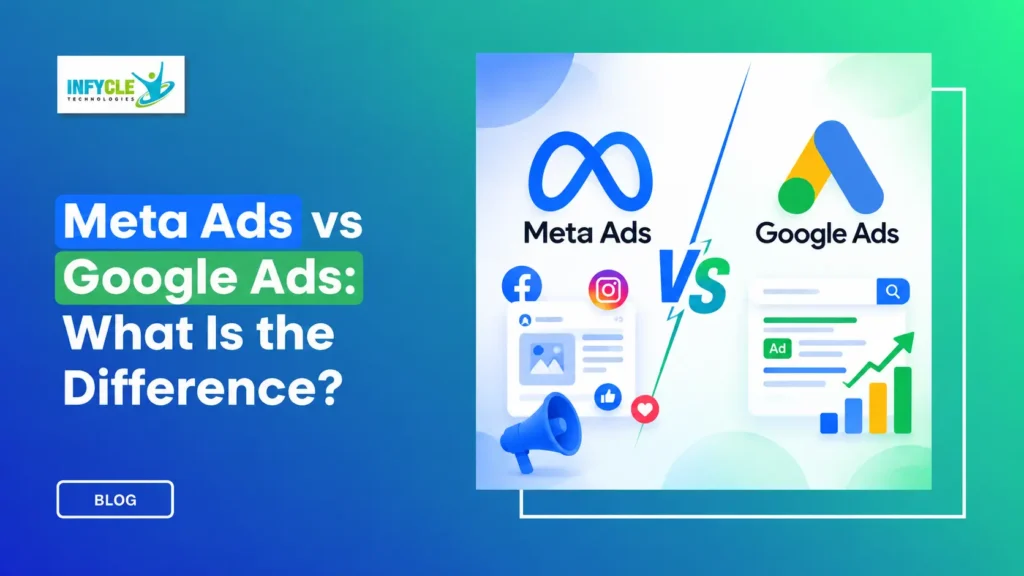
Meta Ads – Google Ads: What Is the Difference?
Introduction
Meta Ads – Google Ads are two major paid advertising platforms, but they reach audiences in different ways. Meta Ads focus on social discovery, while Google Ads can capture users actively searching for products or services.
For students and job seekers, understanding both platforms builds a strong foundation in paid digital marketing. Moreover, practical knowledge can help learners create campaigns, analyze results, and understand customer behavior.
Learners in Chennai can develop these skills through structured training and project-based practice. Therefore, knowing the difference between both platforms is useful before starting a digital marketing career.
Table of Contents
- What is Meta Ads – Google Ads?
- Why Choose a Meta Ads – Google Ads Course in Chennai?
- Key Modules Covered in a Meta Ads – Google Ads Course
- Practical Tools You Master in Meta Ads – Google Ads Training
- Meta Ads – Google Ads: Key Differences
- How to Choose the Right Advertising Platform
- Career Opportunities After Completing a Meta Ads – Google Ads Course
- Self-Learning vs. Hands-on Training
- Frequently Asked Questions About Meta Ads – Google Ads
- Conclusion
What is Meta Ads – Google Ads?
Meta Ads – Google Ads represent two different approaches to online advertising. Meta Ads allow businesses to reach people across social platforms using audience-based targeting.
Google Ads can display advertisements when people search for specific terms. For example, someone searching for “digital marketing course” may see relevant search advertisements.
Meta campaigns can reach users before they actively search for a service. On the other hand, Google Search campaigns can connect with people who already show search intent.
Therefore, both platforms can support different stages of the customer journey.
Why Choose a Meta Ads – Google Ads Course in Chennai?
Learning both platforms helps beginners understand audience targeting, search intent, campaign planning, and advertising analytics. Moreover, guided practice can make complex advertising concepts easier to apply.
Students from Arts, Science, Commerce, and Engineering backgrounds can start with basic concepts. However, regular practice is important for developing campaign management skills.
A structured course can cover campaign objectives, audience research, keyword research, ad copy, creatives, budgets, and conversion tracking. In addition, learners can practice reading important metrics such as CTR, CPC, conversions, and conversion rate.
For job seekers, these skills can strengthen a digital marketing portfolio. As a result, learners can demonstrate practical knowledge during internships and interviews.
Key Modules Covered in a Meta Ads – Google Ads Course
A complete beginner course should cover campaign setup, targeting, creatives, keywords, tracking, and performance analysis. These modules help learners understand the advertising process from planning to reporting.
Meta Advertising Fundamentals
Meta Ads campaigns can support goals such as awareness, traffic, engagement, leads, and sales. Also, advertisers can create audiences using different targeting options.
Creative content plays an important role on social platforms. Therefore, learners should understand headlines, primary text, images, videos, carousels, and calls to action.
Google Ads Search Fundamentals
Google Search campaigns connect advertisements with relevant search queries. For instance, a training institute can target keywords related to digital marketing courses.
Keyword research helps advertisers identify relevant search terms. Consequently, marketers should understand search intent, keyword relevance, match types, and negative keywords.
Audience Research
Audience research helps marketers understand who may respond to an advertisement. Furthermore, demographic information and user interests can support audience planning on social platforms.
Marketers should also understand location-based targeting. This is particularly useful for businesses promoting services within specific cities.
Keyword Research
Keyword research plays an important role in search advertising. For example, marketers can identify terms that potential customers use before creating Google Search campaigns.
Search intent also matters. Therefore, keywords should match the advertisement, landing page, and actual customer need.
Budget Management
Advertising platforms provide different bidding and budget options. However, increasing the budget alone does not guarantee better campaign performance.
Instead, marketers should monitor results and adjust campaigns according to relevant performance data.
Conversion Tracking
Conversion tracking helps marketers measure valuable actions. These actions can include purchases, registrations, calls, enquiries, or form submissions.
Moreover, tools such as Google Analytics, Google Tag Manager, and Meta tracking solutions can support measurement.
Practical Tools You Master in Meta Ads – Google Ads Training
Practical tools help learners move from advertising theory to campaign execution and measurement. Therefore, beginners should practice with advertising dashboards and analytics platforms.
Common tools include:
- Meta Ads Manager
- Google Ads
- Google Analytics
- Google Tag Manager
- Google Keyword Planner
- Meta Pixel
- Canva
- Looker Studio
- Google Search Console
These tools support campaign planning, creative development, keyword research, tracking, and reporting. For example, Looker Studio can help present marketing data through visual reports.
Meta Ads – Google Ads: Key Differences
The biggest difference is how each platform connects businesses with potential customers. Meta advertising commonly supports audience discovery, while Google Search advertising can capture active search demand.
| Factor | Meta Ads | Google Ads |
|---|---|---|
| Main environment | Facebook and Instagram | Google Search and other placements |
| User behavior | Browsing and discovering | Searching for information |
| Main targeting | Interests, demographics, audiences | Keywords, intent, audiences |
| Common formats | Image, video, carousel, stories | Search, display, video, shopping |
| Creative focus | Visual and social content | Search copy and relevance |
| Common goals | Awareness, engagement, leads, sales | Traffic, leads, sales, awareness |
| Key advantage | Audience discovery | Search intent |
| Measurement | Clicks, engagement, leads, conversions | Clicks, CPC, conversions, search data |
However, businesses do not always need to choose only one platform. Both can work together when a customer moves from discovery to active search.
For example, a person may first notice a course advertisement on Instagram. Later, that person may search Google for course details, reviews, fees, or training options.
How to Choose the Right Advertising Platform
The right platform depends on your campaign objective, audience behavior, budget, and advertising format. First, identify whether customers already search for your product or need to discover it.
Google Search can be useful when people actively search for specific services. In contrast, Meta can help businesses introduce products and services to selected audiences.
Landing-page relevance also matters. Furthermore, advertisements should lead users to pages that clearly match the advertised offer.
Testing provides another useful approach. Instead of relying on assumptions, marketers can compare campaign performance using consistent conversion goals and tracking methods.
Career Opportunities After Completing a Meta Ads – Google Ads Course
Paid advertising knowledge can support several entry-level digital marketing roles. However, employers may also expect skills in SEO, analytics, content marketing, and social media.
Potential roles include:
- Digital Marketing Executive
- Performance Marketing Executive
- PPC Executive
- Google Ads Specialist
- Paid Media Executive
- Social Media Advertising Executive
- Digital Marketing Analyst
- Performance Marketing Intern
Moreover, practical projects can help candidates demonstrate their skills. A portfolio may include keyword research, audience planning, campaign structures, ad creatives, tracking, and performance reports.
Self-Learning vs. Hands-on Training at Infycle Technologies
Self-learning offers flexibility, while hands-on training provides structured practice and trainer guidance.
| Learning Area | Self-Learning | Hands-on Training at Infycle Technologies |
|---|---|---|
| Learning structure | Self-managed | Guided learning path |
| Campaign practice | Independent | Trainer-guided |
| Tool learning | Self-exploration | Practical exercises |
| Doubt clarification | Online research | Trainer support |
| Project practice | Self-managed | Guided projects |
| Reporting skills | Independent | Practical reporting |
| Career preparation | Self-directed | Career-oriented guidance |
Want to learn Meta Ads – Google Ads through practical exercises? Infycle Technologies can help learners understand campaign planning, targeting, analytics, tracking, and performance reporting.
Moreover, practical training can help students build confidence with advertising tools. Start with the basics and gradually develop skills through structured project work.
Explore digital marketing training in Chennai and connect with Infycle Technologies today.
Frequently Asked Questions About Meta Ads – Google Ads
What is the main difference between Meta Ads – Google Ads?
The main difference is user intent and advertising environment. Meta generally reaches people while they browse social platforms, while Google Search can reach people actively searching for specific information.
Which platform should beginners learn?
Both platforms provide useful digital advertising skills. Therefore, beginners can learn their basic campaign structures and understand when each platform suits a marketing objective.
Do I need coding knowledge for paid advertising?
No, advanced coding skills are not required for basic campaign management. However, understanding tracking concepts can help marketers work with analytics and technical teams.
Are paid advertising skills useful for digital marketing jobs?
Yes, paid advertising is an important digital marketing skill. In addition, SEO, analytics, content creation, social media, and communication skills can expand career opportunities.
Conclusion
Meta advertising and Google advertising use different approaches to reach potential customers. Therefore, marketers should consider search intent, audience behavior, campaign goals, creative formats, and measurement requirements.
A practical digital marketing course in chennai can help learners develop campaign management, analytics, SEO, and advertising skills. Likewise, when choosing a best software training institute in chennai, check practical learning, trainer support, projects, and career guidance.
With consistent practice, beginners can build a stronger understanding of paid advertising and create useful portfolio projects.
Ready to build practical digital marketing skills?
Connect with Infycle Technologies Chennai for free career counseling and a live demo. Explore the training path, understand the tools, and plan your next career step with practical guidance.