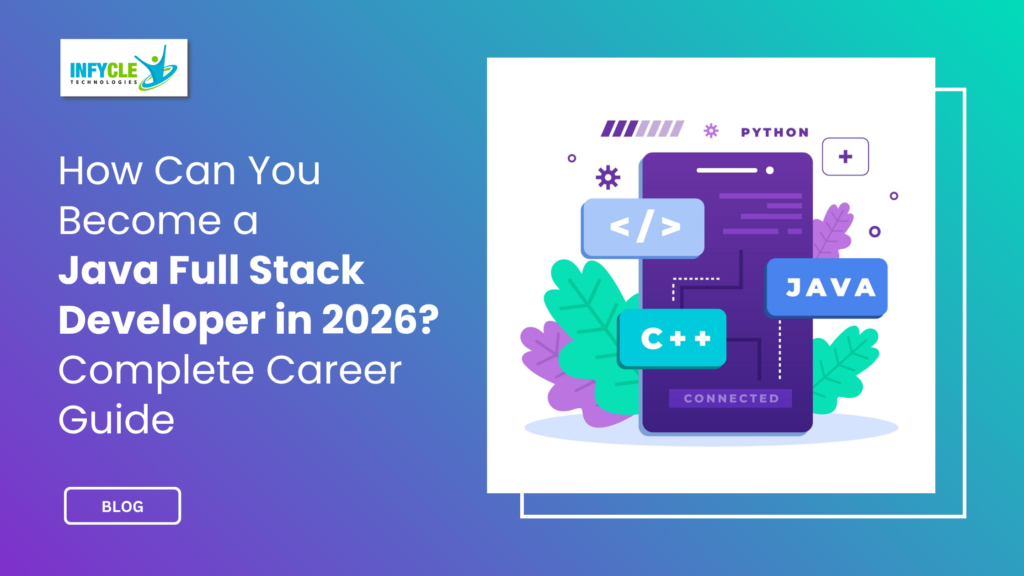
How Can You Become a Java Full Stack Developer in 2026? Complete Career Guide
Introduction
Technology careers continue to evolve rapidly, but one role remains consistently in demand across startups, product companies, and enterprises: the Java Full Stack Developer. As businesses invest more in web applications, cloud platforms, and digital services, companies need professionals who can build complete applications from front end to back end.
For students in CITY, fresh graduates, career changers, freelancers, and even individuals returning to work after a career break, full stack development offers a practical pathway into the IT industry. The best part? You don’t need to be a computer science graduate to get started. Many successful developers today come from Arts, Commerce, Science, and non-technical backgrounds.
If you’re wondering how to become a Java Full Stack Developer in 2026, this guide will walk you through the exact skills, tools, learning roadmap, career opportunities, and industry trends you should know before starting your journey.
Why Java Full Stack Development Remains a Top Career Choice in 2026
While new programming languages emerge every year, Java continues to power thousands of enterprise applications worldwide. From banking platforms and healthcare systems to e-commerce websites and government applications, Java remains one of the most trusted technologies for large-scale software development.
According to industry reports, full stack developers continue to rank among the most sought-after technology professionals because they can work on both client-side and server-side development. Employers value developers who understand the complete application lifecycle rather than specializing in just one area.
Some reasons why this career path remains attractive include:
- Strong job demand across industries
- Competitive salary packages
- Opportunities in startups and multinational companies
- Remote and freelance work options
- Continuous learning and career growth
- Global demand for Java-based applications
What Does a Java Full Stack Developer Actually Do?
A Java Full Stack Developer works on every layer of a web application.
Their responsibilities typically include:
Front-End Development
Building user interfaces using:
- HTML5
- CSS3
- JavaScript
- React.js
- Angular
Back-End Development
Developing application logic using:
- Core Java
- Advanced Java
- Spring Framework
- Spring Boot
- REST APIs
Database Management
Working with databases such as:
- MySQL
- PostgreSQL
- Oracle
- MongoDB
Deployment and Cloud Integration
Managing application deployment using:
- Git and GitHub
- Docker
- Jenkins
- AWS
- Azure
This versatility makes a Java Full Stack Developer valuable to organizations looking for professionals who can contribute across multiple stages of software development.
Skills You Need to Learn in 2026
The technology landscape has expanded significantly. Employers are no longer looking for developers who know only Java.
To become industry-ready, focus on these core skills:
1. Master Java Fundamentals
Start with:
- Variables and Data Types
- Loops and Conditions
- Arrays and Collections
- Object-Oriented Programming
- Exception Handling
- Multithreading
A strong foundation makes advanced concepts much easier to learn.
2. Learn Front-End Technologies
Modern applications require interactive user experiences.
Focus on:
- HTML
- CSS
- JavaScript
- Bootstrap
- React.js
React remains one of the most popular front-end frameworks in 2026 because of its flexibility and performance.
3. Learn Spring Boot
Spring Boot has become the preferred framework for enterprise Java development.
Key concepts include:
- REST API Development
- Dependency Injection
- Security
- Database Connectivity
- Microservices Architecture
4. Understand Databases
Every application needs data storage.
Learn:
- SQL Queries
- Database Design
- Joins and Indexing
- Stored Procedures
- Database Optimization
5. Learn Git and Cloud Basics
Modern development teams rely heavily on:
- Git
- GitHub
- CI/CD Pipelines
- Docker
- AWS Fundamentals
Cloud knowledge can significantly improve your employability.
A Step-by-Step Roadmap to Become a Java Full Stack Developer
Many beginners feel overwhelmed by the number of technologies involved. Here’s a practical roadmap:
Step 1: Learn Java Programming
Spend the first few weeks mastering Java basics and OOP concepts.
Step 2: Build Small Projects
Create:
- Calculator App
- Student Management System
- Library Management System
Projects help reinforce learning.
Step 3: Learn Front-End Development
Understand how websites are built and how users interact with applications.
Step 4: Study Spring Boot
Build APIs and connect them to databases.
Step 5: Learn Database Management
Practice SQL queries and database integration.
Step 6: Create Full Stack Projects
Examples:
- E-commerce Application
- Online Learning Platform
- Employee Management System
- Food Delivery Application
Step 7: Learn Deployment
Deploy your projects on cloud platforms and showcase them online.
Focus on Projects, Not Just Certificates
Many learners spend months collecting certificates without building practical applications.
Employers in 2026 increasingly prioritize:
- GitHub portfolios
- Live project experience
- Problem-solving ability
- Practical coding skills
A strong portfolio often creates more opportunities than multiple certificates alone.
If you’re serious about becoming a software developer, dedicate time every week to building real-world projects and documenting them properly.
Industry Trends Every Aspiring Developer Should Know
The role of a Java Full Stack Developer is evolving alongside modern technologies.
Some trends shaping the industry include:
AI-Assisted Development
Developers now use AI coding assistants to improve productivity and debugging efficiency.
Microservices Architecture
Organizations prefer scalable applications built with microservices rather than monolithic systems.
Cloud-Native Development
AWS, Azure, and containerized applications are becoming standard across industries.
Full Stack + DevOps Skills
Developers with deployment and automation knowledge often have a competitive advantage.
Cybersecurity Awareness
Secure coding practices are becoming a mandatory skill rather than an optional one.
Professionals who adapt to these trends will remain highly employable throughout the coming years.
Career Opportunities After Learning Full Stack Java
After gaining practical experience, you can apply for roles such as:
- Java Developer
- Full Stack Developer
- Software Engineer
- Backend Developer
- Application Developer
- Web Developer
- Software Consultant
Many companies in CITY are actively hiring developers who can work across multiple technologies and contribute from development to deployment.
How Long Does It Take to Become Job-Ready?
The timeline depends on your background and learning commitment.
Typical estimates:
- 4–6 months for dedicated learners
- 6–9 months for students studying part-time
- 9–12 months for complete beginners
Consistency matters more than speed.
Learning one hour daily for several months is often more effective than studying intensely for a few weeks.
Frequently Asked Questions
Can a non-technical student become a Java Full Stack Developer?
Yes. Many successful developers come from Arts, Commerce, Science, and other non-engineering backgrounds. Consistent practice and project-based learning are the keys to success.
Is Java Full Stack Developer a good career in 2026?
Absolutely. Demand remains strong due to enterprise application development, cloud adoption, and digital transformation initiatives across industries.
Do I need a degree in Computer Science?
No. Employers increasingly focus on skills, projects, and practical experience rather than academic background alone.
Which projects should beginners build?
Start with student management systems, employee management portals, online shopping websites, and task management applications.
Can I get a job after completing Java training?
Yes. With strong projects, interview preparation, and practical skills, many learners secure entry-level development roles after completing structured training programs.
Conclusion
Becoming a full stack developer is one of the most practical ways to enter the technology industry in 2026. By learning Java, front-end development, databases, cloud fundamentals, and deployment practices, you can build a strong foundation for a long-term software development career.
For learners looking for structured guidance, practical projects, and industry-focused mentoring, enrolling in a quality Java Training in Chennai program can significantly accelerate your learning journey. At Infycle Technologies, students gain hands-on experience, real-world project exposure, and job-oriented training designed to help them succeed in today’s competitive IT market.
Ready to Start Your Software Development Career?
If you’re searching for the Best Software Training Institute in Chennai, consider learning with Infycle Technologies. With expert trainers, practical project-based learning, placement-focused support, and comprehensive Java Training in Chennai, you’ll gain the skills employers are actively looking for in 2026 and beyond.