Java Frameworks Overview: Introduction and Advantages
Introduction
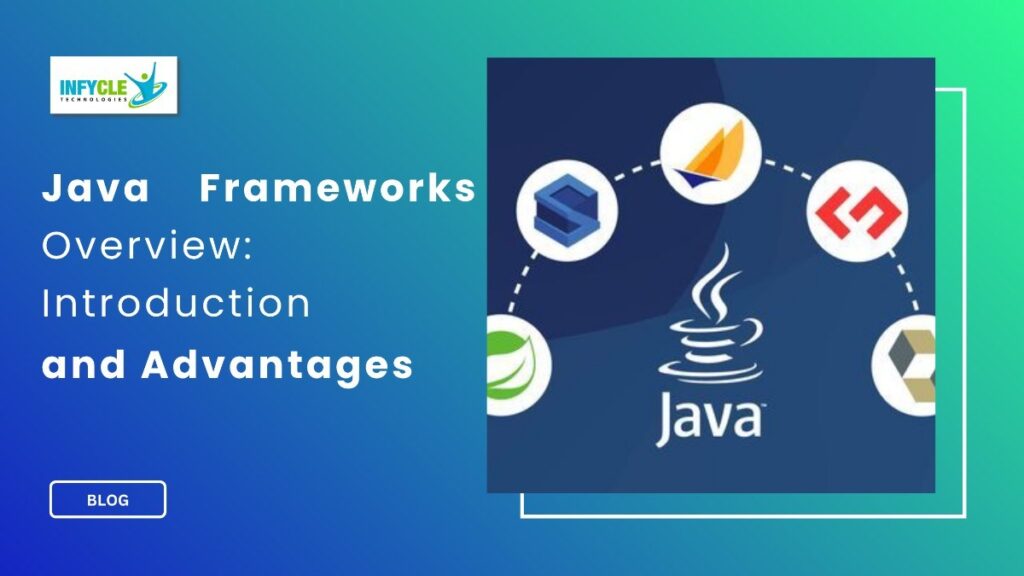
Java remains a popular choice for building reliable web and enterprise applications. Java Frameworks help developers create applications faster by providing reusable structures, tools, and development patterns.
Furthermore, frameworks reduce repetitive coding and help teams maintain consistent application structures. For students and fresh graduates, understanding these tools can make Java development easier and more practical.
Chennai has a strong technology and software-training ecosystem. Therefore, learning Java development with practical projects can help learners prepare for real workplace requirements.
This guide explains how Java frameworks work, their advantages, important modules, practical tools, and career opportunities.
Table of Contents
- What is Java Frameworks?
- Why Choose a Java Frameworks in Chennai?
- Key Modules Covered in a Java Frameworks
- Practical Tools You Master in Java Frameworks Training
- Career Opportunities After Completing a Java Frameworks
- Self-Learning vs. Hands-on Training at Infycle Technologies
- Frequently Asked Questions About Java Frameworks
- Conclusion
- Final CTA
What is Java Frameworks?
A Java framework is a pre-built software structure that helps developers create Java applications efficiently.
In simple terms, a framework provides ready-made components, rules, and libraries for common development tasks. Therefore, developers can focus more on application logic instead of writing repetitive code.
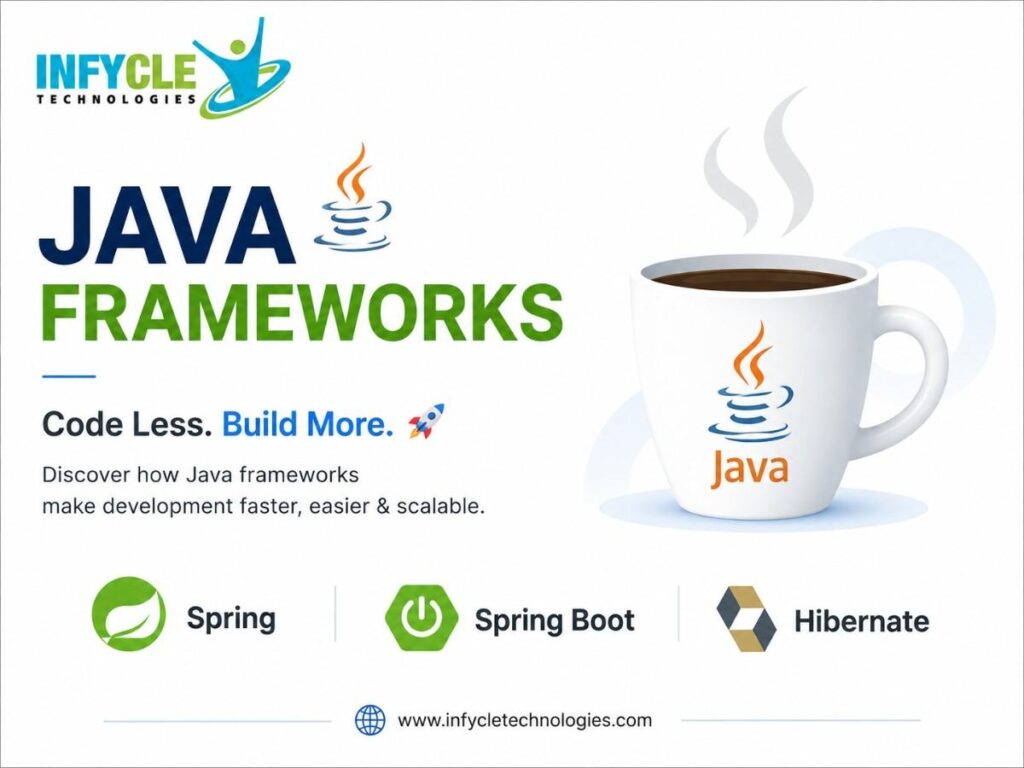
For example, Spring provides tools for developing enterprise applications, while Hibernate simplifies database interaction. Similarly, other frameworks support web development, testing, user interfaces, and microservices.
Frameworks also encourage organized development practices. As a result, developers can build applications that are easier to test, maintain, and expand.
Another advantage is the availability of established development patterns. Furthermore, teams can follow common structures when multiple developers work on the same project.
Java frameworks are useful across many industries. Banking, healthcare, e-commerce, education, and enterprise software companies commonly use Java-based technologies.
Why Choose a Java Frameworks in Chennai?
Learning Java development in Chennai can provide students with practical exposure to widely used programming technologies.
However, knowing Java syntax alone may not be enough for modern development roles. Employers often look for candidates who understand databases, frameworks, APIs, testing, and project development.
For instance, learners can combine Java fundamentals with Spring, Hibernate, SQL, and REST API development. This combination creates a stronger foundation for application development.
Moreover, classroom learning becomes more useful when students work on practical assignments. Projects allow learners to understand how individual concepts connect inside a complete application.
Chennai also offers opportunities for students, fresh graduates, and career changers interested in software development. Therefore, choosing structured learning can help learners follow a clear path from fundamentals to project development.
A well-planned Java Frameworks learning path can also help students understand how professional development teams structure applications.
Key Modules Covered in a Java Frameworks
A practical framework curriculum should cover development concepts that connect directly with real projects.
Java Frameworks and Core Java
Core Java provides the foundation for framework-based development. Therefore, learners should understand classes, objects, inheritance, interfaces, exceptions, collections, and multithreading.
These concepts make framework features easier to understand. In addition, strong Java fundamentals help developers troubleshoot application problems.
Java Frameworks and Spring
Spring is one of the major technologies used in Java application development. It provides features for dependency injection, application configuration, web development, and enterprise applications.
For example, Spring Boot simplifies the process of creating production-ready applications. Developers can create REST APIs and connect different application layers with less configuration.
Java Frameworks and Hibernate
Hibernate is widely associated with object-relational mapping. In simple terms, it helps Java applications interact with relational databases using Java objects.
Consequently, developers can reduce repetitive database code. They can also work with entities, relationships, queries, and database transactions more efficiently.
Java Frameworks and REST APIs
REST API development is another important area for modern Java developers. APIs allow different applications and services to exchange information.
Furthermore, learners can understand HTTP methods such as GET, POST, PUT, and DELETE. Practical API projects can then demonstrate how frontend applications communicate with backend services.
Java Frameworks and Testing
Testing helps developers identify problems before applications reach users. Therefore, learners should understand unit testing and common Java testing practices.
For example, JUnit can help developers test individual application components. This skill also supports better code quality and maintenance.
Practical Tools You Master in Java Frameworks Training
Practical training introduces tools that developers commonly use during application development.
For instance, learners can work with IntelliJ IDEA or Eclipse for writing and debugging Java applications. They can also use Maven for project management and dependency handling.
Furthermore, Git helps developers track code changes and collaborate with other team members. GitHub can provide a convenient platform for storing and sharing project repositories.
Database tools are equally important. Learners can practice SQL and connect Java applications with databases such as MySQL.
In addition, Postman can help test REST APIs during backend development. These tools give learners experience beyond basic programming exercises.
A practical Java Frameworks curriculum should connect these tools through real projects. As a result, students can understand how development workflows operate from coding to testing.
Career Opportunities After Completing a Java Framework
Java development can lead to several software career paths when learners build strong programming and project skills.
For example, graduates can explore roles such as Java Developer, Backend Developer, Full Stack Developer, and Software Engineer. Their opportunities can expand further after gaining experience with databases, APIs, testing, and cloud platforms.
Furthermore, developers who understand Spring Boot can work on enterprise and web application projects. Those who learn REST APIs can also contribute to modern distributed applications.
Project experience is important during the job search. Therefore, students should build applications that demonstrate authentication, database operations, API integration, error handling, and testing.
Career growth also depends on continuous learning. In addition, developers should improve problem-solving skills and stay comfortable with development tools.
For students seeking Java Training in Chennai, a project-focused learning approach can make technical concepts easier to apply during interviews and practical assessments.
Self-Learning vs. Hands-on Training at Infycle Technologies
Both self-learning and instructor-led training can help learners develop Java skills, but their learning experience can differ significantly.
| Learning Factor | Self-Learning | Hands-on Training at Infycle Technologies |
|---|---|---|
| Learning pace | Completely self-directed | Structured learning path |
| Doubt clarification | Requires independent research | Trainer guidance |
| Practical projects | Depends on learner | Guided project practice |
| Tools | Learner chooses tools | Practical tool exposure |
| Interview preparation | Self-managed | Can include guided preparation |
| Learning consistency | Depends on personal discipline | Regular training structure |
Self-learning offers flexibility and access to many online resources. However, learners may spend extra time deciding what to study and how different technologies connect.
On the other hand, guided training provides a structured path and direct support. Furthermore, practical exercises can help learners identify mistakes before they become habits.
Mid-Article CTA
If you want to build practical Java development skills, Infycle Technologies provides structured training for learners in Chennai.
Moreover, learners can focus on programming concepts, frameworks, databases, tools, and project development within a guided learning environment. You can explore the Java Course in Chennai option based on your current skill level and career goal.
Frequently Asked Questions About Java Frameworks
What are Java Frameworks used for?
Java Frameworks provide reusable structures and components for developing applications. Therefore, developers can reduce repetitive work and maintain organized application code.
Which Java framework should beginners learn first?
Spring Boot is a strong starting point for many modern Java development paths. However, beginners should first build a solid foundation in Core Java, object-oriented programming, and SQL.
Is Java framework knowledge useful for freshers?
Yes, framework knowledge can strengthen a fresher’s development profile. Furthermore, practical projects can help candidates demonstrate their skills during interviews.
Can I learn Java frameworks without programming experience?
Beginners can start with Java fundamentals before moving into frameworks. In addition, structured guidance can make the transition from basic programming to application development easier.
Conclusion
Java development becomes more practical when learners understand frameworks, databases, APIs, testing, and development tools together.
Furthermore, frameworks can reduce repetitive development work and provide organized structures for building applications. Practical projects can then help learners turn theoretical concepts into usable development skills.
For students and job seekers, choosing the right learning path matters. A structured Java Training in Chennai program can provide guidance while learners build practical knowledge and project experience.
Final CTA
Ready to start your Java development journey?
Connect with Infycle Technologies, a Best Software Training Institute in Chennai, for free career counseling and a live demo. Discuss your career goals, choose the right learning path, and explore practical Java training before you begin.