What Is the Future of Full Stack Development Careers in 2026?
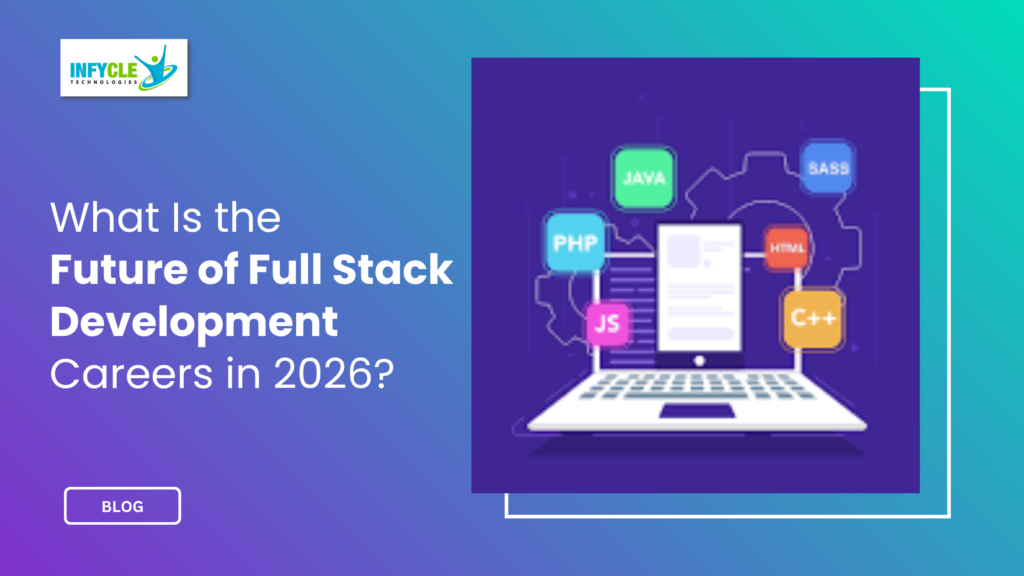
Technology is evolving faster than ever, and companies are looking for professionals who can handle multiple aspects of software development rather than specializing in just one area. This shift has made full stack developers some of the most sought-after professionals in the IT industry. Whether you’re a college student, a recent graduate, a freelancer, or someone planning a career switch, understanding the Future of Full Stack Development can help you make smarter career decisions.
In cities like Chennai, where the technology ecosystem continues to expand with startups, product companies, and global IT firms, the demand for versatile developers is growing steadily. Businesses want professionals who can build user-friendly interfaces, manage databases, work with cloud technologies, and contribute throughout the software development lifecycle.
If you’re wondering whether full stack development will remain a strong career choice in 2026 and beyond, the answer is encouraging. This article explores industry trends, hiring demands, emerging technologies, and the skills you need to stay competitive in the rapidly changing tech landscape.
Why Full Stack Developers Continue to Be in High Demand
Organizations today prefer agile teams capable of delivering projects faster and more efficiently. Hiring a developer who understands both frontend and backend technologies provides significant advantages.
Some key reasons behind the growing demand include:
- Reduced development costs
- Faster project delivery
- Better collaboration between teams
- Increased flexibility in product development
- Easier maintenance and troubleshooting
According to industry reports, software development roles are expected to remain among the fastest-growing technology occupations through the next decade. Companies increasingly value professionals who can contribute across multiple layers of application development.
This trend strongly supports the Future of Full Stack Development, making it one of the most reliable technology career paths for freshers entering the job market.
The Future of Full Stack Development: Key Industry Trends for 2026
Several technological advancements are shaping how full stack developers work.
1. AI-Powered Development
Artificial Intelligence tools are transforming coding workflows. Developers now use AI assistants to generate code snippets, identify bugs, and improve productivity.
However, AI is not replacing developers. Instead, it is helping skilled professionals build applications faster. Companies still need developers who understand architecture, logic, security, and business requirements.
2. Cloud-Native Applications
Modern applications are increasingly deployed on cloud platforms.
Developers familiar with:
- AWS
- Microsoft Azure
- Google Cloud Platform
- Docker
- Kubernetes
will have a significant advantage in the evolving Future of Full Stack Development landscape.
3. Low-Code and No-Code Platforms
While low-code platforms simplify basic application creation, businesses still require experienced developers for custom solutions, integrations, scalability, and security.
This means full stack developers will continue to play a critical role in enterprise projects.
4. API-Driven Development
Applications today rarely operate independently. Developers frequently integrate payment gateways, CRM systems, analytics tools, and third-party services.
Knowledge of API development and integration is becoming a core requirement for modern full stack professionals.
Skills That Will Define Successful Full Stack Developers in 2026
The technology stack continues to evolve, but some skills remain consistently valuable.
Frontend Skills
Modern user experiences depend on responsive and interactive interfaces.
Popular technologies include:
- HTML5
- CSS3
- JavaScript
- React.js
- Angular
- Vue.js
Backend Skills
Backend development remains essential for application functionality and data processing.
Key technologies include:
- Node.js
- Python
- Java
- .NET
- PHP
Database Management
Developers should understand both SQL and NoSQL databases.
Examples include:
- MySQL
- PostgreSQL
- MongoDB
- Redis
Cloud and DevOps Fundamentals
Companies increasingly expect developers to understand deployment pipelines and cloud infrastructure.
Useful skills include:
- CI/CD
- Git
- Docker
- Kubernetes
- AWS services
Mastering these areas significantly strengthens your position in the Future of Full Stack Development job market.
Ready to Build Job-Ready Skills?
Learning through real-world projects can dramatically improve your employability. Instead of focusing only on theory, choose training programs that include hands-on development, portfolio projects, cloud deployment experience, and interview preparation.
Career Opportunities Beyond Traditional Development Roles
One of the biggest advantages of full stack development is career flexibility.
Professionals can move into roles such as:
Software Engineer
Designing and building complete software solutions.
Web Application Developer
Creating scalable business applications and websites.
Product Developer
Working closely with startups and product companies to launch innovative solutions.
Technical Consultant
Helping organizations implement technology solutions efficiently.
DevOps Engineer
Combining development expertise with deployment and infrastructure management.
Technology Entrepreneur
Many startup founders begin as full stack developers because they can independently build and test product ideas.
These diverse career options further reinforce the strong Future of Full Stack Development for aspiring professionals.
Salary Outlook for Full Stack Developers in 2026
Compensation continues to rise as demand increases.
Factors influencing salary include:
- Technical expertise
- Project experience
- Cloud knowledge
- Problem-solving ability
- Industry specialization
Freshers with strong project portfolios often receive competitive entry-level opportunities. Experienced professionals who combine development skills with cloud and AI knowledge can command significantly higher salaries.
In growing technology hubs like Chennai, companies actively seek developers who can contribute from day one, creating excellent opportunities for career growth.
Why Full Stack Development Is Ideal for Freshers and Career Changers
Many students hesitate to enter technology careers because they come from non-engineering backgrounds.
The good news is that modern learning platforms and practical training programs make full stack development accessible to everyone.
This field is particularly suitable for:
- Arts graduates
- Commerce graduates
- Science students
- Engineering graduates
- Working professionals seeking career transitions
- Freelancers looking for higher-income opportunities
The Future of Full Stack Development remains promising because companies value skills and project experience more than academic specialization alone.
Common Mistakes Beginners Should Avoid
As demand grows, many learners make avoidable mistakes.
Learning Too Many Technologies at Once
Focus on mastering one complete stack before exploring others.
Ignoring Real Projects
Employers want proof of practical skills.
Neglecting Version Control
Git proficiency is now considered a fundamental requirement.
Avoiding Cloud Technologies
Cloud platforms are becoming integral to software development workflows.
Skipping Soft Skills
Communication, teamwork, and problem-solving abilities remain critical for long-term success.
How to Prepare for the Future of Full Stack Development
If you’re planning to enter this field in 2026, follow this roadmap:
- Learn HTML, CSS, and JavaScript fundamentals.
- Master a frontend framework such as React.
- Learn backend technologies like Node.js or Python.
- Understand databases and API development.
- Build multiple real-world projects.
- Learn cloud deployment basics.
- Create a professional portfolio.
- Practice coding interviews regularly.
Consistent learning and hands-on implementation will help you stay ahead in the evolving technology landscape.
Frequently Asked Questions
1. Is the Future of Full Stack Development still strong in 2026?
Yes. Businesses continue to seek developers who can work across frontend, backend, databases, and cloud platforms. This versatility keeps demand high across industries.
2. Can non-technical students become full stack developers?
Absolutely. With structured learning and practical project experience, students from Arts, Commerce, Science, and other backgrounds can successfully enter this field.
3. Will AI replace full stack developers?
No. AI assists with coding and productivity but cannot replace human decision-making, architecture design, problem-solving, and business understanding.
4. Which programming language is best for aspiring full stack developers?
JavaScript remains one of the most popular choices because it can be used for both frontend and backend development through technologies like React and Node.js.
5. How long does it take to become job-ready?
With focused learning and consistent project work, many learners become ready for entry-level opportunities within 6–12 months.
Conclusion
The technology industry continues to reward professionals who possess versatile, practical, and adaptable skills. As businesses adopt cloud computing, AI-powered tools, and modern application architectures, full stack developers remain at the center of digital innovation. For students, fresh graduates, freelancers, and career changers, this field offers excellent opportunities for growth, stability, and long-term success.
If you’re looking to start your journey through a Full Stack Developer Course in Chennai, choosing the right training partner can make all the difference. As a Best Software Training Institute in Chennai, Infycle Technologies focuses on practical learning, industry-relevant projects, and career-oriented training to help aspiring developers build the skills employers are actively seeking in 2026 and beyond.