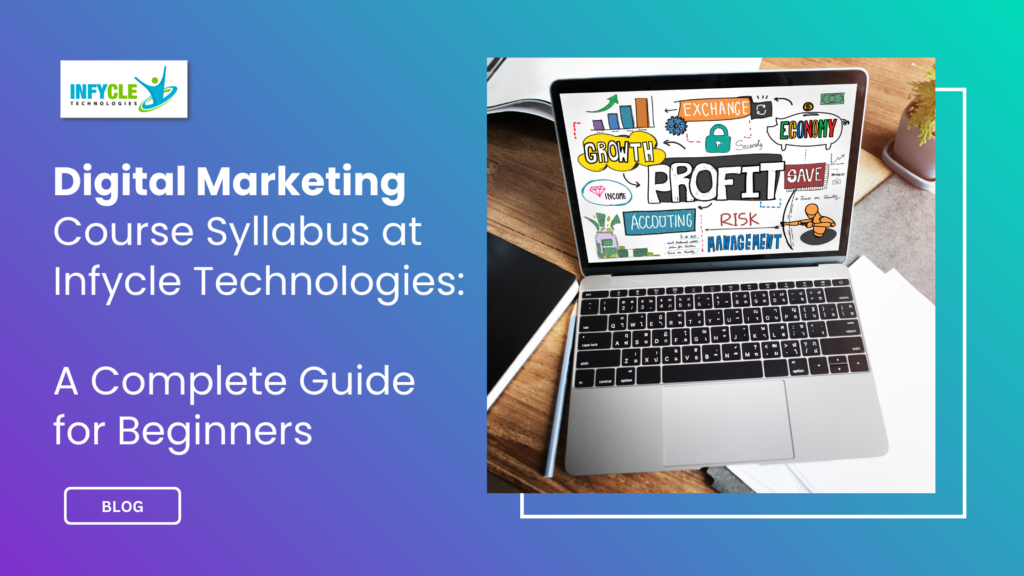
Digital Marketing Course Syllabus at Infycle Technologies: A Complete Guide for Beginners
Introduction
If you’re planning to build a career in digital marketing, the first question you’ll probably ask is, “What will I actually learn?” Understanding the Digital Marketing Course Syllabus helps you choose the right training program and ensures you’re learning the skills employers expect.
Whether you’re a college student, a recent graduate, a working professional, or someone looking for a career change, digital marketing offers practical skills that can be applied across almost every industry. Businesses of all sizes rely on digital channels to reach customers, creating strong demand for professionals with hands-on knowledge.
In this guide, you’ll learn what is covered in the Digital Marketing Course Syllabus at Infycle Technologies, the tools you’ll use, career opportunities after completing the course, and what makes practical training valuable. If you’re searching for a Digital Marketing Course in Chennai, this article will help you understand exactly what to expect before enrolling.
Table of Contents
- What Is a Digital Marketing Course?
- Why Learning the Right Syllabus Matters
- Complete Digital Marketing Course Syllabus
- Tools You’ll Learn During Training
- Practical Projects Included
- Career Opportunities After Completion
- Mid-Article Learning Tip
- Common Mistakes Beginners Make
- Frequently Asked Questions
- Conclusion
What Is a Digital Marketing Course?
A digital marketing course teaches you how businesses promote products and services online. Instead of focusing only on theory, a quality program combines marketing concepts with practical implementation.
A well-designed syllabus should help you:
- Understand customer behavior
- Improve website visibility on search engines
- Generate leads through online advertising
- Build social media strategies
- Measure campaign performance
- Create content that attracts and converts customers
The goal is to make learners job-ready with real-world skills.
Why the Right Digital Marketing Course Syllabus Matters
Not every training program covers the same topics. Some focus only on theory, while others provide live projects, case studies, and practical assignments.
A good syllabus helps you:
- Build industry-relevant skills
- Learn current marketing tools
- Practice with real business scenarios
- Prepare for interviews
- Build a professional portfolio
When evaluating Digital Marketing Training in Chennai, always compare the syllabus before choosing an institute.
Digital Marketing Course Syllabus: Modules Covered
The Digital Marketing Course Syllabus at Infycle Technologies is designed to take beginners from the basics to advanced practical implementation.
1. Digital Marketing Fundamentals
Learn the foundation of digital marketing, including:
- Marketing concepts
- Customer journey
- Sales funnel
- Digital marketing channels
- Branding basics
- Marketing strategy
This module helps learners understand how every digital channel works together.
2. Search Engine Optimization (SEO)
SEO is one of the most valuable long-term marketing skills.
Topics include:
- Keyword research
- On-page SEO
- Technical SEO basics
- Off-page SEO
- Local SEO
- Google Search Console
- SEO audits
- Link building basics
Practical Example:
Optimize a website page so it appears higher in Google search results.
3. Google Ads (PPC)
Learn how businesses generate leads using paid advertising.
You’ll cover:
- Search Ads
- Display Ads
- Video Ads
- Shopping Campaigns
- Keyword planning
- Ad copywriting
- Conversion tracking
- Budget optimization
4. Social Media Marketing
Understand how brands build communities and generate business using social platforms.
Topics include:
- Facebook Marketing
- Instagram Marketing
- LinkedIn Marketing
- YouTube Marketing
- Content planning
- Organic growth
- Paid campaigns
- Audience targeting
5. Content Marketing
Content remains the foundation of successful digital marketing.
You’ll learn:
- Blog writing
- SEO content
- Landing page content
- Email copy
- Social media captions
- Content strategy
- AI-assisted content creation responsibly
6. Email Marketing
Build customer relationships through email campaigns.
Topics include:
- Email list building
- Campaign planning
- Newsletter creation
- Automation basics
- Open rate optimization
- Lead nurturing
7. Analytics and Reporting
Data helps marketers make better decisions.
You’ll work with:
- Google Analytics
- Website traffic analysis
- Campaign tracking
- User behavior
- Conversion reports
- KPI measurement
8. AI Tools for Digital Marketing
Modern marketers use AI to improve productivity.
Examples include:
- Content research
- Idea generation
- SEO assistance
- Campaign planning
- Image generation
- Productivity tools
The focus is on using AI responsibly rather than replacing marketing skills.
9. Freelancing and Personal Branding
Many learners want freelance income or remote work opportunities.
This module covers:
- Building a portfolio
- Finding freelance clients
- Proposal writing
- LinkedIn optimization
- Resume preparation
- Interview guidance
Tools You’ll Learn During the Course
| Skill Area | Popular Tools |
|---|---|
| SEO | Google Search Console, Google Keyword Planner |
| Analytics | Google Analytics |
| PPC | Google Ads |
| Social Media | Meta Business Suite |
| Design | Canva |
| Website | WordPress |
| Productivity | AI-powered marketing tools |
Learning these tools gives students practical experience that employers value.
Practical Projects Included
Theory alone isn’t enough.
During Digital Marketing Training in Chennai, practical assignments help reinforce every concept.
Typical projects include:
- SEO website optimization
- Google Ads campaign setup
- Social media content calendar
- Blog optimization
- Landing page creation
- Competitor analysis
- Keyword research project
- Website audit
- Performance reporting
These projects help build a portfolio for interviews.
Career Opportunities After Completing the Course
Digital marketing offers multiple career paths depending on your interests.
Some popular roles include:
- Digital Marketing Executive
- SEO Analyst
- PPC Specialist
- Social Media Executive
- Content Marketer
- Email Marketing Executive
- Performance Marketing Executive
- Digital Marketing Analyst
- Freelance Digital Marketer
Many learners also use these skills to promote their own businesses or work as independent consultants.
Continue Learning Beyond the Classroom
Digital marketing changes regularly as search engines, advertising platforms, and customer behavior evolve.
Along with completing your course, build the habit of:
- Reading industry blogs
- Practicing on your own website
- Creating personal projects
- Following digital marketing updates
- Learning from campaign results
Practical experience combined with continuous learning creates stronger career opportunities than certifications alone.
Common Mistakes Beginners Make
Avoid these common errors while learning digital marketing:
- Trying to master every platform at once
- Ignoring analytics
- Focusing only on theory
- Not practicing SEO regularly
- Running ads without clear goals
- Skipping portfolio development
Consistent practice is far more valuable than simply completing modules.
Frequently Asked Questions About the Digital Marketing Course Syllabus
1. What does the Digital Marketing Course Syllabus include?
The syllabus covers SEO, Google Ads, social media marketing, content marketing, analytics, email marketing, WordPress, AI tools, and practical projects.
These modules provide both theoretical knowledge and hands-on experience needed for real-world marketing roles.
2. Is this course suitable for beginners without technical knowledge?
Yes. The syllabus starts with digital marketing fundamentals before moving into advanced concepts.
Students from Arts, Commerce, Science, Engineering, and other backgrounds can comfortably learn each module through guided practical sessions.
3. How long does it take to complete the course?
Most comprehensive training programs take around 3 to 4 months, depending on the learning schedule.
Weekend, weekday, and fast-track batches allow learners to choose a pace that fits their availability.
4. Will I work on live projects during the course?
Yes. Practical assignments are an essential part of the Digital Marketing Course Syllabus.
Working on SEO, advertising campaigns, content creation, and analytics projects helps students gain confidence before attending interviews.
5. Can I get a job after completing the course?
Completing the course builds job-ready skills, but career success also depends on consistent practice, portfolio quality, communication skills, and interview preparation.
Learners who actively complete projects and stay updated with industry trends generally have stronger employment opportunities.
Conclusion
Choosing the right Digital Marketing Course in Chennai begins with understanding the syllabus. A structured curriculum that combines SEO, paid advertising, social media, analytics, content marketing, AI tools, and practical projects prepares learners for today’s digital careers.
At Infycle Technologies, the focus is on practical learning, industry-relevant tools, project-based training, and career guidance so students can confidently apply their knowledge in real business situations.
If you’re ready to develop practical digital marketing skills, explore the Digital Marketing Course at Infycle Technologies, review the syllabus carefully, attend a demo session, and choose a learning path that matches your career goals.