What Is PL/SQL And Why It Is Important In 2026

PL/SQL in 2026 stands out as a skill that remains relevant—even as newer technologies emerge. But many beginners still wonder whether it’s worth learning today.
In Chennai’s competitive job market, companies are not just looking for coders—they need professionals who can handle data efficiently. From banking systems to enterprise applications, structured data plays a crucial role. That’s where PL/SQL comes in.
For students, freshers, and even career changers, learning plsql can open doors to stable, long-term opportunities. This blog breaks down what it is, why it matters in 2026, and how it can shape your career path.
Understanding PL/SQL in a Practical Way
PL/SQL is an extension of SQL used in Oracle databases. While SQL helps you query and manage data, plsql allows you to write complete programs within the database.
Think of it like this:
- SQL → Fetches and updates data
- plsql → Adds logic, automation, and control.
This combination makes it powerful for handling complex operations directly inside the database.
Why PL/SQL Still Matters in 2026
With so many modern tools available, it’s easy to assume that older technologies lose value. But that’s not the case here.
Key reasons plsql remains important:
- Enterprise companies still rely heavily on Oracle systems.
- Data security and performance are top priorities.
- Automation inside databases reduces system load.
- Skilled professionals are consistently in demand.
Many large organisations in Chennai continue to depend on Oracle databases, making plsql a reliable career skill.
Where PL/SQL Is Used in Real Projects
Understanding where PL/SQL is applied makes its importance clearer.
Common use cases:
- Banking systems handling daily transactions
- Healthcare platforms managing patient records.
- ERP systems used by large companies
- E-commerce platforms are processing orders.
For example, in a banking system, plsql procedures can automatically process transactions, validate data, and ensure security rules are followed.
Skills You Build While Learning PL/SQL
Learning plsql does more than just teach you a language—it builds a strong technical foundation.
Core skills include:
- Writing optimised SQL queries
- Understanding database structure
- Logical thinking and problem-solving
- Handling large datasets efficiently
- Debugging and error handling
These skills are useful across multiple IT roles, not just database-related jobs.
Is PL/SQL a Smart Career Choice?
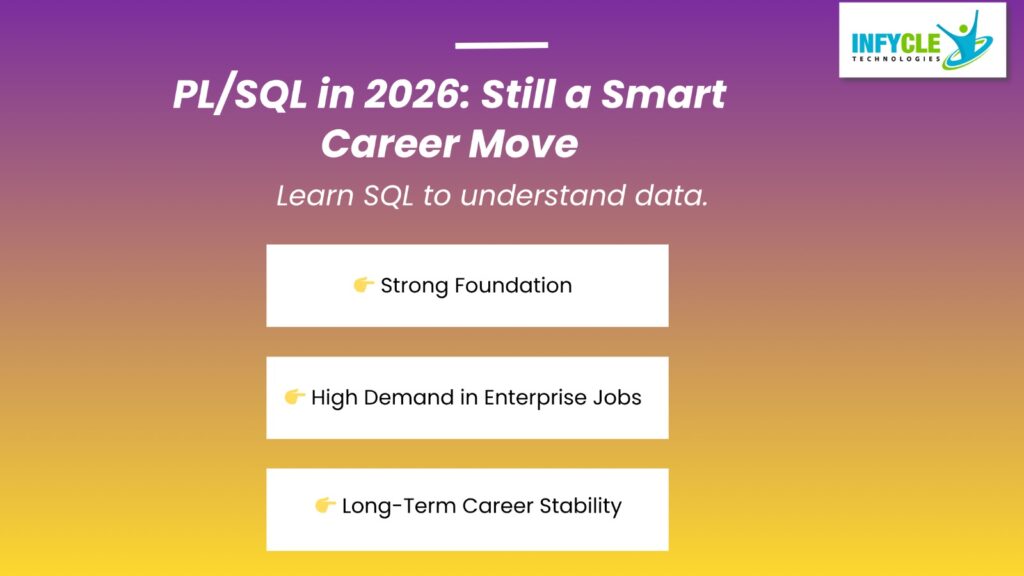
If your goal is stability and long-term growth, plsql is a solid choice.
While newer technologies come and go, databases remain essential. Every application needs structured data management. That’s why companies continue hiring professionals with strong database skills.
Enrolling in the Best Oracle PL/SQL Training in Chennai can help you gain practical exposure, making it easier to apply your knowledge in real-world scenarios.
Career Opportunities After Learning PL/SQL
Once you gain confidence in PL/SQL, several career paths open up:
- Oracle Developer
- Database Administrator (DBA)
- Data Analyst
- Backend Developer
In Chennai, many companies prefer candidates who understand both SQL and PL/SQL, especially for enterprise-level roles.
PL/SQL and Future Trends (2025–2026)
Technology is evolving, but PL/SQL continues to adapt alongside it.
Emerging trends:
- Integration with cloud-based databases
- Increased demand in the fintech and banking sectors
- Hybrid roles combining SQL with analytics tools
- Focus on data security and compliance.
These trends show that plsql is not outdated—it’s evolving with modern systems.
How Beginners Can Start Learning plsql
If you’re new to databases, starting can feel overwhelming. But a structured approach makes it easier.
Step-by-step path:
- Learn basic SQL concepts.
- Understand PL/SQL syntax.
- Practice writing procedures and functions.
- Work on real-time examples
- Build small projects
Consistency is key. Even beginners from non-technical backgrounds can learn effectively with the right guidance.
Common Mistakes to Avoid
Many learners face similar challenges while learning plsql
Avoid these:
- Jumping into advanced topics too quickly
- Ignoring practical practice
- Not understanding SQL basics first.
- Memorising instead of understanding logic
Focusing on fundamentals will make your learning journey smoother.
FAQ Section
1. Is PL/SQL difficult for beginners?
It may seem complex at first, but with step-by-step instructions and practice, beginners can understand it easily.
2. Is PL/SQL still in demand in 2026?
Yes, especially in industries like banking, healthcare, and enterprise IT systems.
3. Can non-IT students learn PL/SQL?
Absolutely. With the right training approach, even students from non-technical backgrounds can learn it.
4. How long does it take to learn PL/SQL?
You can gain basic knowledge in 2–3 months with consistent practice.
5. Where is PL/SQL mainly used?
PL/SQL is mainly used in Oracle databases for automation, data processing, and backend operations.
Conclusion
PL/SQL remains a valuable skill for anyone looking to build a strong career in database management. It offers stability, practical relevance, and strong demand across industries.
For learners in Chennai, gaining hands-on experience is crucial. Choosing the Best Software Training Institute in Chennai ensures you not only understand concepts but also apply them effectively in real-world scenarios.
Start Your Learning Journey with Confidence
If you’re ready to build a career in database technologies, Infycle Technologies offers the Best Oracle PL/SQL training in Chennai with real-time projects, expert guidance, and practical learning.
Take your first step with Infycle Technologies and move toward a secure and rewarding IT future.