Full Stack Interview Questions for Freshers

Introduction
Breaking into the tech industry can feel overwhelming, especially when you’re preparing for your first interview. Whether you’re from a technical or non-technical background, understanding what employers expect is the first step toward success. One of the smartest ways to prepare is by focusing on Full Stack interview questions that test both your frontend and backend knowledge.
If you’re based in CITY and looking to start your IT journey, you’ll notice a growing demand for skilled developers across startups and established companies. Recruiters are not just looking for degrees anymore—they want practical skills, problem-solving ability, and confidence during interviews.
This guide is designed to help freshers understand the most important interview questions, how to approach them, and what skills matter most in 2026. Whether you’re self-learning or planning to enroll in a Full Stack Developer Course In Chennai, this blog will give you a strong head start.
Why Full Stack Interviews Are Different
Unlike single-role interviews, Full Stack interviews test your versatility. Employers want someone who can handle both frontend (UI/UX) and backend (server, database) responsibilities.
Here’s what makes them unique:
- You’ll face questions from multiple technologies
- Real-world problem-solving is often tested
- Practical understanding is more important than theory
- Communication skills matter just as much as coding
In 2026, companies are focusing more on project-based hiring, meaning your ability to explain what you’ve built matters more than memorized answers.
Top Full Stack Interview Questions for Freshers
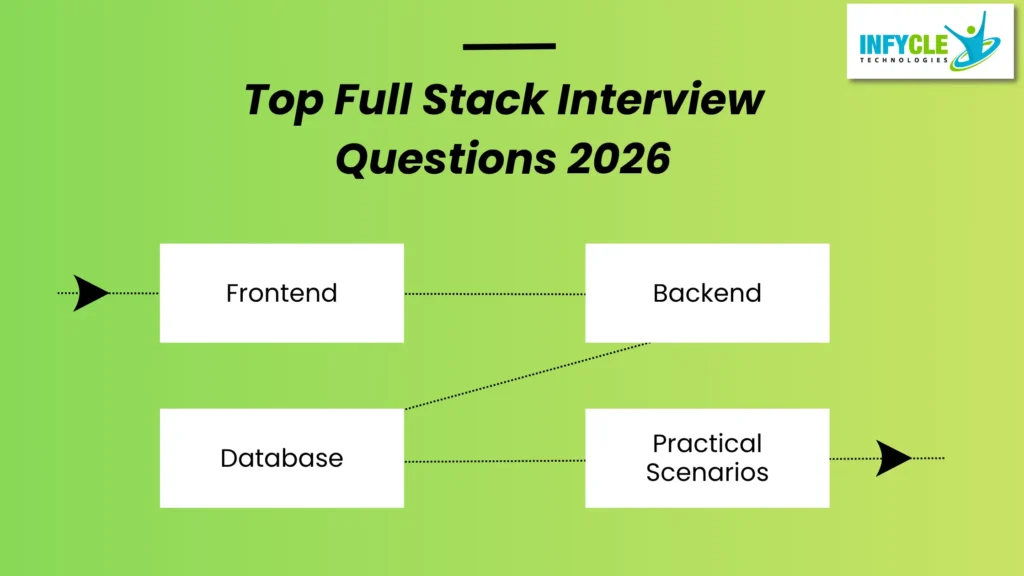
Let’s break down the most commonly asked Full Stack interview questions into categories.
1. Basic Technical Questions
These are usually asked to test your foundation:
- What is Full Stack development?
- Difference between frontend and backend?
- What are REST APIs?
- What is the role of a database in web applications?
👉 Tip: Keep answers simple and practical. Use examples from projects if possible.
2. Frontend-Related Questions
Frontend is your user interface layer. Expect questions like:
- What is the difference between HTML, CSS, and JavaScript?
- What is the DOM?
- Explain responsive design
- What are frameworks like React or Angular?
💡 In 2026, recruiters often prefer candidates familiar with React.js due to its widespread industry use.
3. Backend Questions
Backend handles logic, servers, and databases.
Common questions include:
- What is Node.js?
- Difference between SQL and NoSQL databases
- What is middleware?
- Explain CRUD operations
Even basic understanding can set you apart as a fresher.
4. Database Questions
You’ll likely be tested on:
- What is normalization?
- Difference between primary key and foreign key
- What is a query?
- Explain joins
According to recent hiring trends, over 70% of entry-level developer roles require database knowledge, even for frontend-heavy roles.
5. Practical & Scenario-Based Questions
This is where many freshers struggle.
Examples:
- How would you design a login system?
- How do you handle errors in an application?
- Explain a project you’ve worked on
- How do you improve website performance?
These questions test your real-world thinking, not just theory.
https://infycletechnologies.com/full-stack-developer-course/If you’re feeling unsure about where to start or how to build real projects, structured learning can make a big difference. A well-designed Full Stack Developer Course In Chennai can guide you through frontend, backend, and live projects step by step—making interview preparation much easier and more confident.
Key Skills Interviewers Look for in 2026
Today’s hiring is skill-first, not degree-first.
Here’s what recruiters expect from freshers:
- Basic understanding of frontend & backend
- Hands-on project experience
- Problem-solving mindset
- Version control knowledge (Git)
- Communication and confidence
Even if you’re from a non-technical background, focusing on these areas can help you compete with engineering graduates.
Common Mistakes Freshers Should Avoid
Many candidates fail not because they lack knowledge, but because of avoidable mistakes.
Avoid These:
- Memorizing answers without understanding
- Not preparing project explanations
- Ignoring basics like HTML & SQL
- Lack of confidence during interviews
- Not practicing coding problems
In CITY, where competition is increasing, preparation quality matters more than quantity.
How to Prepare Smartly for Full Stack Interviews
Instead of random preparation, follow a structured approach:
✔Step-by-Step Plan:
- Learn fundamentals (HTML, CSS, JS, backend basics)
- Build 2–3 real-world projects
- Practice common interview questions
- Mock interviews with friends or mentors
- Improve communication skills
Many learners in CITY are now choosing guided programs from the Best Software Training Institute in Chennai to speed up this process and gain industry exposure.
Industry Trends Freshers Should Know (2026)
To stand out, you need to align with current trends:
- AI integration in web applications
- Demand for MERN stack developers
- Cloud-based deployment skills
- API-first development approach
Reports suggest that Full Stack developers remain among the top 5 most in-demand tech roles globally, making this a future-proof career choice.
FAQ Section
1. What are the most important Full Stack interview questions for freshers?
Focus on basics like frontend, backend, databases, and simple project explanations. Interviewers test understanding more than complexity.
2. Do I need coding experience to crack a Full Stack interview?
Yes, basic coding knowledge and at least 2–3 projects are essential to demonstrate practical skills.
3. How can non-technical students prepare for Full Stack interviews?
Start with fundamentals, follow structured learning, and practice regularly. Many non-tech students successfully transition into IT with the right approach.
4. How long does it take to prepare for a Full Stack interview?
Typically, 3–6 months of focused learning and project building is enough for freshers.
5. Is joining a training institute necessary?
Not mandatory, but learning from the Best Software Training Institute in Chennai can provide guidance, real-time projects, and placement support.
Conclusion
Preparing for interviews doesn’t have to be stressful if you follow the right strategy. By focusing on core concepts, practicing real-world scenarios, and staying updated with industry trends, you can confidently face your first interview.
If you’re serious about building a strong foundation, enrolling in a Full Stack Developer Course In Chennai can accelerate your journey. With expert guidance and hands-on training from Infycle Technologies, you’ll not only learn the skills but also gain the confidence needed to succeed in today’s competitive job market.