Benefits of Learning Java from Industry Experts in OMR
Java remains one of the most reliable programming languages for building enterprise applications, web platforms, Android apps, cloud-based solutions, and backend systems. While thousands of learners start learning Java every year, many struggle to apply their knowledge in real projects because they focus only on theory. This is where the Benefits of Learning Java from experienced industry professionals become clear.
If you’re planning to join a Java Course In OMR, choosing trainers with real software development experience can significantly improve your learning journey. Instead of memorizing concepts, you’ll understand how Java is used in actual companies, how projects are built, and what employers expect from fresh graduates.
Whether you’re an engineering student, a commerce graduate exploring IT careers, a working professional switching domains, or someone restarting after a career break, learning from industry experts helps you develop practical skills with confidence.
In this guide, you’ll discover why experienced trainers make a difference, what skills you’ll gain, common mistakes beginners should avoid, and how expert-led training can prepare you for software development careers in Chennai and beyond.
Table of Contents
- Why Java Continues to Be a Valuable Skill
- What Does Learning from Industry Experts Mean?
- Benefits of Learning Java from Industry Experts
- Practical Skills You Develop
- Industry Training vs Self-Learning
- Common Mistakes Beginners Make
- How Industry Experts Prepare You for Interviews
- Career Opportunities After Java Training
- Mid-Article Learning Tip
- Conclusion
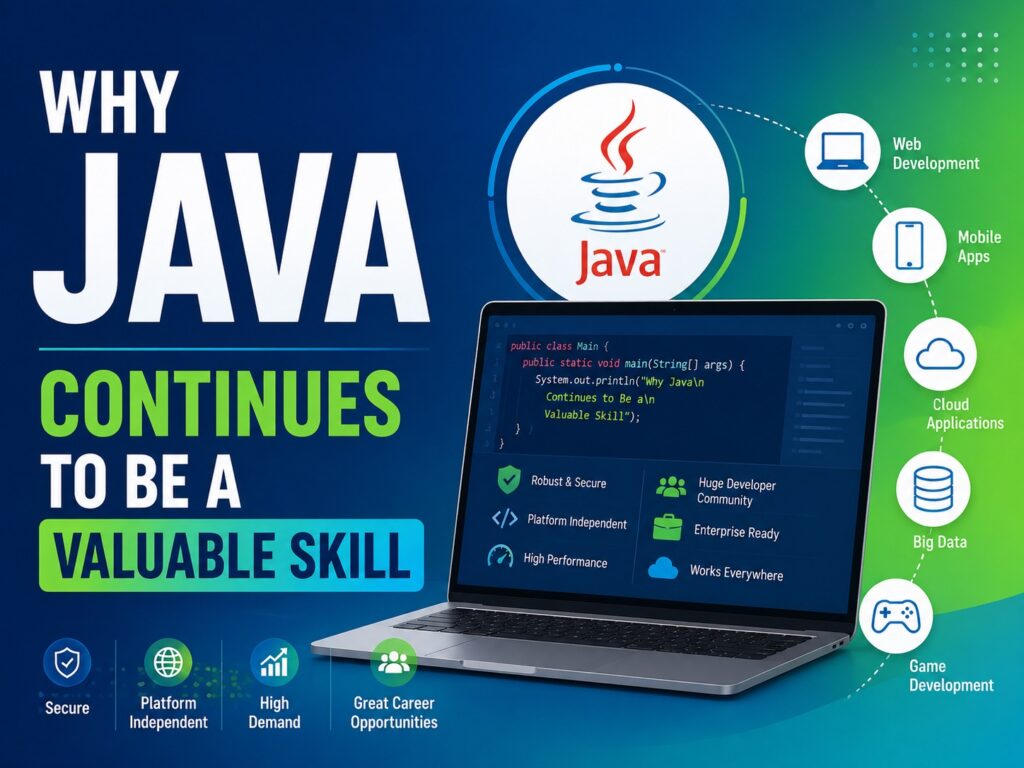
Why Java Continues to Be a Valuable Skill
Java has been trusted by businesses for decades because of its reliability, security, scalability, and platform independence. Many industries—including banking, healthcare, e-commerce, logistics, insurance, and telecommunications—continue to use Java for large-scale applications.
Some popular technologies built around Java include:
- Spring Boot
- Hibernate
- REST APIs
- Microservices
- Maven
- Gradle
- JUnit
- Apache Tomcat
- Jenkins
Because these technologies are widely used in software companies, employers continue to hire Java developers with practical knowledge rather than theoretical understanding.
What Does Learning from Industry Experts Mean?
Industry experts are professionals who have worked on real software projects. They understand development processes, coding standards, debugging techniques, deployment practices, teamwork, and client requirements.
Instead of only explaining syntax, experienced trainers teach:
- Why a concept is used
- Where it is applied
- Common mistakes
- Best coding practices
- Real project architecture
- Industry expectations
This practical perspective helps students learn faster and retain concepts longer.
Benefits of Learning Java from Industry Experts
1. Learn Real-World Development Practices
One of the biggest Benefits of Learning Java from experienced professionals is exposure to real software development.
Instead of solving only textbook examples, you’ll understand how applications are actually designed, developed, tested, and maintained.
You’ll learn:
- Project structure
- Source code management
- Modular programming
- Error handling
- Performance optimization
- Secure coding
These practical skills are difficult to gain through videos alone.
2. Better Understanding Through Practical Examples
Experienced trainers often explain programming concepts using situations they have encountered during software development.
For example:
Rather than simply explaining inheritance, they may demonstrate how inheritance is used in an employee management system or banking application.
Learning becomes easier because concepts are connected to real business problems.
3. Industry-Relevant Curriculum
Technology changes regularly.
An experienced trainer continuously updates course content based on current industry practices.
A quality Java Course In OMR often includes:
- Core Java
- Advanced Java
- JDBC
- Servlets
- JSP
- Spring Framework
- Spring Boot
- Hibernate
- REST APIs
- Git & GitHub
- SQL
- Maven
- Basic Microservices
This ensures students learn skills that companies actively use.
4. Faster Problem-Solving Skills
Programming isn’t only about writing code.
It’s about fixing bugs.
Industry professionals teach debugging techniques such as:
- Reading stack traces
- Using IDE debugging tools
- Identifying logical errors
- Optimizing inefficient code
These skills help learners become confident developers.
5. Exposure to Real Projects
Working on projects is one of the most valuable learning experiences.
Instead of creating small programs only, students may work on projects like:
- Student Management System
- Online Shopping Application
- Employee Payroll System
- Hospital Management System
- Banking Application
These projects strengthen both technical knowledge and resumes.
6. Learn Industry Coding Standards
Writing code that works is only the beginning.
Professional developers also write code that is:
- Readable
- Maintainable
- Reusable
- Well documented
- Properly tested
Industry experts teach coding practices followed by software companies.
This improves both project quality and interview performance.
7. Better Career Guidance
Experienced mentors understand recruitment processes.
They help students with:
- Resume preparation
- GitHub portfolio
- LinkedIn profile
- Coding assessments
- Mock interviews
- HR interview preparation
This guidance bridges the gap between learning and employment.
Practical Skills You Develop
After completing professional Java training, learners generally develop skills such as:
| Technical Skills | Career Skills |
|---|---|
| Core Java | Communication |
| OOP Concepts | Problem Solving |
| Collections | Team Collaboration |
| JDBC | Interview Readiness |
| Spring Boot | Project Presentation |
| REST APIs | Professional Coding |
| SQL | Resume Building |
| Git & GitHub | Continuous Learning |
These combined skills help learners perform better during interviews and workplace projects.
Industry Training vs Self-Learning
| Industry Expert Training | Self-Learning |
|---|---|
| Structured roadmap | Often unorganized |
| Real project guidance | Mostly tutorials |
| Immediate doubt clarification | Delayed answers |
| Mock interviews | Usually unavailable |
| Code reviews | Limited feedback |
| Placement support | Self-managed |
| Industry best practices | Difficult to learn independently |
While self-learning is valuable, expert guidance often accelerates progress by providing direction, feedback, and practical context.
Common Mistakes Beginners Make While Learning Java
Many beginners lose confidence because they approach Java without a proper learning plan. Learning from experienced trainers helps you avoid these common pitfalls early.
Memorizing Syntax Instead of Understanding Concepts
Java is more than keywords and syntax. Concepts such as Object-Oriented Programming (OOP), exception handling, collections, and multithreading form the foundation of professional Java development. Industry experts explain the “why” behind each concept, making it easier to apply your knowledge in real applications.
Skipping Hands-On Practice
Reading tutorials alone won’t make you a programmer. Writing code regularly is essential to improving your logical thinking and debugging skills. Experienced trainers encourage daily coding exercises, assignments, and mini-projects that reinforce classroom learning.
Ignoring Version Control
Many beginners overlook tools like Git and GitHub. However, most software companies use version control to manage code and collaborate with teams. Learning these tools alongside Java prepares you for real development environments.
Building Too Few Projects
Completing only simple console applications isn’t enough to impress employers. Industry mentors guide students through projects that demonstrate practical skills, helping them create a portfolio that showcases their abilities during interviews.
How Industry Experts Prepare You for Interviews
Technical knowledge is important, but interview success also depends on communication, confidence, and problem-solving ability.
Experienced trainers typically prepare students through:
- Resume-building workshops
- Java coding practice sessions
- Mock technical interviews
- HR interview guidance
- Aptitude and logical reasoning practice
- Real interview questions based on hiring trends
Instead of simply teaching Java concepts, they explain how interviewers evaluate candidates and what skills companies expect from entry-level developers.
Career Opportunities After Learning Java
One of the biggest Benefits of Learning Java is the wide range of career opportunities available across industries. Java continues to be a preferred programming language for enterprise software, web applications, cloud platforms, and backend development.
Some common job roles include:
- Java Developer
- Backend Developer
- Full Stack Java Developer
- Software Engineer
- Application Developer
- Web Application Developer
- Junior Software Programmer
- API Developer
As you gain experience, you can progress into roles such as Senior Java Developer, Technical Lead, Software Architect, or Engineering Manager. Java skills also provide a strong foundation for learning cloud technologies, DevOps tools, and microservices architecture.
A Simple Learning Roadmap for Java Beginners
Following a structured roadmap helps you build confidence and avoid confusion.
| Stage | Topics to Learn |
|---|---|
| Beginner | Java Basics, Variables, Loops, Arrays |
| Foundation | OOP, Collections, Exception Handling, File Handling |
| Intermediate | JDBC, SQL, Servlets, JSP |
| Advanced | Spring Framework, Spring Boot, Hibernate |
| Professional | REST APIs, Git, GitHub, Maven, Unit Testing |
| Portfolio | Live Projects, Code Reviews, Mock Interviews |
Learning each stage thoroughly before moving to the next creates a solid technical foundation.
Continue Your Learning Journey
If you’re serious about building a software development career, don’t focus only on completing a course. Choose training that emphasizes practical coding, real-world projects, code reviews, and continuous mentorship.
A well-designed learning program helps you understand concepts faster, solve programming problems confidently, and prepare for technical interviews with greater confidence.
Why Choose the Best Software Training Institute in Chennai?
Selecting the Best software training institute in chennai is about more than classroom sessions. Look for an institute that offers:
- Experienced industry trainers
- Updated Java curriculum
- Hands-on coding practice
- Live project experience
- Flexible learning schedules
- Placement preparation support
- Mock interviews and resume guidance
- Continuous mentorship after course completion
These factors contribute significantly to your overall learning experience and career readiness.
Frequently Asked Questions (FAQs)
1. What are the main Benefits of Learning Java from industry experts?
Learning from industry experts provides practical knowledge, exposure to real projects, coding best practices, and interview preparation.
Unlike theory-only learning, experienced professionals explain how Java is used in software companies, helping students become job-ready through hands-on practice and real-world examples.
2. Is a Java Course In OMR suitable for absolute beginners?
Yes. A well-structured Java Course In OMR usually starts with programming fundamentals before progressing to advanced topics like Spring Boot and REST APIs.
This step-by-step approach makes it suitable for students, fresh graduates, and career changers with little or no programming experience.
3. How long does it take to become job-ready in Java?
Most learners can build a strong foundation within three to six months with consistent practice.
The timeline depends on your learning pace, project experience, coding practice, and dedication to improving problem-solving skills.
4. Do Java developers still have good career opportunities?
Yes. Java remains one of the most widely used programming languages across industries such as finance, healthcare, retail, logistics, and enterprise software.
Many organizations continue to hire Java developers because of the language’s reliability, scalability, and extensive ecosystem.
5. Why is project-based learning important in Java?
Projects help you apply theoretical concepts to real-world scenarios, improve debugging skills, and build a professional portfolio.
Recruiters often value candidates who can demonstrate practical experience through meaningful Java projects.
Conclusion
Learning Java is not just about understanding programming concepts—it’s about knowing how to apply them in real software development environments. Guidance from experienced professionals can shorten your learning curve, improve your coding practices, and prepare you for technical interviews with confidence.
If you’re planning to enroll in a Java Course In OMR, choose a training program that combines expert mentorship, hands-on projects, industry-relevant tools, and placement preparation. The right learning environment can help you build practical skills, strengthen your portfolio, and take the first step toward a successful software development career.