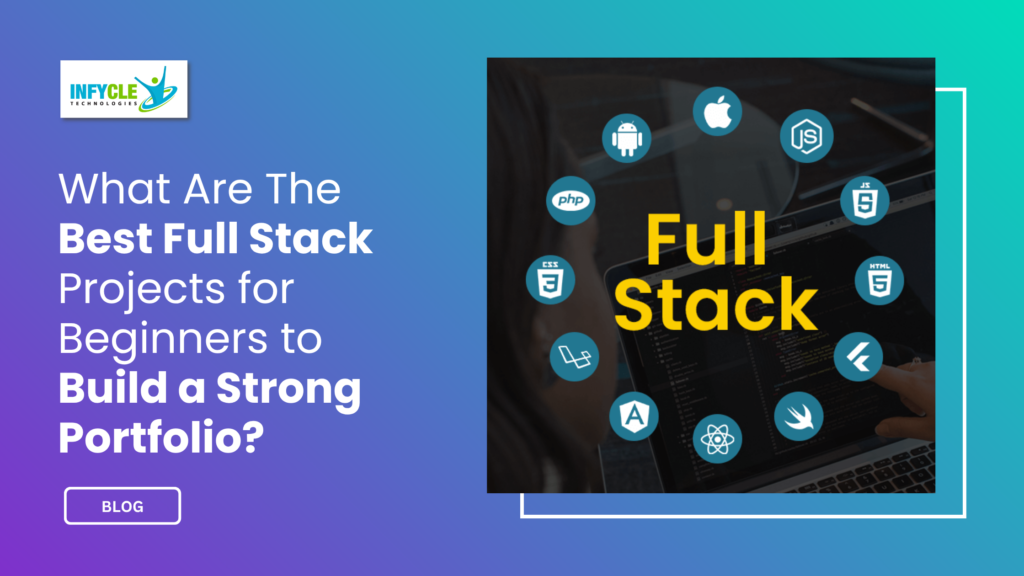
What Are the Best Full Stack Projects for Beginners to Build a Strong Portfolio?
Introduction
If you’re exploring Full Stack Projects for Beginners, you’re already taking an important step toward becoming a confident developer. Whether you’re a college student, a recent graduate, a freelancer, or someone planning a career change, building projects allows you to connect theory with real-world application. Employers are increasingly interested in what you can build rather than simply which technologies you’ve studied.
For learners in Chennai, where software companies continue to hire developers across startups, IT services, and product-based organizations, developing a strong portfolio can significantly improve interview confidence. This guide explores beginner-friendly full stack projects, explains why they matter, and shares practical tips to help you create projects that reflect your technical skills and continuous learning.
Why Projects Matter More Than Certificates
Completing an online course or earning a certificate certainly adds value to your resume. However, certificates alone rarely demonstrate your ability to solve technical problems.
Projects provide evidence that you can:
- Build complete web applications
- Design user-friendly interfaces
- Connect frontend and backend systems
- Work with databases
- Debug real-world issues
- Deploy applications successfully
Many hiring managers prefer candidates who can explain how they built an application rather than simply listing programming languages on their resume.
For beginners, even a simple but well-developed project can leave a stronger impression than several certificates without practical examples.
Skills You’ll Improve Through Full Stack Projects for Beginners
Every project helps strengthen multiple technical and problem-solving skills simultaneously.
Instead of learning technologies in isolation, you’ll understand how they work together within a complete application.
Some of the most valuable skills include:
Front-End Development
- HTML5
- CSS3
- Responsive Design
- JavaScript
- React or Angular
- UI Components
Back-End Development
- Node.js
- Express.js
- Java Spring Boot
- Python Django
- REST APIs
- Authentication
Database Skills
- MySQL
- PostgreSQL
- MongoDB
- Database Design
- CRUD Operations
Additional Skills
- Git & GitHub
- API Integration
- Deployment
- Version Control
- Debugging
- Team Collaboration
These practical experiences help beginners become more comfortable working on real software applications.
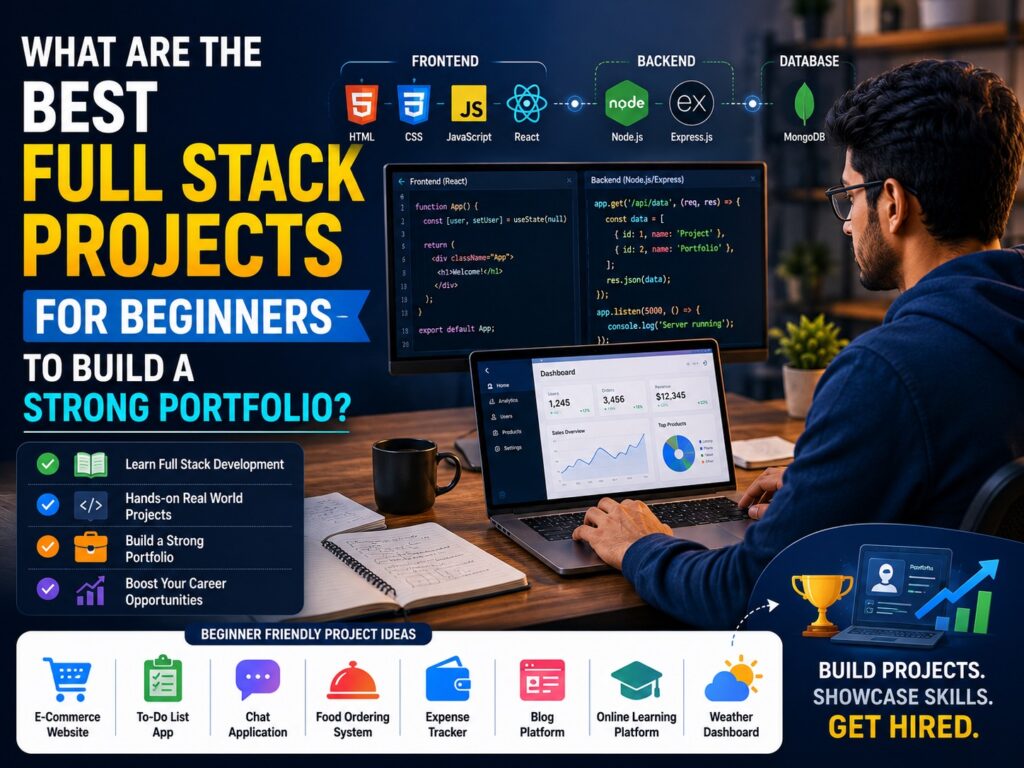
Best Full Stack Projects for Beginners to Build Your Portfolio
Rather than attempting large enterprise applications immediately, start with manageable projects that gradually introduce new concepts.
Here are some excellent project ideas.
1. Student Management System
This project is ideal for understanding database operations and CRUD functionality.
Features can include:
- Student Registration
- Login Authentication
- Course Management
- Attendance Tracking
- Result Management
- Admin Dashboard
You’ll learn:
- User Authentication
- Database Relationships
- API Development
- Form Validation
2. Online Library Management System
A library application introduces practical database concepts while remaining beginner-friendly.
Possible features include:
- Book Search
- Borrowing History
- User Login
- Admin Panel
- Book Categories
- Fine Calculation
This project teaches how different users interact with the same application using different permissions.
3. Personal Expense Tracker
Financial management applications remain popular portfolio projects because they demonstrate practical business logic.
Features may include:
- Income Tracking
- Expense Categories
- Monthly Reports
- Dashboard
- Graphs
- Budget Planning
You’ll also gain experience working with charts, authentication, and data visualization.
4. Job Portal Website
A job portal combines several important full stack concepts.
Users can:
- Register Accounts
- Upload Resumes
- Apply for Jobs
- Search Openings
- Save Job Listings
Recruiters can:
- Post Jobs
- Review Applications
- Manage Candidates
This project demonstrates your ability to develop role-based applications.
5. E-Commerce Website
Among all Full Stack Projects for Beginners, an e-commerce application remains one of the most valuable additions to a portfolio.
Features include:
- Product Listings
- Shopping Cart
- User Accounts
- Payment Integration (Demo)
- Wishlist
- Order Tracking
- Product Reviews
This single project allows you to demonstrate frontend design, backend development, database management, and API integration
Don’t Just Build Projects—Solve Problems
One common mistake beginners make is copying tutorials line by line.
While tutorials are useful for learning concepts, recruiters often ask questions about design decisions, architecture, and challenges you faced.
Instead of reproducing an existing project, try improving it.
For example:
Instead of a basic To-Do List,
Create:
- Priority Management
- Notifications
- User Login
- Dark Mode
- Calendar Integration
- Team Collaboration
These improvements demonstrate creativity and independent thinking.
2026 Trend: AI-Powered Full Stack Applications
Artificial Intelligence is becoming a valuable addition to modern web applications.
Even beginner projects can include simple AI-powered features such as:
- AI Chat Support
- Smart Search Suggestions
- Resume Analysis
- Content Summarization
- Image Recognition APIs
- Personalized Recommendations
Understanding how to integrate AI services into traditional web applications gives students additional exposure to technologies increasingly used across the software industry.
If you’re planning to become a software developer, don’t wait until you’ve mastered every programming language before building projects. Start with one practical application, improve it step by step, and document your learning on GitHub. A consistent portfolio often demonstrates growth and problem-solving ability more effectively than simply listing technical skills on a resume.
Common Mistakes Beginners Make While Building Full Stack Projects
Building projects is one thing; building projects that genuinely showcase your skills is another. Many beginners unknowingly make mistakes that reduce the impact of their portfolio during technical interviews.
Here are some common pitfalls to avoid.
1. Following Tutorials Without Understanding
Tutorials are excellent for learning new concepts, but copying code line by line without understanding the logic won’t help during interviews.
Recruiters often ask questions like:
- Why did you choose this database?
- How does authentication work?
- Why did you structure the API this way?
- How would you improve application performance?
Being able to explain your decisions demonstrates genuine understanding.
2. Ignoring Responsive Design
Today, users access websites from desktops, tablets, and smartphones.
A responsive application should:
- Adapt to different screen sizes
- Maintain readability
- Provide smooth navigation
- Deliver a consistent user experience
Employers appreciate candidates who consider usability alongside functionality.
3. Not Using Git and GitHub
Version control is an essential developer skill.
Hosting your projects on GitHub demonstrates:
- Consistent coding practice
- Version management
- Documentation skills
- Professional workflow
A well-maintained GitHub profile often strengthens a developer’s portfolio.
4. Skipping Documentation
A project without documentation can be difficult for others to understand.
Include a README file explaining:
- Project overview
- Technologies used
- Installation steps
- Features
- Folder structure
- Future improvements
Clear documentation reflects professionalism and makes your work easier to evaluate.
How to Showcase Full Stack Projects for Beginners Professionally
Completing a project is only part of the journey. Presenting it effectively can make a significant difference during internships and job interviews.
Here are a few practical ways to showcase your work:
Create a Personal Portfolio Website
A portfolio website allows recruiters to explore your work in one place.
Include:
- About Me
- Technical Skills
- Featured Projects
- GitHub Profile
- Resume
- Contact Information
It also gives you an opportunity to demonstrate your frontend development skills.
Keep Your GitHub Repository Organized
Each repository should contain:
- Clean code
- Proper folder structure
- Meaningful commit history
- Screenshots
- Setup instructions
- Live demo link (if available)
These details help recruiters understand your development process.
Explain Your Learning Journey
Instead of only listing project names, describe:
- The problem you solved
- Technologies used
- Challenges you encountered
- How you resolved them
- Features you plan to add
This storytelling approach reflects analytical thinking and continuous improvement.
Industry Trends Every Beginner Should Know in 2026
Full stack development continues to evolve as businesses adopt modern technologies and cloud-native applications.
Some of the key trends shaping software development include:
AI-Assisted Development
Developers increasingly use AI tools for:
- Code suggestions
- Debugging
- Documentation
- Test case generation
- API integration
- Productivity improvements
While AI speeds up development, employers still expect developers to understand programming fundamentals and software architecture.
Cloud Deployment Skills
Many organizations now deploy applications using cloud platforms such as AWS, Microsoft Azure, and Google Cloud.
Understanding deployment concepts, containerization, and CI/CD pipelines can complement your development skills and make your portfolio more relevant.
API-Driven Applications
Modern applications communicate through APIs.
Building projects that integrate payment gateways, maps, weather services, or authentication providers demonstrates practical development experience.
Why Practical Learning Creates Better Developers
Many aspiring developers spend months watching videos but postpone building applications until they feel “ready.”
In reality, learning happens most effectively through practice.
Developing Full Stack Projects for Beginners helps you:
- Apply programming concepts
- Improve debugging skills
- Strengthen logical thinking
- Build confidence
- Learn software architecture
- Understand real-world development workflows
Every completed project becomes evidence of your growing expertise.
Frequently Asked Questions
1. Which are the best Full Stack Projects for Beginners to build first?
Beginner-friendly projects include Student Management Systems, Library Management Systems, Expense Trackers, E-commerce Websites, Job Portals, and Task Management Applications. These projects cover frontend development, backend programming, databases, and API integration.
2. How many projects should I include in my portfolio?
Quality matters more than quantity. Four to six well-documented projects that solve real problems are usually more valuable than many unfinished or repetitive applications.
3. Should beginners deploy their projects online?
Yes. Hosting projects using platforms such as Vercel, Netlify, Render, or cloud services allows recruiters to interact with your applications and evaluate your work more effectively.
4. Do recruiters check GitHub profiles?
Many companies review GitHub repositories during the hiring process. A profile with consistent commits, clean documentation, and practical applications reflects genuine interest in software development.
5. Can students from non-technical backgrounds become Full Stack Developers?
Absolutely. Many successful developers began with little or no programming experience. With structured learning, consistent coding practice, and project-based development, students from Arts, Commerce, Science, and other backgrounds can successfully transition into software development careers.
Conclusion
Building a strong portfolio is one of the smartest investments aspiring developers can make. Every project helps strengthen technical knowledge, improve problem-solving skills, and demonstrate practical experience that employers value. Rather than waiting until you feel completely confident, start with simple applications, refine them over time, and continue learning from each project you build.
For learners looking to gain practical experience through structured guidance, a Full Stack Developer Course in Chennai can provide the right combination of technical knowledge, live projects, mentorship, and career-focused learning. Choosing an institute that emphasizes hands-on development helps bridge the gap between classroom concepts and real-world software engineering.
If you’re planning to build a career in software development, focus on learning by creating real applications instead of only completing theoretical lessons. At Infycle Technologies, the Full Stack Developer Course in Chennai is designed to help students develop practical coding skills through live projects, GitHub portfolio development, and industry-relevant technologies. A strong portfolio built with consistent practice can become one of your greatest strengths when applying for internships and full-time developer roles.