What are the Skills Required for Full Stack Developers in 2026?
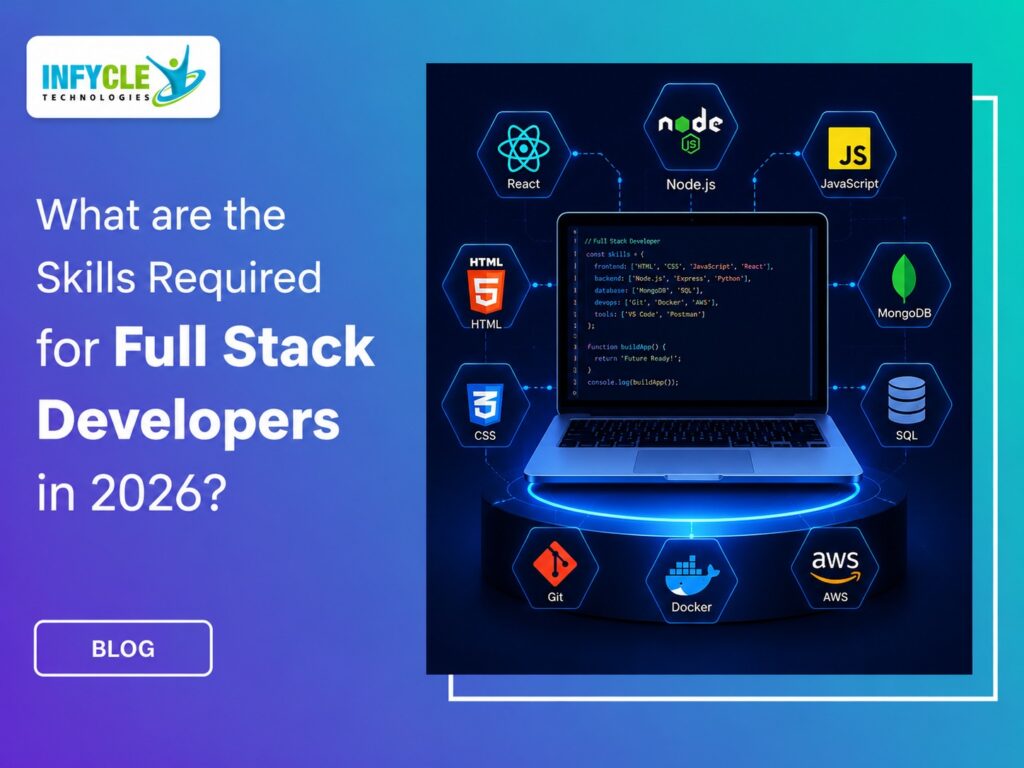
Full stack development is still one of the most fulfilling job options for students, recent graduates, and working professionals, and technology careers are changing more quickly than ever. Companies are no longer looking for developers who only know coding basics. In 2026, businesses expect developers to understand frontend technologies, backend systems, cloud platforms, APIs, AI integrations, and even user experience fundamentals. That is exactly why understanding the Skills Required for Full Stack Developers has become important for anyone planning to enter the IT industry. Whether you are from an engineering background, commerce stream, arts degree, or someone restarting your career after a break, full stack development offers flexible opportunities across startups, software companies, freelancing platforms, and remote jobs.
In CITY, the demand for job-ready developers is increasing rapidly as businesses continue their digital transformation journey. Students searching for practical career-oriented learning are now choosing programs like a Full Stack Developer Course in Chennai to gain hands-on experience with real-world tools and projects.
If you are wondering which technical and practical skills will matter most in 2026, this guide will help you understand exactly what modern employers expect from full stack developers.
Why Full Stack Development Is Still a High-Demand Career in 2026
The software industry is moving toward faster product development cycles. Companies prefer hiring professionals who can manage multiple layers of application development instead of depending on separate frontend and backend teams for every task.
According to recent industry reports, full stack developer roles remain among the top 10 most in-demand tech jobs globally. Startups especially prefer developers who can:
- Build user interfaces
- Manage databases
- Create APIs
- Handle deployment
- Work with cloud platforms
- Integrate AI-powered tools
This trend has made the Skills Required for Full Stack Developers more diverse and exciting than ever before.
For students in CITY looking to build stable careers, this field offers strong salary growth, remote work flexibility, and freelancing opportunities.
Core Frontend Skills Every Full Stack Developer Needs
What users see and interact with on websites or applications is the main emphasis of frontend development. In 2026, companies expect developers to build fast, responsive, and user-friendly interfaces.
1. HTML5 and CSS3
These remain the foundation of web development. Webpage structure and responsive design for desktop, tablet, and mobile users are essential skills for developers.
Important areas include:
- Flexbox and Grid
- Responsive layouts
- CSS animations
- Accessibility standards
- Dark mode optimization
2. JavaScript Mastery
JavaScript continues to dominate modern web development. One of the major Skills Required for Full Stack Developers is writing clean and efficient JavaScript code.
Developers should understand:
- ES6+ concepts
- Async programming
- DOM manipulation
- API handling
- Event-driven architecture
3. Frontend Frameworks
Modern companies prefer developers familiar with frameworks like:
- React.js
- Angular
- Vue.js
- Next.js
Among these, React remains highly popular because of its component-based architecture and scalability.
Backend Skills That Matter in 2026
A strong backend ensures that applications run smoothly, securely, and efficiently.
Popular Backend Technologies
Full stack developers should know at least one backend language and framework.
Popular choices include:
- Node.js
- Python
- Java
- PHP
- .NET
Node.js remains widely used because developers can use JavaScript for both frontend and backend development.
Database Management
Another essential part of the Skills Required for Full Stack Developers is understanding databases.
Developers should learn:
SQL Databases
- MySQL
- PostgreSQL
NoSQL Databases
- MongoDB
- Firebase
Knowing how to design scalable databases gives developers a major advantage during interviews and real-time projects.
API Development and Integration Skills
Modern applications depend heavily on APIs. From payment gateways to AI chatbots, APIs connect systems together.
Developers should understand:
- REST APIs
- GraphQL
- Authentication systems
- JSON handling
- Third-party API integration
For example, many companies in 2026 are integrating AI tools into applications using APIs from platforms like OpenAI and Google Cloud AI.
Cloud Computing and DevOps Basics
Cloud knowledge is no longer optional.
Businesses now deploy applications on cloud platforms instead of traditional servers. Because of this, cloud-related expertise has become one of the fastest-growing Skills Required for Full Stack Developers.
Important Cloud Platforms
- AWS
- Microsoft Azure
- Google Cloud Platform
DevOps Fundamentals
Developers should also understand:
- Git and GitHub
- CI/CD pipelines
- Docker
- Kubernetes basics
- Deployment automation
Learning these tools helps developers manage applications efficiently in real-world environments.
AI and Automation Awareness in Full Stack Development
The emergence of AI-assisted development is one of the most significant changes in 2026.
Developers are now using tools like:
- GitHub Copilot
- ChatGPT
- AI code generators
- Automated testing tools
However, companies still value developers who understand logic, debugging, and architecture. AI can speed up coding, but problem-solving ability remains critical.
This means future developers should learn how to work alongside AI rather than depend entirely on it.
Soft Skills That Employers Expect
Technical skills alone are not enough anymore.
Recruiters now prioritize developers who can communicate clearly, collaborate with teams, and solve business problems effectively.
Important Soft Skills
- Problem-solving
- Communication
- Team collaboration
- Time management
- Adaptability
- Critical thinking
Students from non-technical backgrounds often underestimate their strengths here. In reality, communication and creativity can become huge advantages in software careers.
If you want to build practical coding skills with real-time projects, choosing structured training can make the learning journey easier. Many students in CITY are now enrolling in industry-focused programs to gain hands-on experience instead of relying only on theory-based learning.
Cybersecurity and Secure Coding Knowledge
Security has become a major concern for businesses worldwide. Developers need to understand how to create secure apps.
Important concepts include:
- Authentication and authorization
- Data encryption
- Secure APIs
- Preventing SQL injection
- Preventing XSS attacks
Companies now consider secure coding one of the most valuable Skills Required for Full Stack Developers, especially for fintech, healthcare, and e-commerce applications.
UI/UX Understanding Gives Developers an Advantage
Modern businesses care deeply about user experience.
Full stack developers who understand the principles of design can produce applications that are both aesthetically beautiful and useful.
Useful areas to learn include:
- User flow
- Wireframing
- Figma basics
- Responsive design principles
- Accessibility standards
This skill becomes especially useful for freelancers and startup developers handling complete projects independently.
Real-World Project Experience Matters More Than Certificates
In 2026, recruiters increasingly prefer portfolios over theoretical resumes.
Students should work on projects like:
- E-commerce websites
- AI-integrated applications
- Task management systems
- Blogging platforms
- CRM dashboards
Hands-on projects demonstrate practical understanding and improve interview confidence significantly.
This is why many learners search for the Best Software Training in Chennai that includes internship support, live projects, and placement-focused learning.
How Beginners Can Start Learning Full Stack Development
If you are starting from zero, the learning process becomes easier when divided into stages.
Beginner Roadmap
Step 1 Learn Basics
- HTML
- CSS
- JavaScript
Step2: Learn Frontend Frameworks
- React or Angular
Step 3: Learn Backend Development
- Node.js or Python
Step4: Work with Databases
- MySQL
- MongoDB
Step 5: Build Projects
- Portfolio website
- CRUD applications
- Real-world mini projects
Step 6 Learn Deployment
- GitHub
- Cloud hosting
- CI/CD basics
With consistent practice, even students from non-technical backgrounds can become job-ready developers within months.
Future Trends Full Stack Developers Should Watch
The technology landscape will continue evolving rapidly after 2026.
Here are some upcoming trends developers should monitor:
- AI-powered web applications
- Low-code and no-code integrations
- Progressive Web Apps (PWAs)
- Voice-enabled interfaces
- Blockchain-based applications
- Edge computing
- Serverless architecture
Developers who continuously upgrade their skills will always remain valuable in the industry.
Frequently Asked Questions
1. What are the most important Skills Required for Full Stack Developers in 2026?
The most important skills include JavaScript, React, backend development, cloud computing, database management, API integration, cybersecurity basics, and AI tool awareness.
2. Can non-technical students learn full stack development?
Yes. Students from arts, commerce, and science backgrounds can successfully learn full stack development with structured practice and project-based learning.
3. Is coding enough to become a full stack developer?
No. Employers also expect communication skills, problem-solving ability, teamwork, and understanding of deployment and security practices.
4. How long does it take to become job-ready in full stack development?
With consistent practice and proper guidance, beginners can become job-ready within 6–12 months depending on learning pace and project exposure.
5. Why are companies hiring more full stack developers now?
Businesses prefer professionals who can handle multiple aspects of development because it improves productivity, reduces hiring costs, and speeds up project delivery.
Conclusion
Full stack development continues to be one of the strongest technology career paths for students, freshers, freelancers, and career changers. The industry now expects developers to combine coding expertise with cloud knowledge, AI awareness, security practices, and real-world problem-solving skills.
If you are planning to build a future-ready tech career, joining a practical Full Stack Developer Course in Chennai can help you gain industry-relevant exposure faster. At Infycle Technologies, learners get hands-on training, real-time project experience, and career-focused guidance designed to prepare them for modern software development roles in CITY and beyond.