Can Full Stack Developers Come From Non-IT Backgrounds?
A few years ago, software development careers were mostly associated with engineering graduates and computer science students. That idea has changed rapidly. In 2026, companies care far more about practical skills, project experience, and problem-solving ability than your degree title. That’s why many aspiring Full Stack Developers today come from Arts, Commerce, Science, MBA, and even completely non-technical backgrounds.
In cities like Chennai, where the tech industry continues to expand across startups, SaaS companies, e-commerce, healthcare, fintech, and AI-driven businesses, the demand for skilled web developers is growing faster than ever. Many students who once thought coding was “only for IT people” are now successfully transitioning into tech careers through structured learning and hands-on practice.
The best part? You do not need to become a coding genius overnight. With the right roadmap, consistent practice, and industry-focused learning, non-IT students can absolutely build successful careers as developers. Whether you are a college student, a job seeker with a career gap, a freelancer, or someone looking for a stable career shift, this guide will help you understand how to enter the world of Full Stack Developers confidently in 2026.
Who Are Full Stack Developers?
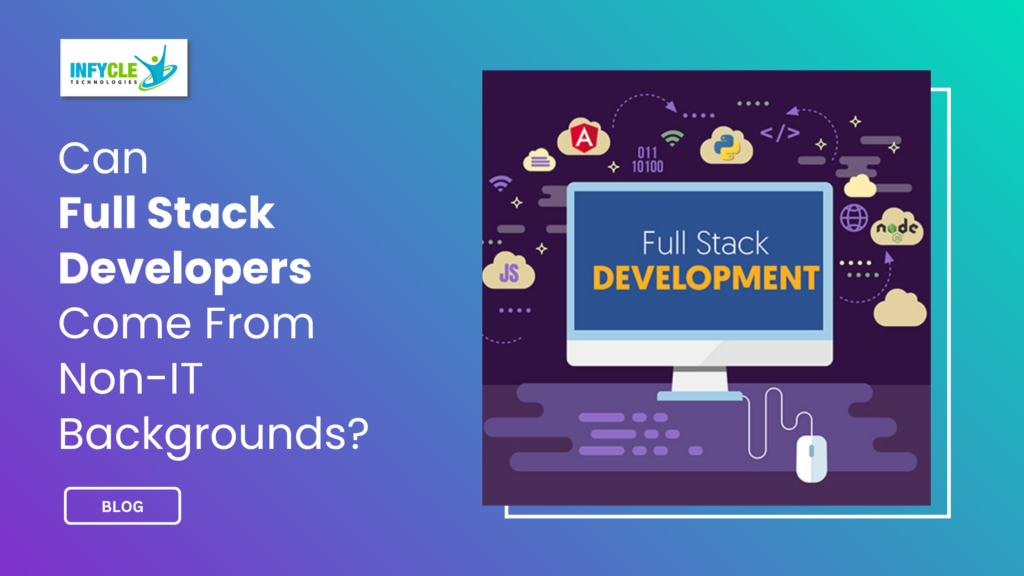
Full Stack Developers are professionals who can work on both the front-end and back-end of a web application.
That means they can:
- Design user interfaces
- Build responsive websites
- Handle databases
- Create APIs
- Manage server-side logic
- Deploy applications to the cloud
In simple terms, they can build complete web applications from start to finish.
Popular technologies used in full stack development include:
Front-End Technologies
- HTML5
- CSS3
- JavaScript
- React.js
- Angular
Back-End Technologies
- Node.js
- Python
- Java
- PHP
Databases & Tools
- MySQL
- MongoDB
- GitHub
- Docker
- AWS
According to recent developer hiring reports in 2025, companies increasingly prefer multi-skilled developers who can handle multiple layers of application development instead of depending on separate teams for every small task. This trend is expected to continue strongly into 2026 and beyond.
Why Non-IT Students Are Entering Tech Careers in 2026
The software industry is becoming more skill-driven than degree-driven.
Many employers now evaluate candidates based on:
- Portfolio projects
- Problem-solving ability
- Internship experience
- GitHub profiles
- Practical coding knowledge
This shift has opened doors for thousands of non-technical graduates.
For example:
- Commerce students move into web development after learning JavaScript and databases.
- Mechanical engineers switch careers for better salary growth.
- Arts graduates become UI-focused developers.
- Freelancers learn development to offer website-building services.
Several Chennai-based startups also hire junior developers based on practical assessments rather than academic specialization alone.
This is one reason why enrollment in a Full Stack Developer Course In Chennai has increased significantly among non-engineering students over the last two years.
Is Coding Difficult for Beginners?
One of the biggest fears among non-IT learners is:
“What if coding is too hard for me?”
The truth is that coding feels difficult only in the beginning because it is unfamiliar. Just like learning spoken English, graphic design, or digital marketing, programming becomes easier with regular practice.
Most beginners struggle initially with:
- Syntax
- Logical thinking
- Debugging errors
- Understanding how applications work
But these are normal learning stages.
Modern learning platforms, project-based teaching methods, AI coding assistants, and interactive coding environments have made learning easier than ever in 2026.
The key is consistency, not background.
Skills Non-IT Students Need to Become Full Stack Developers
You do not need advanced mathematics or deep computer science theory to start.
Instead, focus on these practical skills:
1. Basic Programming Logic
Understanding variables, loops, functions, and conditions.
2. Front-End Development
Learning how websites are designed and interact with users.
3. Back-End Development
Understanding servers, APIs, and databases.
4. Problem-Solving Skills
Debugging and logical thinking are essential.
5. Real-Time Project Building
Projects matter more than certificates in most interviews.
6. Communication Skills
Developers often work in teams and explain ideas to clients or managers.
Many successful Full Stack Developers started by building simple portfolio websites and gradually moved into advanced projects.
Step-by-Step Roadmap for Non-IT Students
Step 1: Start With Web Basics
Learn:
- HTML
- CSS
- JavaScript
These technologies form the foundation of web development.
Step 2: Learn Front-End Frameworks
React.js remains one of the most in-demand frameworks in 2026.
Companies look for developers who can create fast and responsive user interfaces.
Step 3: Understand Back-End Development
Learn Node.js or Python-based frameworks to handle server-side operations.
Step 4: Work With Databases
Practice storing and retrieving data using MySQL or MongoDB.
Step 5: Build Projects
Projects could include:
- E-commerce websites
- Student portals
- Blog applications
- Task management apps
Step 6: Create a Portfolio
A strong GitHub portfolio increases interview opportunities significantly.
Step 7: Apply for Internships
Internships help beginners gain confidence and industry exposure.
2026 Industry Trends Every Aspiring Developer Should Know
The role of Full Stack Developers is evolving rapidly.
Here are major trends shaping the industry:
AI-Assisted Development
Developers now use AI tools to improve coding speed and debugging efficiency.
Cloud-Based Applications
AWS and cloud deployment skills are becoming highly valuable.
Mobile-Friendly Development
Businesses prioritize responsive applications across devices.
Low-Code Integration
Even with low-code platforms growing, companies still need developers who understand customization and scalability.
Cybersecurity Awareness
Basic security practices are becoming mandatory for developers.
Students learning modern development stacks with real-time project exposure are gaining a major advantage in the job market. If you are planning to enter the software industry without an IT background, choosing practical training matters more than just theory. A project-focused learning environment with mentorship, live assignments, and interview preparation can make your transition much smoother and faster.
Common Challenges Non-IT Students Face
Fear of Technology
Many students assume developers must be “born coders.” That is simply not true.
Lack of Confidence
Beginners often compare themselves with experienced programmers too early.
Information Overload
There are thousands of tutorials online, which can confuse learners.
No Real Projects
Watching tutorials alone does not build confidence.
This is why structured guidance from the Best Software Training in Chennai can help learners stay focused and follow a proper roadmap instead of jumping randomly between technologies.
How Long Does It Take to Become Job-Ready?
The timeline depends on consistency and learning style.
Average Learning Timeline
- 2–3 months: Basics
- 4–6 months: Intermediate projects
- 6–9 months: Job-ready skills with portfolio
Students who practice daily and build projects usually progress much faster.
In Chennai, many training institutes now focus on:
- Internship-style learning
- Industry-based assignments
- Mock interviews
- Resume preparation
- GitHub portfolio development
These practical approaches help beginners become employable faster.
Career Opportunities for Full Stack Developers in 2026
The demand for Full Stack Developers continues to grow across industries.
Job Roles Include:
- Full Stack Web Developer
- Front-End Developer
- Back-End Developer
- React Developer
- MERN Stack Developer
- Software Engineer
- Web Application Developer
Industries Hiring Developers
- Healthcare tech
- Banking & fintech
- E-commerce
- SaaS companies
- EdTech
- AI startups
Freelancing opportunities are also increasing rapidly. Many developers now work remotely for global clients while living in Chennai.
Do Companies Care About Degrees Anymore?
For many entry-level development jobs, skills matter more than degrees.
Recruiters now pay close attention to:
- Projects
- Internships
- Technical assessments
- Coding skills
- Problem-solving ability
A strong portfolio can often outweigh academic background.
That’s why many non-engineering students are successfully entering software careers after completing a Full Stack Developer Course In Chennai with practical exposure and real-time projects.
FAQ Section
Can non-IT students really become Full Stack Developers?
Yes. Many successful developers today come from Arts, Commerce, Science, and non-engineering backgrounds. Practical skills and projects matter more than your degree in many companies.
Is full stack development a good career in 2026?
Yes. Web development demand remains strong because businesses continue building digital platforms, SaaS products, and cloud applications across industries.
How much salary can beginners expect?
Entry-level salaries vary based on skills, projects, and company type. Freshers with strong portfolios often receive competitive packages in Chennai and other major tech cities.
Which programming language is best for beginners?
JavaScript is one of the best starting points because it is used in both front-end and back-end development.
Do I need coaching to learn full stack development?
Self-learning is possible, but structured training often helps beginners stay consistent, practice projects, and prepare for interviews more effectively.
Conclusion
Non-IT students no longer need to feel excluded from software careers. The tech industry in 2026 is more open, skill-driven, and opportunity-focused than ever before. With dedication, project practice, and the right guidance, anyone can build a successful development career regardless of academic background.
If you are looking to build practical coding skills, gain real-time project experience, and prepare for modern software careers, joining a quality Full Stack Developer Course In Chennai can be a strong first step toward entering the industry confidently. At Infycle Technologies, students get hands-on exposure, mentorship, and career-focused training designed for beginners as well as career changers.