How to Start a Career in Cloud Computing in 2026?

Cloud computing is no longer limited to large IT companies. Today, startups, hospitals, banks, e-commerce brands, and even educational institutions rely on cloud platforms to manage data, applications, and digital services. Because of this rapid shift, companies are actively searching for professionals who understand cloud technologies and can manage modern digital infrastructure efficiently. For students and job seekers in Chennai, this creates a major opportunity. Whether you come from an Engineering, Science, Commerce, or Arts background, building a Career in Cloud Computing is now more accessible than ever. Many beginners are entering the field through practical training, certifications, and project-based learning instead of traditional IT experience alone.
The demand is also growing at a remarkable pace. According to recent industry reports, cloud-related roles are expected to remain among the top technology jobs through 2030. Businesses are increasing investments in platforms like AWS, Microsoft Azure, and Google Cloud to support AI, cybersecurity, remote work, and scalable digital operations.
If you are wondering how to enter this field without confusion or technical overwhelm, this guide will walk you through the exact roadmap, required skills, certifications, career options, and industry trends shaping 2026.
Why Cloud Computing Is a Smart Career Choice in 2026
Technology trends change quickly, but cloud computing continues to expand year after year. Companies are moving away from expensive physical servers and adopting cloud-based systems because they are flexible, scalable, and cost-effective.
Here’s why many fresh graduates are choosing a Career in Cloud Computing:
- High demand across industries
- Attractive starting salaries
- Remote and freelance opportunities
- Multiple career paths beyond coding
- Strong future growth with AI and automation integration
In Chennai, many IT companies are hiring cloud support engineers, cloud administrators, DevOps associates, and infrastructure analysts. Even non-technical graduates are entering support and cloud operations roles after proper training.
Another advantage is flexibility. You do not need to become an advanced programmer immediately. Many cloud roles focus more on deployment, management, monitoring, and automation rather than full-scale software development.
Understanding the Basics of Cloud Computing
Before starting your learning journey, it’s important to understand what cloud computing actually means.
Cloud computing, to put it simply, is the use of the internet to store and access databases, services, and applications rather than local systems.
Popular cloud platforms include:
- Amazon Web Services (AWS)
- Microsoft Azure
- Google Cloud Platform (GCP)
These platforms provide services such as:
- Virtual servers
- Cloud storage
- Networking
- Security management
- AI and machine learning tools
- Database hosting
A successful Career in Cloud Computing usually begins with learning how these services work in real-world business environments.
Skills You Need to Build a Career in Cloud Computing
One of the biggest misconceptions is that cloud computing requires deep coding expertise from day one. In reality, beginners can start with foundational skills and gradually move into advanced areas.
Essential Beginner Skills
1. Basic Networking Knowledge
Understanding IP addresses, servers, domains, and networking concepts helps you understand how cloud systems communicate.
2. Operating Systems
Linux knowledge is highly valuable because many cloud servers run on Linux environments.
3. Cloud Platform Basics
Learning AWS or Azure fundamentals gives you practical exposure to cloud environments.
4. Security Awareness
Companies prioritize cloud security. Even entry-level professionals should understand authentication, permissions, and data protection basics.
5. Automation and Scripting
Simple scripting with Python or Shell scripting can improve efficiency and open advanced career opportunities later.
AWS vs Azure: Which One Should Beginners Learn?
This is one of the most common questions among students in Chennai.
AWS
Amazon Web Services remains the global market leader in cloud infrastructure. It is widely used by startups, multinational companies, and SaaS businesses.
Choosing AWS Training In Chennai can help students learn:
- EC2
- S3 Storage
- IAM
- Cloud deployment
- Monitoring services
AWS certifications are highly recognized and valuable for freshers entering the industry.
Azure
Microsoft Azure is growing rapidly, especially among enterprise organizations and corporate environments.
Many learners choose Azure Training In Chennai because Azure integrates well with Microsoft tools already used by companies.
Azure is particularly useful for:
- Enterprise cloud management
- Hybrid cloud environments
- Business application hosting
- Security and compliance operations
For beginners, either platform is a strong starting point. What matters most is gaining practical hands-on experience.
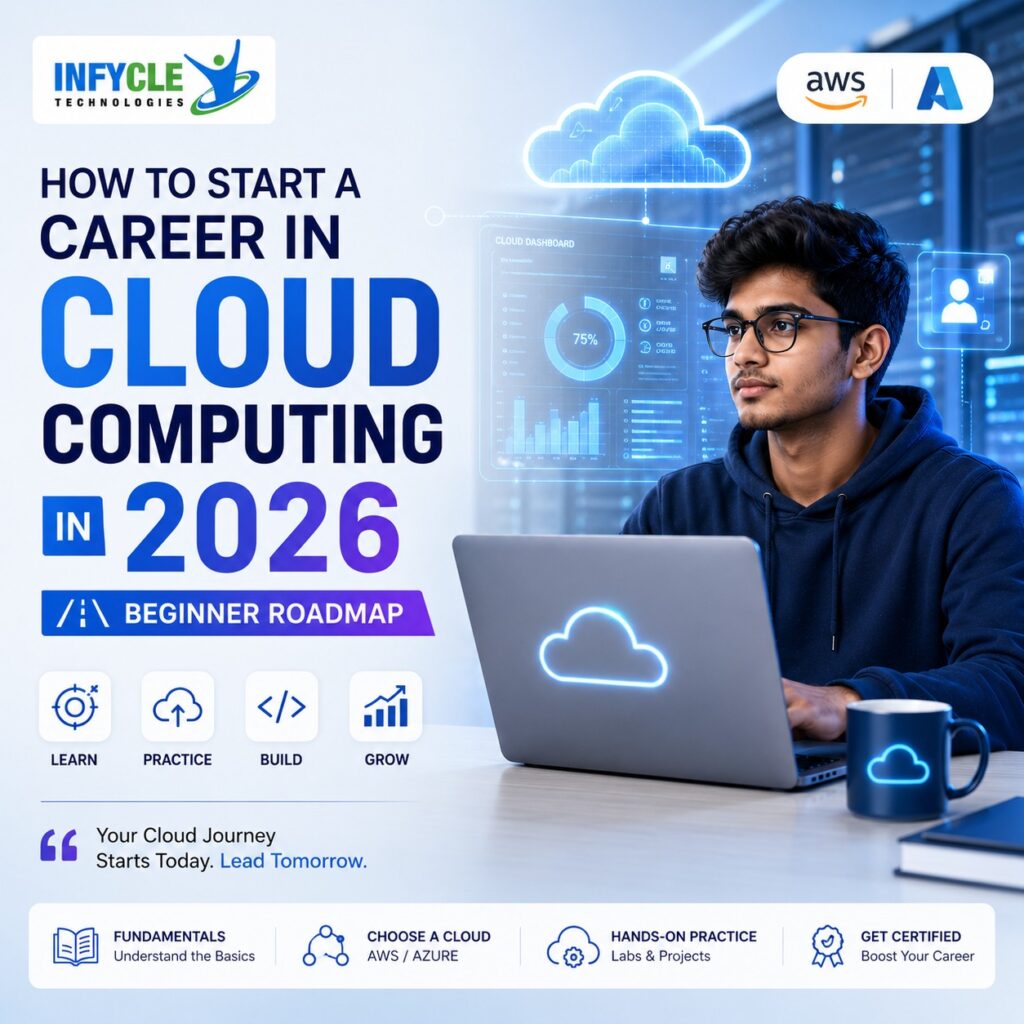
Roadmap to Start Your Cloud Career in 2026
Step 1: Learn Cloud Fundamentals
Start with beginner-friendly concepts:
- Cloud types
- Virtualization
- Storage
- Networking
- Security basics
Step 2: Choose a Cloud Platform
Focus on AWS or Azure initially rather than trying to learn everything together.
Step 3: Practice Real-Time Projects
Hands-on learning matters more than theory alone. Build mini projects like:
- Hosting a website
- Creating cloud storage
- Setting up virtual machines
- Managing user permissions
Step 4: Earn Industry Certifications
Certifications improve credibility and help freshers stand out during interviews.
Popular beginner certifications:
- AWS Certified Cloud Practitioner
- Microsoft Azure Fundamentals (AZ-900)
Step 5: Build a Portfolio
Document your projects and learning process. Recruiters appreciate candidates who demonstrate practical skills.
Step 6: Apply for Entry-Level Roles
Begin with:
- Cloud Support Associate
- Junior Cloud Engineer
- System Administrator
- Technical Support Executive
- DevOps Trainee
This gradual path makes a Career in Cloud Computing achievable even for complete beginners.
2026 Trends Shaping the Cloud Industry
Cloud computing is evolving beyond storage and hosting. Several emerging trends are increasing demand for skilled professionals.
AI + Cloud Integration
AI applications require massive cloud infrastructure. Companies need cloud experts who can manage scalable AI environments.
Multi-Cloud Strategy
Organizations are now using multiple cloud providers simultaneously for flexibility and security.
Cloud Security Demand
Cybersecurity concerns are creating strong demand for cloud security professionals.
Serverless Computing
Businesses are adopting serverless platforms to reduce infrastructure management costs.
DevOps and Automation
Cloud and DevOps are increasingly connected. Automation skills can significantly improve your career opportunities.
These trends show why a Career in Cloud Computing remains future-proof for the coming years. If you are looking for practical exposure instead of only theoretical learning, choosing the right training institute can make a huge difference. The Best Software Training programs focus on live projects, certification preparation, interview support, and hands-on cloud deployment experience that employers actually value.
Common Mistakes Beginners Should Avoid
Learning Without Practice
Watching tutorials alone is not enough. Employers expect hands-on understanding.
Trying to Learn Everything Together
Focus on one platform first before expanding into advanced tools.
Ignoring Linux and Networking
These are foundational skills for cloud environments.
Skipping Certifications
Certifications help freshers build trust during job applications.
Fear of Technical Background
Many successful cloud professionals started from non-technical educational backgrounds.
Cloud Computing Job Roles for Freshers
A Career in Cloud Computing offers multiple paths depending on your interests.
Popular Beginner Roles
- Cloud Support Engineer
- AWS Associate
- Azure Administrator
- DevOps Support Engineer
- Cloud Operations Analyst
- Infrastructure Support Engineer
Average Salary Expectations in India (2026)
Freshers entering cloud-related roles can expect:
- ₹3.5 LPA to ₹6 LPA initially
- Higher packages with certifications and practical projects
Professionals with 3–5 years of experience often move into senior engineering and architecture roles with significantly higher salaries.
Why Chennai Is Becoming a Cloud Learning Hub
Chennai continues to grow as a strong IT and technology center. Many companies are expanding cloud infrastructure teams due to digital transformation initiatives.
Students in Chennai now have access to:
- Cloud-focused training institutes
- Internship opportunities
- Startup ecosystems
- IT hiring events
- Certification workshops
For fresh graduates and career changers, Chennai offers a practical environment to begin learning and build industry connections.
FAQ Section
1. Is cloud computing a good career for beginners in 2026?
Yes. A Career in Cloud Computing offers excellent opportunities for beginners because companies are actively hiring professionals with practical cloud skills and certifications.
2. Can non-technical students learn cloud computing?
Absolutely. Many Arts, Commerce, and Science graduates successfully enter cloud support and administration roles after structured training and hands-on practice.
3. Which is better for beginners: AWS or Azure?
Both are excellent choices. AWS has a larger market share globally, while Azure is highly popular among enterprise companies using Microsoft technologies.
4. How long does it take to become job-ready in cloud computing?
With consistent practical learning, many students become job-ready within 4–8 months depending on their learning pace and certification goals.
5. Do cloud computing jobs require coding?
Not all roles require advanced coding. Many beginner positions focus on cloud management, deployment, monitoring, and support operations.
Conclusion
Cloud computing has become one of the most reliable and future-focused career paths for students and professionals looking to build stable, high-growth opportunities in technology. With industries rapidly adopting cloud platforms, the demand for skilled professionals continues to increase across Chennai and the rest of India.
If you want structured practical learning, certification guidance, and real-time project exposure, enrolling in AWS Training In Chennai at Infycle Technologies can help you build industry-ready skills and confidently step into the cloud industry with strong career support.