Oracle DBA Roles And Responsibilities Explained

If you’re planning to build a career in the IT field, especially in database management, understanding Oracle DBA roles is a great place to start. Many students and fresh graduates in Chennai are now exploring database careers because of their stability and long-term growth.
Behind every banking system, e-commerce platform, or enterprise application, there’s a database working silently. And managing that database efficiently is the responsibility of a Database Administrator (DBA). This is where Oracle DBAs come in.
For beginners, career switchers, or even freelancers looking for stable opportunities, learning about Oracle DBA roles can help you understand what to expect and how to prepare for this career path. Let’s break it down in a simple and practical way.
What Does an Oracle DBA Do?
An Oracle DBA (Database Administrator) is responsible for managing, maintaining, and securing databases. Their goal is to ensure that data is always available, safe, and performing efficiently.
In simple terms, Oracle DBA roles involve:
- Managing database systems
- Ensuring data security
- Improving performance
- Handling backups and recovery
Companies in Chennai rely heavily on Oracle databases, especially in industries like finance, healthcare, and IT services.
Core Oracle DBA Roles and Responsibilities
Let’s look at the key responsibilities that define Oracle DBA roles in real-world scenarios.
1. Database Installation and Configuration
DBAs are responsible for setting up Oracle databases from scratch. This includes:
- Installing database software
- Configuring system settings
- Ensuring proper environment setup
2. Database Monitoring and Performance Tuning
Performance is critical. DBAs continuously monitor databases to:
- Identify slow queries
- Optimize performance
- Ensure smooth operations
3. Backup and Recovery Management
Data loss can be disastrous. One of the most important Oracle DBA roles is:
- Creating regular backups
- Restoring data in case of failure
- Implementing disaster recovery plans
4. Security and User Management
Protecting data is a top priority.
DBAs handle:
- User access control
- Data encryption
- Preventing unauthorized access
5. Database Maintenance
Routine maintenance ensures everything runs smoothly:
- Updating patches
- Fixing bugs
- Managing storage and space
Skills Required to Become an Oracle DBA
To succeed in this field, you need a mix of technical and analytical skills.
Essential skills:
- Strong understanding of SQL and PL/SQL
- Knowledge of database architecture
- Problem-solving ability
- Basic knowledge of operating systems
- Understanding of backup and recovery tools
Many beginners in Chennai start building these skills through structured training programs.
Why Choose Oracle DBA as a Career?
If you’re looking for a stable and high-demand career, Oracle DBA is a strong choice.
Reasons to consider:
- High demand in enterprise companies
- Good salary growth over time
- Opportunities in multiple industries
- Long-term career stability
Enrolling in Oracle DBA Training In Chennai can help you gain hands-on experience, making it easier to transition into real job roles.
Career Opportunities for Oracle DBAs in 2026
The demand for database professionals continues to grow as companies rely more on data-driven decisions.
Popular job roles:
- Junior Oracle DBA
- Senior Database Administrator
- Cloud Database Engineer
- Data Engineer
In Chennai, many IT companies are actively hiring Oracle DBAs, especially those with practical experience.
Real-World Example of Oracle DBA Work
Imagine an online shopping platform during a sale. Thousands of users are placing orders at the same time.
An Oracle DBA ensures:
- The database doesn’t crash
- Transactions are processed smoothly
- Data remains secure
This shows how critical Oracle DBA roles are in maintaining business operations.
Common Challenges in Oracle DBA Roles
Like any career, this role comes with challenges.
Common issues:
- Handling unexpected database failures
- Managing large volumes of data
- Ensuring zero downtime
- Keeping up with new technologies
With proper training and practice, these challenges become manageable.
Future Trends for Oracle DBAs
The role of DBAs is evolving with new technologies.
Trends in 2025–2026:
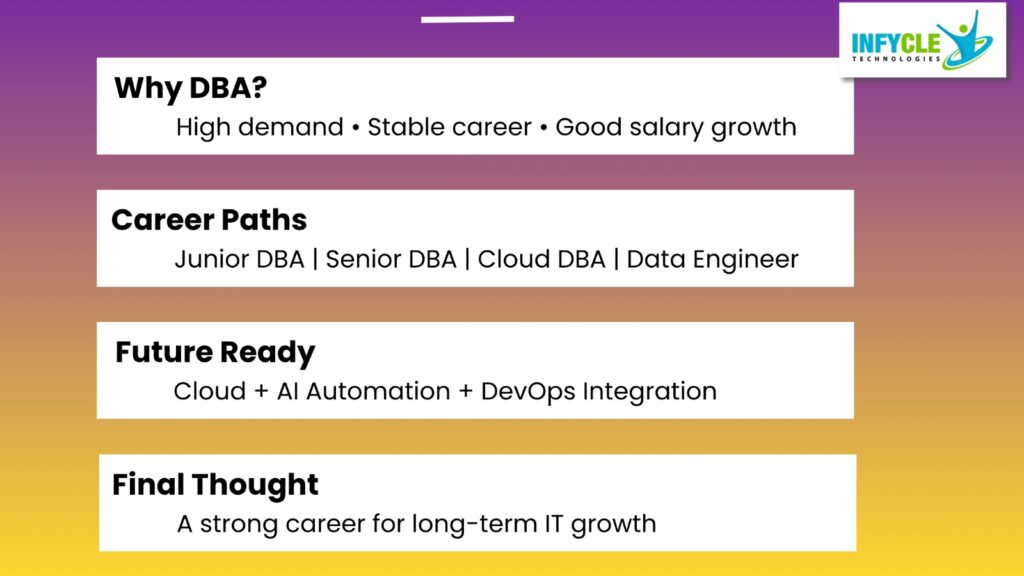
- Integration with cloud platforms
- Automation using AI tools
- Increased focus on data security
- Hybrid roles combining DBA and DevOps
This makes Oracle DBA roles even more valuable in modern IT environments.
How to Start Your Oracle DBA Journey
If you’re a beginner, here’s a simple roadmap:
- Learn SQL basics
- Understand Oracle database concepts
- Practice PL/SQL programming
- Learn backup and recovery techniques
- Work on real-time projects
Consistency and hands-on practice are key to success.
FAQ Section
1. What are Oracle DBA roles for beginners?
Oracle DBA roles for beginners include database monitoring, backup management, and basic performance tuning tasks.
2. Is Oracle DBA a good career in 2026?
Yes, it offers stable job opportunities, good salary growth, and demand across industries.
3. Can non-IT students become Oracle DBAs?
Yes, with proper training and practice, even non-technical students can build a career in this field.
4. What skills are needed for Oracle DBA roles?
Key skills include SQL, PL/SQL, database management, and problem-solving abilities.
5. How long does it take to learn Oracle DBA?
With consistent learning, you can gain basic knowledge in 3–6 months.
Conclusion
Oracle DBA is a strong career option for anyone interested in database management. It offers stability, growth, and opportunities across multiple industries. For learners in Chennai, gaining practical experience is essential to stand out in the job market.
Choosing the Best Software Training Institute in Chennai can help you build real-world skills and confidence.
Start Your Career with Confidence
If you’re ready to step into the database field, Infycle Technologies offers Oracle DBA Training In Chennai with hands-on projects, expert guidance, and industry-relevant skills.
Start your journey with Infycle Technologies and build a successful future in the IT industry.