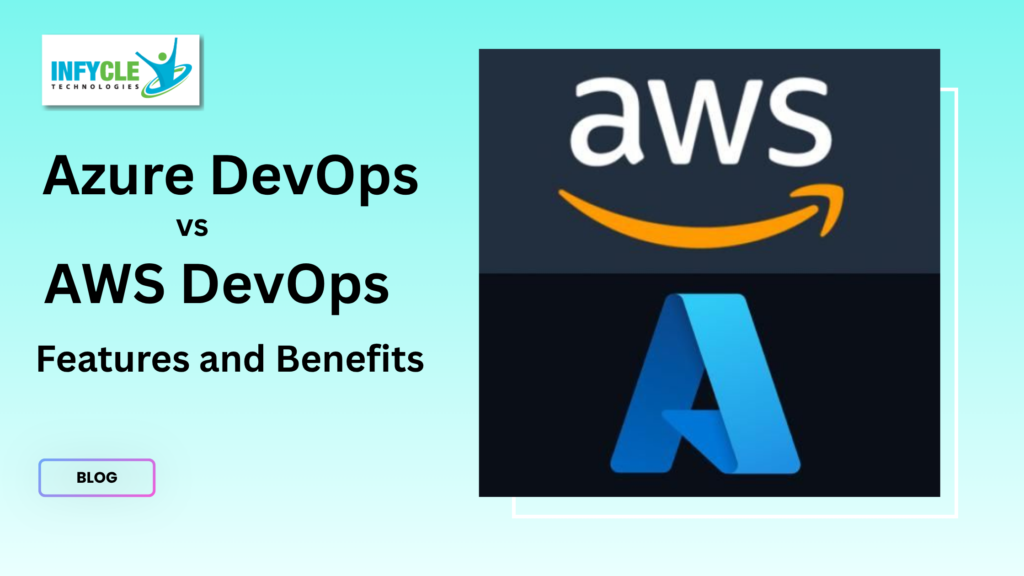
Azure DevOps vs AWS DevOps: Features and Benefits
Cloud computing and DevOps have completely changed the way modern software is developed and deployed. Companies today expect faster application delivery, automated workflows, secure cloud environments, and continuous integration systems that can scale without delays. Because of this shift, DevOps professionals are becoming highly valuable across industries.
For students, fresh graduates, and career changers in Chennai, one common question keeps coming up: which platform offers better learning and career opportunities — Microsoft Azure or Amazon Web Services? Understanding the differences between these platforms is important before choosing a specialization. The discussion around Azure DevOps vs AWS DevOps has become especially relevant in 2026 because both platforms are dominating cloud-based software development and infrastructure management.
While both technologies support automation, deployment, monitoring, and cloud services, they differ in ecosystem, tools, integrations, pricing, and enterprise usage. For beginners planning to build a long-term IT career, learning the strengths and limitations of each platform can help make smarter career decisions.
Understanding the Basics of Azure DevOps and AWS DevOps
Before comparing them, it’s important to understand what these platforms actually do.
What Is Azure DevOps?
Azure DevOps is Microsoft’s cloud-based DevOps platform that supports software development lifecycle management. It offers tools for:
- Source code management
- CI/CD pipelines
- Agile project management
- Automated testing
- Deployment monitoring
- Collaboration workflows
It integrates strongly with Microsoft technologies and enterprise applications.
What Is AWS DevOps?
AWS DevOps includes Amazon Web Services tools used for automation, cloud deployment, and infrastructure management. It provides services like:
- AWS CodePipeline
- AWS CodeBuild
- AWS Lambda
- CloudFormation
- Elastic Kubernetes Service
- CloudWatch monitoring
AWS focuses heavily on scalability, cloud infrastructure, and flexible cloud-native environments.
Understanding these foundations makes the Azure DevOps vs AWS DevOps comparison easier for beginners and IT learners.
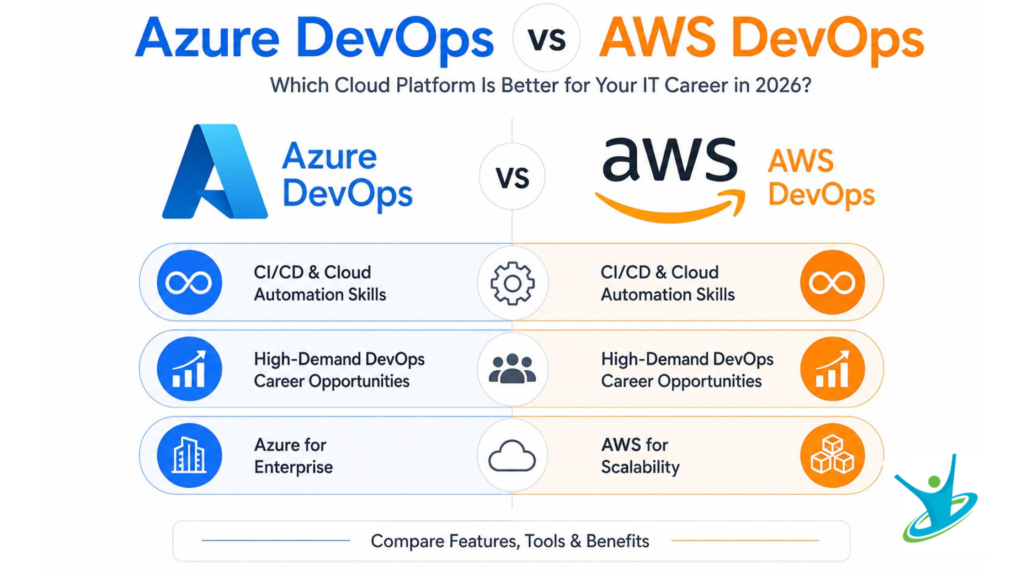
Azure DevOps vs AWS DevOps: Key Feature Comparison
Both platforms offer powerful DevOps capabilities, but they differ in approach and ecosystem design.
| Feature | Azure DevOps | AWS DevOps |
| Cloud Provider | Microsoft | Amazon |
| Best Integration | Microsoft tools | AWS cloud services |
| CI/CD Pipelines | Built-in Azure Pipelines | AWS CodePipeline |
| User Interface | Beginner-friendly | Technical and flexible |
| Enterprise Adoption | Strong in enterprises | Strong in startups and cloud-native companies |
| Hybrid Cloud Support | Excellent | Good |
| Learning Curve | Moderate | Slightly advanced |
| Pricing Flexibility | Structured plans | Pay-as-you-go model |
The choice often depends on company infrastructure, project requirements, and career goals.
Pros of Azure DevOps
The Azure DevOps vs AWS DevOps debate often highlights Microsoft’s strong enterprise ecosystem.
Easy Integration With Microsoft Products
Azure DevOps works smoothly with Windows Server, Active Directory, Visual Studio, and Office-based enterprise environments.
User-Friendly Interface
Many beginners find Azure easier to navigate during the initial learning stages.
Strong Agile and Project Management Features
Azure Boards and Azure Repos help teams manage projects efficiently.
Hybrid Cloud Strength
Organizations with on-premise infrastructure often prefer Azure because of its hybrid cloud capabilities.
Better for Enterprise Workflows
Large corporations using Microsoft technologies frequently choose Azure DevOps.
Cons of Azure DevOps
While Azure offers many benefits, it also has some limitations.
- Slightly smaller cloud market share compared to AWS
- Some advanced services are less mature than AWS equivalents
- Best suited mainly for Microsoft-focused environments
Still, Azure adoption continues growing rapidly in Chennai and across India.
Pros of AWS DevOps
AWS remains one of the largest cloud service providers globally, making it highly valuable for DevOps careers.
Massive Cloud Ecosystem
AWS offers hundreds of services supporting modern application development.
Strong Scalability
AWS infrastructure supports applications of all sizes, from startups to enterprise systems.
Flexibility for Developers
Developers can customize infrastructure extensively using AWS services.
Excellent Global Adoption
Many international companies rely heavily on AWS infrastructure.
Strong Container and Kubernetes Support
AWS provides advanced container orchestration and cloud-native deployment tools.
Because of these strengths, the Azure DevOps vs AWS DevOps comparison often depends on whether learners prefer enterprise systems or cloud-native environments.
Cons of AWS DevOps
AWS also presents challenges for beginners.
- Steeper learning curve
- Complex pricing structure
- Requires deeper cloud understanding
- Some services may overwhelm freshers initially
However, professionals with strong AWS expertise often receive excellent salary packages and global opportunities.
Which Platform Is Better for Freshers?
The answer depends on career goals and learning preferences.
Azure DevOps May Be Better If You:
- Prefer Microsoft technologies
- Want structured learning
- Aim for enterprise company roles
- Need beginner-friendly workflows
AWS DevOps May Be Better If You:
- Want cloud-native infrastructure skills
- Prefer highly scalable systems
- Plan to work with startups or international cloud projects
- Enjoy learning advanced cloud architectures
The good news is that both platforms offer excellent career potential. Many professionals eventually learn both systems as they advance in their careers.
For students and freshers entering cloud computing for the first time, practical project experience matters more than memorizing concepts. Learning through real-time deployment exercises, CI/CD workflows, and cloud automation projects can make DevOps concepts much easier to understand.
Career Opportunities in Chennai for DevOps Professionals
The demand for DevOps professionals in Chennai has increased significantly because companies are modernizing software delivery pipelines and moving toward cloud infrastructure.
Common job roles include:
- DevOps Engineer
- Cloud Engineer
- Site Reliability Engineer
- Build and Release Engineer
- Infrastructure Automation Engineer
- Cloud Support Associate
Both Azure and AWS professionals are being hired actively across IT service companies, SaaS firms, fintech startups, and enterprise technology organizations.
This increasing demand is one major reason why the Azure DevOps vs AWS DevOps topic has become highly important for students exploring modern IT careers.
Salary Trends for Azure and AWS DevOps Roles
Approximate fresher salary ranges in Chennai for 2026:
| Role | Average Salary Range |
| Azure DevOps Engineer | ₹4.5 LPA – ₹7 LPA |
| AWS DevOps Engineer | ₹5 LPA – ₹8 LPA |
| Cloud Support Associate | ₹3.5 LPA – ₹6 LPA |
| Infrastructure Engineer | ₹4 LPA – ₹7 LPA |
Professionals with certification training and project experience often receive better opportunities during campus placements and interviews.
Future Trends in DevOps for 2026 and Beyond
Several emerging technologies are shaping the future of DevOps careers:
AI-Powered Automation
AI is helping automate monitoring, testing, and deployment optimization.
Kubernetes Adoption
Container orchestration continues becoming standard across cloud platforms.
DevSecOps Integration
Security is increasingly integrated directly into deployment pipelines.
Multi-Cloud Strategies
Companies now use both Azure and AWS together for flexibility and disaster recovery.
This means professionals who understand cloud infrastructure and automation tools will remain in high demand.
Many students in Chennai prefer learning from the Best Software Training Institute in Chennai because structured training and mentorship help them understand cloud technologies more effectively.
FAQ Section
1. Which is better for beginners: Azure DevOps or AWS DevOps?
Azure DevOps is often considered easier for beginners because of its user-friendly interface and Microsoft ecosystem integration.
2. Is Azure DevOps vs AWS DevOps a good career comparison for freshers?
Yes. Both platforms offer strong job opportunities, salary growth, and long-term career potential in cloud computing and automation.
3. Which platform has higher salary opportunities?
AWS professionals sometimes receive slightly higher salaries due to advanced cloud infrastructure expertise, but Azure professionals are also highly valued in enterprise environments.
4. Can non-technical students learn DevOps?
Yes. With structured training and consistent practice, even beginners from non-technical backgrounds can build DevOps skills gradually.
5. Are DevOps jobs available in Chennai?
Absolutely. Chennai has strong demand for cloud engineers, DevOps professionals, and infrastructure automation specialists.
Conclusion
Both Azure and AWS offer excellent opportunities for students, fresh graduates, freelancers, and career changers who want to enter the cloud computing and automation industry. Choosing the right platform depends on career goals, learning style, and preferred technology ecosystem.
For learners who want practical cloud exposure and industry-focused guidance, joining Azure DevOps Training in Chennai through Infycle Technologies can help build real-time DevOps skills, improve deployment knowledge, and prepare confidently for modern cloud engineering careers.