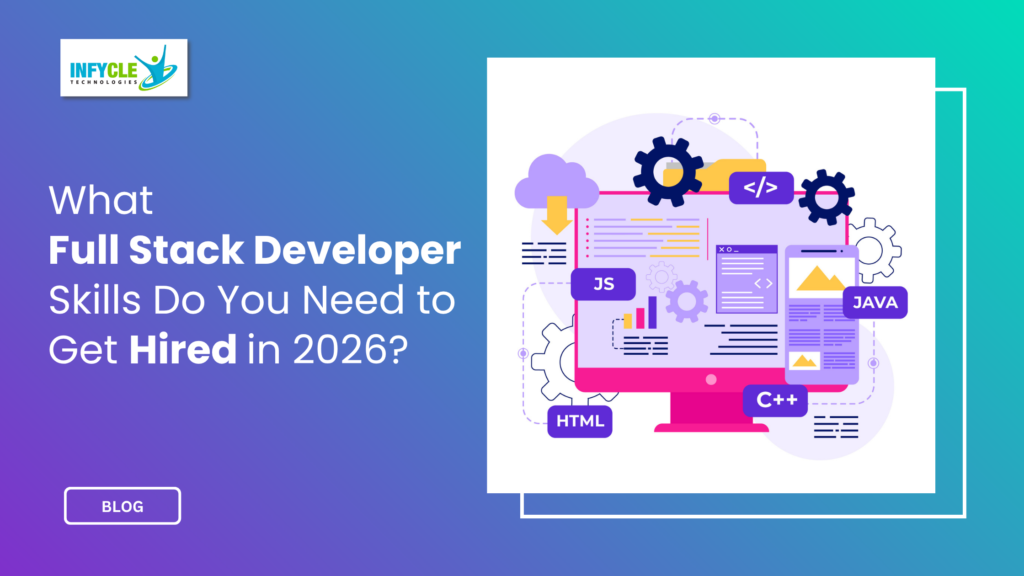
What Full Stack Developer Skills Do You Need to Get Hired in 2026?
Technology careers are evolving rapidly, but one role continues to stand out for its versatility, earning potential, and long-term demand: the Full Stack Developer. Companies today are looking for professionals who can handle both front-end and back-end development, making them valuable assets in startups, product companies, and enterprise organizations alike.
If you’re a student in CITY, a recent graduate, someone returning to work after a career break, or even a freelancer looking for more opportunities, learning the right Full Stack Developer Skills can significantly improve your job prospects in 2026.
The good news? You don’t need a computer science degree to get started. Many successful developers today come from Arts, Commerce, Science, and Engineering backgrounds. What matters most is building practical skills, understanding industry tools, and gaining real-world project experience. In this guide, we’ll explore exactly what employers are looking for and how you can prepare yourself for the next generation of software development careers.
Why Full Stack Developers Will Remain in High Demand in 2026
Organizations increasingly prefer developers who can contribute across multiple stages of application development. Instead of hiring separate specialists for every task, companies often seek professionals who can build user interfaces, manage databases, develop APIs, and deploy applications.
Industry reports continue to show strong demand for full stack professionals because they:
- Reduce development costs
- Improve project collaboration
- Speed up product delivery
- Adapt quickly to changing technologies
- Work effectively in startups and enterprise environments
As AI-assisted development tools become more common, companies still need developers who understand how applications work end-to-end. That’s where strong Full Stack Developer Skills become essential.
Core Full Stack Developer Skills Every Employer Expects
Let’s break down the most important competencies hiring managers evaluate during interviews.
Front-End Development Fundamentals
The front-end is what users see and interact with.
Every aspiring full stack developer should be comfortable with:
- HTML5
- CSS3
- JavaScript
- Responsive Design
- Bootstrap or Tailwind CSS
Modern employers also expect candidates to understand how websites perform across different devices and browsers.
JavaScript Frameworks Are No Longer Optional
JavaScript remains the foundation of modern web development.
Among all frameworks, React continues to dominate hiring trends in 2026.
Key concepts include:
- React Components
- State Management
- Hooks
- Routing
- API Integration
Mastering React significantly strengthens your Full Stack Developer Skills profile and opens doors to product-based companies.
Back-End Development Expertise
A website is more than what users see.
The server-side logic powers authentication, business operations, and database interactions.
Popular technologies include:
- Node.js
- Express.js
- REST APIs
- Authentication Systems
- Server Architecture
Developers who understand both front-end and back-end workflows are often preferred during recruitment.
Database Skills That Companies Expect
Every application stores and manages data.
As a full stack developer, you should know how to work with databases such as:
SQL Databases
- MySQL
- PostgreSQL
NoSQL Databases
- MongoDB
- Firebase
Understanding database design, relationships, queries, indexing, and optimization makes your Full Stack Developer Skills more valuable in real-world projects.
Git and GitHub: Non-Negotiable Skills in 2026
One of the most common mistakes beginners make is ignoring version control.
Today, almost every development team uses Git and GitHub for:
- Code collaboration
- Project management
- Deployment workflows
- Team development
Recruiters often review GitHub profiles before scheduling interviews. A strong GitHub portfolio can sometimes outweigh academic qualifications.
Understanding APIs and Integrations
Modern applications rely heavily on APIs.
Whether you’re building e-commerce platforms, healthcare applications, or SaaS products, you’ll frequently connect with third-party services.
Developers should know how to:
- Consume REST APIs
- Handle JSON data
- Manage authentication tokens
- Integrate payment gateways
- Connect cloud services
These practical capabilities help demonstrate real-world Full Stack Developer Skills during technical interviews.
Looking to Build These Skills Practically?
Many learners struggle because they focus only on theory. The fastest way to become job-ready is through project-based learning that mirrors actual industry workflows.
Choosing a structured training program with live projects, mentorship, and deployment experience can help you build confidence and create a portfolio that employers value.
Cloud and Deployment Knowledge Is Becoming Essential
In 2026, developers are expected to understand how applications move from development environments to production.
Popular deployment tools include:
- AWS
- Microsoft Azure
- Vercel
- Netlify
- Docker
You don’t need advanced DevOps expertise initially, but understanding deployment basics can make your profile stand out from other candidates.
AI Is Changing Development—But Not Replacing Developers
AI coding assistants have become common in software development.
However, employers are not hiring people simply because they can use AI tools.
Instead, they want professionals who can:
- Understand code quality
- Solve business problems
- Debug applications
- Design scalable systems
- Validate AI-generated code
This means future-ready Full Stack Developer Skills involve combining technical knowledge with problem-solving ability.
Build a Portfolio Instead of Just Collecting Certificates
One strong project often creates more impact than multiple certificates.
Consider building:
- E-commerce websites
- Student management systems
- Task management applications
- Online booking platforms
- AI-powered web applications
Recruiters want evidence that you can apply your knowledge to solve practical challenges.
For students and job seekers in CITY, showcasing projects can significantly improve interview opportunities.
Common Mistakes That Prevent Beginners From Getting Hired
Many aspiring developers spend months learning but still struggle to secure jobs.
Avoid these mistakes:
- Learning too many technologies simultaneously
- Ignoring JavaScript fundamentals
- Skipping database concepts
- Not creating real projects
- Having no GitHub presence
- Avoiding deployment experience
- Depending entirely on tutorials
A focused learning roadmap consistently produces better results than jumping between technologies.
What Does the Hiring Roadmap Look Like in 2026?
A practical roadmap would be:
- HTML, CSS, JavaScript
- React.js
- Node.js & Express.js
- MongoDB or SQL
- Git & GitHub
- APIs
- Deployment
- Real-world projects
- Interview preparation
Following this path helps you gradually develop the Full Stack Developer Skills employers actively seek.
Frequently Asked Questions
Do I need a computer science degree to become a full stack developer?
No. Many successful developers come from Arts, Commerce, Science, and other non-technical backgrounds. Skills and projects matter more than your degree.
How long does it take to learn Full Stack Developer Skills?
Most learners can build job-ready capabilities within 6 to 12 months with consistent practice and project work.
Is Full Stack Development a good career in 2026?
Yes. Demand remains strong across startups, software companies, fintech firms, healthcare organizations, and enterprise businesses.
Which programming language should beginners start with?
JavaScript is often the best starting point because it is used in both front-end and back-end development.
Can I get freelance opportunities after learning full stack development?
Absolutely. Many businesses need websites, web applications, maintenance services, and custom software solutions, creating excellent freelance opportunities.
Conclusion
The developers who succeed in 2026 won’t necessarily be the ones who know the most technologies. They’ll be the professionals who can build complete applications, solve real business problems, and demonstrate practical experience through projects.
If you’re serious about entering the software industry, choosing a quality Full Stack Developer course in Chennai can provide the structured learning, project exposure, and mentorship needed to accelerate your career journey.
Whether you’re a student, graduate, freelancer, or career changer, Infycle Technologies, recognized by many learners as a Best Software Training Institute in Chennai, can help you gain practical development skills and prepare confidently for today’s competitive technology job market.