SAP Career Roadmap: From Entry-Level To SAP Consultant

In today’s fast-paced digital economy, businesses rely heavily on intelligent enterprise software to manage finance, supply chains, human resources, and customer operations. Among the many enterprise solutions available, SAP (Systems, Applications, and Products) continues to dominate the global ERP landscape. Understanding the SAP Career Roadmap is essential as organizations increasingly adopt SAP to streamline processes and enable data-driven decision-making. This growing adoption has led to a steady rise in demand for skilled SAP professionals across industries.
For students, recent graduates, and working professionals seeking a stable, high-growth IT career, SAP offers a clearly structured career path. With the right learning strategy, certifications, and hands-on experience—such as enrolling in SAP FICO Training in Chennai — you can progress from an entry-level role to becoming a highly valued SAP Consultant. This blog explores the complete SAP career roadmap, detailing each stage and what it takes to grow successfully in this domain.
What Is SAP And Why Is It A Strong Career Choice?
SAP is a leading ERP software used by small, medium, and large enterprises worldwide. It integrates core business functions like finance, sales, procurement, production, logistics, and human resources into a single, centralized system. This integration allows organizations to operate efficiently, reduce errors, and improve overall productivity.
From a career perspective, SAP stands out for several reasons:
- Global demand across industries such as IT, manufacturing, banking, healthcare, and retail
- Role-based specialization, allowing professionals to focus on functional or technical domains
- Attractive salary packages compared to many traditional IT roles
- Long-term career stability, as ERP systems are mission-critical for organizations
SAP professionals are not limited to coding alone; they play a strategic role in aligning business requirements with technology solutions.
Understanding SAP Career Paths
Before diving into the roadmap, it’s important to understand that SAP careers are broadly divided into three streams:
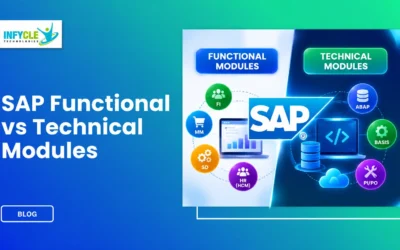
- Functional Consultants – Focus on business processes (Finance, HR, Sales, Supply Chain, etc.)
- Technical Consultants – Handle system development, customization, and integrations
- Techno-Functional Consultants – Combine both business process knowledge and technical skills
Each stream offers growth opportunities, depending on your background, interests, and career goals.
Step 1: Entry-Level SAP Roles
Every SAP professional begins their journey at the foundation level. Entry-level roles are ideal for freshers and career switchers who are new to SAP.
Common Entry-Level Job Titles:
- SAP Trainee
- SAP Support Executive
- Junior SAP Analyst
- SAP End-User / Business User
Skills Required:
- Basic understanding of SAP modules
- Knowledge of business processes
- Familiarity with ERP concepts
- Good communication and documentation skills
At this stage, professionals usually support day-to-day SAP operations, assist senior consultants, and work on incident management. The primary goal is to learn how SAP is used in real business environments.
Step 2: Choosing The Right SAP Module
Selecting the right SAP module is a crucial career decision. The module you choose determines your specialization and long-term growth potential.
Popular SAP Modules:
- SAP FICO – Finance & Controlling
- SAP MM – Materials Management
- SAP SD – Sales & Distribution
- SAP HCM – Human Capital Management
- SAP PP – Production Planning
- SAP ABAP – Technical programming
Among these, SAP FICO remains one of the most in-demand modules due to its relevance across all industries. Finance and controlling functions are core to every organization, making SAP FICO professionals highly valuable.
Step 3: SAP Certification And Structured Training
Once you have chosen the right SAP module, structured training and certification become essential for building a strong foundation. SAP certification validates your understanding of core concepts, business processes, and system configurations, making your profile more credible to employers. Professional training programs combine theoretical knowledge with practical exposure through real-time scenarios, case studies, and hands-on exercises. This phase helps learners understand how SAP functions in real business environments, improves problem-solving skills, and boosts confidence when working on projects. A well-structured learning path significantly increases job readiness and long-term career growth.
Step 4: Transitioning Into An SAP Consultant Role
After gaining foundational knowledge, certification, and initial project exposure, professionals move into the role of an SAP Consultant, which marks a major milestone in their career journey. At this stage, the focus shifts from learning concepts to applying them in real-world business scenarios. SAP Consultants work closely with business users to understand operational requirements and translate them into effective SAP solutions. Key responsibilities include system configuration, business process mapping, data validation, testing, end-user training, and post-implementation support.
Sharp analytical thinking and effective communication abilities are essential, as consultants must interpret complex business requirements, communicate technical concepts clearly, and facilitate collaboration between technical teams and business stakeholders. Exposure to implementation and support projects helps professionals understand the complete SAP project lifecycle, from requirement gathering to go-live.
To gain deeper practical insights, many consultants actively engage with global SAP professionals through platforms like the SAP Community, where real-world use cases, best practices, and expert discussions are shared. This phase significantly strengthens functional and technical expertise while building confidence in client handling and solution delivery, paving the way for senior consulting and leadership roles.
Step 5: Mid-Level SAP Roles (3–6 Years Experience)
With a few years of hands-on experience, SAP professionals advance to mid-level roles where responsibilities increase significantly.
Typical Roles:
- SAP Functional Consultant
- SAP Business Analyst
- SAP Module Lead
At this stage, professionals:
- Handle complete modules independently
- Participate in implementation and migration projects
- Provide strategic recommendations to clients
- Mentor junior team members
Domain knowledge (such as finance, logistics, or HR) becomes a major differentiator at this level.
Step 6: Advanced SAP Consultant / Solution Architect
After mastering a module and working on multiple projects, professionals can move into senior-level positions.
Senior Roles Include:
- Senior SAP Consultant
- SAP Solution Architect
- SAP Project Manager
Skills Needed:
- Deep module expertise
- Cross-module integration knowledge
- Leadership and stakeholder management
- Project planning and risk management
Senior SAP professionals play a key role in designing enterprise-wide solutions and ensuring business alignment with SAP implementations.
Step 7: Specialization And Industry Expertise
To stand out in a competitive market, many SAP professionals choose to specialize further by:
- Learning SAP S/4HANA
- Gaining industry-specific expertise in sectors such as banking, manufacturing, retail, and healthcare
- Working on global rollouts and large-scale digital transformation projects
In the second half of your SAP journey, advanced learning options such as SAP ABAP on HANA Training in Chennai help professionals upgrade their technical expertise, particularly when transitioning to S/4HANA environments and modern digital transformation initiatives.
Step 8: Freelancing, Consulting Firms, And Global Opportunities
Experienced SAP professionals are not limited to full-time employment. Many explore:
- Freelance SAP consulting
- Contract-based global projects
- Remote SAP support roles
- Independent advisory services
SAP skills are globally transferable, opening doors to international careers and long-term consulting opportunities.
Salary Growth And Career Stability In SAP
SAP professionals enjoy consistent salary growth due to the specialized nature of ERP skills.
Career benefits include:
- Strong job security
- Continuous learning opportunities
- High return on investment for training
- Long-term relevance in digital enterprises
As businesses continue to adopt ERP-driven models, SAP professionals remain essential to operational success.
Conclusion: Building A Future-Ready SAP Career
An SAP career is not just about learning software—it’s about understanding how businesses function and how technology enables smarter decisions. From entry-level roles to becoming a trusted SAP Consultant, the journey requires structured learning, hands-on experience, and continuous upskilling.
For aspiring professionals and career switchers, choosing the right training partner is equally important. Institutes like Infycle Technologies focus on industry-relevant SAP training, real-time project exposure, and career-oriented guidance to help learners confidently navigate the SAP career roadmap. With the right approach and commitment, SAP can offer you a future-proof, globally respected career path.