How AI-Integrated Full Stack Development Is Redefining Industry Standards In 2026
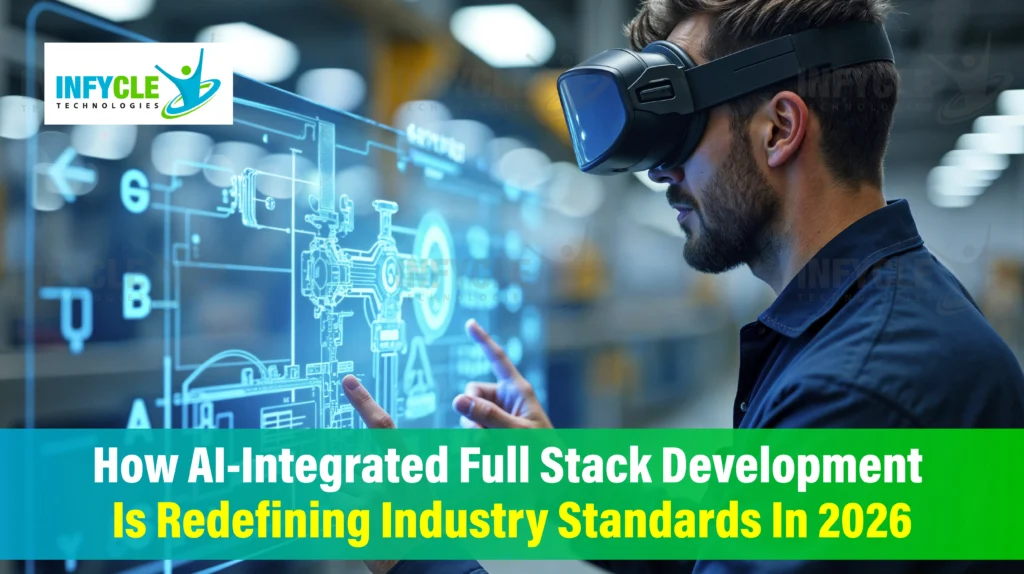
The technology landscape in 2026 is evolving faster than ever, and at the center of this transformation stands AI-Integrated Full Stack Development. Full Stack Developers have always played a crucial role in building end-to-end applications, but artificial intelligence has elevated this role to an entirely new level. Today, AI is no longer an optional enhancement—it has become a foundational element that reshapes how applications are designed, developed, tested, deployed, and optimized.
As organizations push toward automation, scalability, and personalized digital experiences, AI-powered development practices are setting new benchmarks for speed, efficiency, and innovation. Full Stack Development, when combined with AI, is now redefining industry standards across startups, enterprises, and global technology ecosystems.
The Rise Of AI In Full Stack Development
Traditionally, Full Stack Development involved mastering front-end technologies such as HTML, CSS, JavaScript, and frameworks like React or Angular, alongside back-end technologies including Java, Python, Node.js, databases, APIs, and cloud platforms. While these skills remain essential, the expectations placed on developers have expanded significantly.
In 2026, developers are expected to collaborate with AI-driven tools that assist in writing code, identifying bugs, automating tests, and optimizing performance. This shift has also transformed how aspiring professionals prepare for their careers. Many learners now choose a Full Stack Developer Course in Chennai that integrates AI concepts, automation tools, and real-world project exposure to meet modern industry demands.
Rather than replacing developers, AI acts as a productivity multiplier—allowing professionals to focus more on logic, architecture, and innovation rather than repetitive tasks.
How AI Is Transforming The Full Stack Development Lifecycle
AI has embedded itself into every stage of the software development lifecycle, creating smarter, faster, and more reliable workflows.
AI-Assisted Code Generation
AI-powered coding assistants can generate boilerplate code, APIs, UI components, and database queries based on simple prompts. This drastically reduces development time while ensuring consistent coding standards across teams.
Smart Debugging and Error Detection
Debugging, once one of the most time-consuming activities, has become faster and more accurate. AI tools analyze vast codebases to detect anomalies, predict potential errors, and recommend fixes—often before issues reach production.
Automated Testing and Quality Assurance
AI-driven testing frameworks automatically generate test cases, perform regression testing, and identify edge cases. This ensures faster releases with fewer defects, setting higher quality benchmarks for modern applications.
Intelligent and Adaptive User Experience
On the front end, AI enables applications to adapt dynamically based on user behavior. Personalized content, intelligent recommendations, and responsive UI designs have become standard expectations rather than premium features.
AI-Driven DevOps Integration: Bridging Development And Deployment
One of the most powerful transformations in 2026 is the integration of AI with DevOps practices. Earlier, development and operations teams worked in isolation, often leading to deployment delays and system failures. AI has eliminated these silos by enabling intelligent, automated DevOps pipelines.
AI-powered CI/CD systems now analyze deployment history, performance metrics, and user traffic patterns to determine the safest and most efficient release strategies. They can automatically roll back failed deployments, detect anomalies in real time, and even suggest performance improvements post-deployment.
For Full Stack Developers, this means taking ownership beyond code—actively participating in deployment optimization, system monitoring, and scalability planning. AI-integrated DevOps has become a core industry standard, making developers more versatile and valuable than ever before.
AI In Database Management And Backend Optimization
Backend systems in 2026 are more complex due to cloud-native architectures, real-time data processing, and massive user traffic. AI has transformed how databases and backend services are managed and optimized.
AI-driven tools now analyze database queries, identify performance bottlenecks, and suggest indexing or schema improvements automatically. Predictive scaling allows systems to adjust server resources in real time based on usage patterns, ensuring high performance during peak demand and cost efficiency during low traffic.
This intelligent backend optimization reduces downtime, enhances reliability, and allows developers to focus on building scalable and resilient architectures rather than constant troubleshooting.
Why Businesses Are Rapidly Adopting AI-Integrated Full Stack Development
Organizations across industries are embracing AI-powered development models because of the tangible business advantages they offer:
- Faster time-to-market
- Reduced development and maintenance costs
- Improved scalability and system reliability
- Enhanced customer experience
- Data-driven decision-making
AI enables businesses to predict system load, personalize customer journeys, and continuously optimize performance—capabilities that were once resource-intensive and complex.
Changing Role Of The Full Stack Developer In 2026
The role of a Full Stack Developer has evolved from a technical executor to a strategic problem solver. Developers now:
- Collaborate with AI tools for smarter decision-making
- Focus on system design and architecture
- Interpret AI-generated insights
- Drive innovation rather than routine coding
This evolution has redefined industry expectations and increased the value of skilled Full Stack professionals.
Salary Growth And Market Demand
With AI expertise becoming a key requirement, Full Stack Developers are experiencing strong salary growth. Professionals who combine Full Stack skills with AI knowledge are among the most sought-after talents in the tech industry.
According to Glassdoor, Full Stack Developers continue to command competitive salaries due to high demand across sectors. The salary of a full stack developer is 5LPA to 11LPA. This data highlights how advanced skills directly influence earning potential and career growth.
The Importance Of Choosing The Right Training Institute
As technology evolves, learning outdated tools is no longer enough. Selecting the Best Software Training Institute in Chennai plays a crucial role in shaping a future-ready career.
A high-quality institute should offer:
- AI-integrated Full Stack curriculum
- Real-time projects and industry case studies
- Cloud, DevOps, and automation exposure
- Experienced trainers and mentorship
- Career guidance and placement support
The right training environment bridges the gap between academic learning and real-world industry requirements.
Ethical AI And Responsible Development Practices
With AI deeply embedded in applications, ethical responsibility has become a critical development standard. Full Stack Developers must ensure transparency, fairness, and data privacy in AI-powered systems.
This includes auditing AI models for bias, protecting user data, and complying with data protection regulations. Ethical AI practices not only build trust but also ensure long-term sustainability and legal compliance for organizations.
How AI Is Empowering Startups And Small Businesses
AI-integrated Full Stack Development has democratized access to advanced technology. Startups and small businesses can now build enterprise-grade applications without massive teams or budgets.
Automated development tools, AI-driven analytics, and intelligent scaling allow startups to compete with large enterprises. This has sparked innovation and accelerated digital entrepreneurship worldwide.
Future Trends Beyond 2026
Looking ahead, AI will continue to redefine Full Stack Development through:
- Self-healing applications
- AI-designed system architectures
- Voice-driven development environments
- Low-code and no-code AI platforms
Developers who adapt early to these trends will remain highly relevant in the evolving tech ecosystem.
Building A Future-Proof Career In Full Stack Development
To thrive in 2026 and beyond, professionals should:
- Master Full Stack fundamentals
- Learn AI-assisted development tools
- Work on real-world AI-driven projects
- Continuously upskill
- Choose industry-aligned training programs
The combination of Full Stack expertise and AI proficiency is now the gold standard for modern software careers.
Conclusion
AI-Integrated Full Stack Development is no longer the future—it is the present reality redefining industry standards in 2026. By automating repetitive tasks, enhancing code quality, optimizing deployment, and enabling intelligent decision-making, AI has transformed how modern applications are built and scaled.
For learners and professionals alike, success depends on choosing the right learning path and staying aligned with evolving technologies. Institutions that blend Full Stack Development with AI-focused training play a critical role in shaping future-ready developers.
Infycle Technologies continues to empower learners by delivering industry-relevant Full Stack and AI training, helping them build strong, sustainable careers in today’s competitive technology landscape.