Can Non-IT Students Become Full Stack Developers? A Complete Beginner’s Guide
Introduction
If you’re asking, Become Full Stack Developer, you’re not alone. Thousands of career changers and fresh graduates successfully enter the software industry every year by learning practical programming skills instead of relying only on academic qualifications.
Companies today value problem-solving ability, project experience, and technical skills more than your college degree for many entry-level developer roles. Whether you’re a fresher, someone restarting your career, or looking for better job opportunities, learning full stack development can open doors to a wide range of careers.
In this guide, you’ll learn what full stack development is, whether non-IT students can learn it, the skills required, a practical learning roadmap, common challenges, career opportunities, and how choosing the right Full Stack Developer Course in Chennai can help you become job-ready.
Table of Contents
- What Is Full Stack Development?
- Can Non-IT Students Become Full Stack Developers?
- Skills You Need to Learn
- Learning Roadmap for Beginners
- Common Challenges and How to Overcome Them
- Career Opportunities After Learning Full Stack
- Mid-Article Learning Tip
- FAQs
- Conclusion
What Is Full Stack Development?
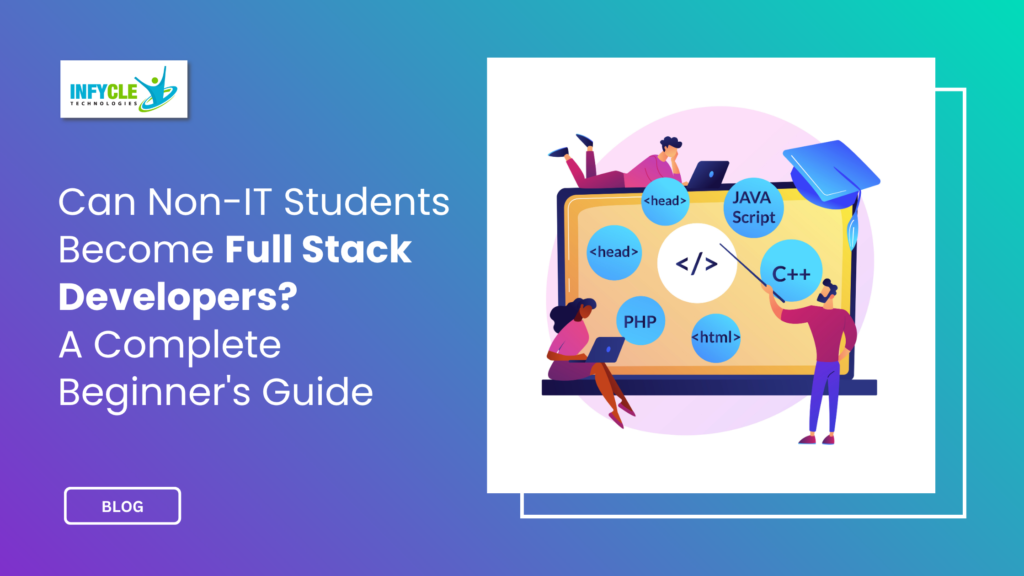
A full stack developer builds both the front end (what users see) and the back end (how applications work behind the scenes).
A typical full stack developer works with:
- HTML
- CSS
- JavaScript
- React or Angular
- Node.js
- Express.js
- SQL or MongoDB databases
- Git and GitHub
- REST APIs
- Deployment platforms
Instead of specializing in just one area, full stack developers understand the complete software development process.
Can Non-IT Students Become Full Stack Developers?
The simple answer is yes.
Your educational background does not prevent you from becoming a software developer. Many successful developers started with degrees in Commerce, Arts, Physics, Mathematics, Biotechnology, or even completely unrelated fields.
What matters more is your willingness to learn, practice consistently, and build real-world projects.
Why companies hire skilled learners
Most recruiters evaluate candidates based on:
- Programming knowledge
- Practical projects
- Problem-solving ability
- Communication skills
- Portfolio and GitHub profile
- Interview performance
A non-IT graduate with strong projects often stands out more than someone with only theoretical knowledge.
Why Full Stack Development Is a Good Career Choice
Full stack development remains one of the most versatile career paths in software development.
Some benefits include:
- High demand across startups and established companies
- Opportunities in web development, SaaS, fintech, healthcare, and e-commerce
- Ability to work as a freelancer or remote developer
- Continuous learning and career growth
- Strong foundation for future technologies
Learning both frontend and backend also gives you flexibility to move into specialized roles later.
Skills Non-IT Students Need to Learn
You don’t need to master everything at once.
A structured roadmap works much better.
| Learning Stage | Topics |
|---|---|
| Step 1 | Computer basics and programming logic |
| Step 2 | HTML and CSS |
| Step 3 | JavaScript fundamentals |
| Step 4 | React or Angular |
| Step 5 | Backend using Node.js and Express |
| Step 6 | SQL and MongoDB |
| Step 7 | APIs and authentication |
| Step 8 | Git, GitHub, deployment, and projects |
The goal isn’t to memorize syntax but to build working applications.
A Practical Learning Roadmap
1. Learn Programming Fundamentals
Start by understanding:
- Variables
- Loops
- Functions
- Conditions
- Arrays
- Objects
These concepts make learning any programming language much easier.
2. Build Static Websites
Practice creating:
- Personal portfolio
- Landing pages
- Business websites
This improves your HTML and CSS skills.
3. Learn JavaScript
JavaScript makes websites interactive.
Focus on:
- DOM manipulation
- Events
- Fetch API
- ES6 features
- Async programming
Can Non-IT Students Become Full Stack Developers Without Coding Experience?
Yes.
Many beginners write their first line of code during training.
The key is choosing a learning path that includes:
- Live coding sessions
- Hands-on assignments
- Mini projects
- Real-world applications
- Mentor guidance
Learning through practical implementation is much easier than only reading theory.
Build Projects That Employers Want to See
Projects demonstrate your skills better than certificates alone.
Some beginner-friendly projects include:
- Student management system
- Library management portal
- Online shopping website
- Expense tracker
- Restaurant booking application
- Employee management system
As your confidence grows, build larger projects with authentication, databases, and payment integration.
Common Challenges for Non-IT Students
Many beginners face similar obstacles.
| Challenge | Solution |
| No coding background | Start with programming basics |
| Fear of programming | Practice daily in small steps |
| Too many technologies | Follow one structured roadmap |
| Lack of confidence | Build simple projects first |
| Interview preparation | Practice coding and mock interviews |
Remember that every experienced developer was once a beginner.
Career Opportunities After Learning Full Stack
Full stack development offers multiple career paths.
Possible roles include:
- Full Stack Developer
- Frontend Developer
- Backend Developer
- Web Developer
- JavaScript Developer
- React Developer
- Node.js Developer
- Software Engineer
Many professionals also choose freelancing, startup opportunities, or remote international projects after gaining experience.
Continue Learning with Practical Training
Learning from videos alone can sometimes leave knowledge gaps. A structured program with practical projects, mentor guidance, mock interviews, and placement support helps beginners gain confidence faster.
If you’re looking to build job-ready skills, choosing a Best Software Training Institute in Chennai that emphasizes real-world development, live projects, and interview preparation can significantly improve your learning journey.
Best Practices for Success
To improve your chances of getting hired:
- Practice coding every day.
- Build at least five complete projects.
- Learn Git and GitHub.
- Create a professional portfolio website.
- Solve programming problems regularly.
- Participate in coding communities.
- Keep learning new technologies.
Small, consistent progress produces better results than trying to learn everything quickly.
Frequently Asked Questions
Can non-IT students become full stack developers without an engineering degree?
Yes. Many companies hire developers based on skills rather than degrees. A strong portfolio, practical projects, and interview performance often matter more than your academic background. Focus on learning consistently and demonstrating your abilities through real applications.
How long does it take for non-IT students to become full stack developers?
Most beginners can develop job-ready skills within six to twelve months with consistent practice. The exact timeline depends on your learning schedule, project experience, and how much time you dedicate each week.
Is coding difficult for beginners from non-technical backgrounds?
Coding can feel challenging at first, but it becomes easier with regular practice. Starting with programming fundamentals and gradually building projects helps beginners understand concepts without feeling overwhelmed.
Which technologies should beginners learn first?
Start with HTML, CSS, and JavaScript. Then move to React, Node.js, Express.js, databases such as MySQL or MongoDB, Git, APIs, and deployment. This sequence provides a strong foundation for full stack development.
Which is the best way to learn full stack development in Chennai?
A structured Full Stack Developer Course in Chennai that includes live projects, mentor support, practical assignments, interview preparation, and placement assistance can help beginners learn efficiently while building industry-ready skills.
Conclusion
A non-IT background should never stop you from pursuing a software development career. With the right roadmap, regular practice, and real-world projects, you can confidently build the skills employers expect.
Success in full stack development comes from consistency, curiosity, and hands-on experience—not from your college degree alone.
If you’re ready to begin your journey, enrolling in a practical Full Stack Developer Course in Chennai can provide the guidance, projects, and industry exposure needed to become job-ready.