Why Python Skills Matter In Today’s Software Industry
Python Training Institute in OMR helps learners develop the technical skills that modern companies expect from software professionals. Technology companies look for developers who can solve problems, build reliable applications, and adapt to changing technologies. Python has become one of the preferred programming languages because it supports a wide range of business applications, from web development and automation to data engineering, artificial intelligence, and cloud computing.

Learning Python is not just about writing code—it’s about developing a problem-solving mindset that can be applied across different technology domains. A strong understanding of Python also creates a solid foundation for learning advanced technologies such as machine learning, data science, DevOps automation, and backend application development.
At Infycle Technologies, our Python Training Institute in OMR helps learners understand where Python fits within today’s software ecosystem, making it easier to connect programming concepts with real business applications.
Why Students Trust Infycle Technologies for Python Training
Launch Your IT Career with Infycle Technologies!
| Jul 1st | Mon-Fri(21 Days) | Timing 07:00 AM to 09:00 AM (IST) | Enroll Now |
| Aug 1st | Mon-Fri(21 Days) | Timing 07:00 AM to 09:00 AM (IST) | Enroll Now |
| Sep 1st | Mon-Fri(21 Days) | Timing 07:00 AM to 09:00 AM (IST) | Enroll Now |
Build Future-Ready Python Skills with Infycle Technologies
- Programming is one of the most valuable technical skills in today’s digital economy, and Python continues to be a preferred language across startups, product companies, multinational organizations, and research institutions. Businesses choose Python because it supports faster application development, automation, data processing, artificial intelligence, machine learning, and cloud-based solutions.
- At Infycle Technologies, our Python Training Institute in OMR is designed to help learners build a strong programming foundation rather than simply complete a course. Every topic is introduced with clear explanations and reinforced through practical coding activities, helping you understand not only how Python works but also why developers use specific programming approaches in real projects.
- Our training centre is conveniently located along the OMR IT Corridor, making it easily accessible for learners from Sholinganallur, Navalur, Siruseri, Perungudi, Thoraipakkam, Karapakkam, Semmencherry, and nearby areas. This convenient location allows students and professionals across the region to attend regular training without long commutes.
Learn Python the Way Professional Developers Do
A successful programmer develops through continuous practice, experimentation, and problem-solving. Our training methodology is designed around this principle, helping learners gradually progress from basic programming concepts to building functional applications.
Instead of rushing through topics, we focus on helping you understand programming logic before moving to advanced concepts. Throughout the training, you’ll work with variables, data types, operators, conditional statements, loops, functions, object-oriented programming, file handling, exception handling, modules, APIs, database integration, and debugging techniques.
Skills You'll Build Throughout Your Python Learning Journey
Our Python Training Institute in OMR focuses on developing practical abilities that employers value across different technology domains.
Joining Infycle Is One Of The Best Decision You Will Ever Make In Your Life!
Infycle: Practical Software Training With Job Assurance. Call To Enquiry.
Why Students Continue to Choose Infycle Technologies
Choosing a training institute is an important decision because the learning experience directly influences your confidence and technical growth. At Infycle Technologies, we focus on creating an environment where learners can build programming skills through consistent practice, mentor guidance, and continuous improvement.
- Learn Python with a Structured Roadmap
Every learner progresses differently. Our structured learning approach helps beginners understand programming fundamentals while allowing experienced learners to strengthen their technical skills through progressive modules.
- Prepare for Your First Software Development Role
Along with technical learning, learners receive guidance on professional communication, resume improvement, interview preparation, and career planning to support their long-term growth.
- Build Coding Confidence Every Day
Regular coding practice, logic-building exercises, and technical challenges help you improve accuracy, speed, and confidence while writing programs.
- Learn Through Interactive Coding Sessions
Training sessions encourage discussion, questions, and collaborative problem-solving, allowing learners to understand concepts instead of memorizing them.
From Learning Python To Building Real-World Skills
Every learner starts with different goals. Some want to enter the IT industry, while others want to upgrade their existing skills or explore new career opportunities. Our training is designed to support these different learning journeys by helping students gradually develop confidence through continuous coding practice.
Rather than focusing only on completing a syllabus, we encourage learners to apply concepts through practical exercises that strengthen logical thinking, debugging skills, and programming accuracy. This consistent approach helps students become comfortable solving programming challenges independently.
Practical Skills You’ll Develop
- Programming logic and analytical thinking
- Python coding fundamentals
- Debugging and code optimization
- Working with files and databases
- API integration concepts
- Professional coding practices
- Technical interview readiness

Your Software Development Journey Starts Here
Every successful software developer starts with strong fundamentals and regular practice. Our Python training provides expert guidance to help you build technical skills and prepare for a successful career.
Why Learners From Omr Prefer Infycle Technologies
Our training centre is conveniently located in the OMR IT corridor, making it accessible for learners from Sholinganallur, Navalur, Siruseri, Perungudi, Thoraipakkam, Karapakkam, Semmencherry, and nearby areas of Chennai.
Students and working professionals appreciate the convenience of attending structured training close to major educational institutions, residential communities, and technology parks. This accessibility allows learners to balance their studies or work schedules while continuing to build valuable programming skills.
Our Course Credits
Scruitinize the assets of our course that leads your career!
| Course Name | Phyton |
|---|---|
| Skill Level | Beginner, Intermediate, Advanced |
| Total Learners | 10000+ |
| Course Duration | 500 Hours |
| Course Material |
|
| Student Portal | Yes |
| Placement Assistance | Yes |
Adaptive time & duration!
We make us flexible to adore your dreams and goals!
We enlighten your career path!
Get the prominent methods of attaining your career with our leading masters!
Grasp the perceptive skills from Experts!
You can attain the prominent course lectures and best part of training from our faculties
Stay Unique by certified!
Being certified upscales the status of your profile among the recruiters!

FAQ's
Having more queries to get resolved? We are here to solve them!
Who can join the Python Training Institute in OMR?
Our Python training is suitable for students, recent graduates, working professionals, career changers, and anyone interested in learning programming. The course begins with the fundamentals, so prior coding experience is not required.
What practical skills will I develop during the training?
You’ll learn how to write Python programs, apply programming logic, work with functions, object-oriented programming, file handling, exception handling, APIs, databases, debugging techniques, and build practical applications that strengthen your coding confidence.
Is Python a good choice for beginners?
Yes. Python’s simple syntax and readable structure make it one of the easiest programming languages to start with. It allows beginners to focus on understanding programming concepts before moving to advanced software development topics.
How does Python help in software development?
Python is used to create web applications, backend services, automation scripts, APIs, desktop applications, and AI-powered solutions. Its flexibility allows developers to work across different industries and technology domains.
Do you provide career guidance after the training?
Yes. Along with technical learning, we provide guidance on resume preparation, mock interviews, interview strategies, and career planning to help learners prepare for software development opportunities.
Still Have Questions?
Our team is happy to explain the curriculum, learning methodology, batch schedules, certification, fees, and career guidance so you can choose the right training program with confidence.
We're Here to Help You Choose the Right Python Course
Our team is happy to explain the curriculum, learning methodology, batch schedules, certification, fees, and career guidance so you can choose the right training program with confidence.
Let's get in touch
Give us a call or visit by anytime, we endeavour to answer all enquiries within 24 hours.
Reviews
Some of the student's review about the training!

Jasmine Soundarya
Web Developer
Chris Jerry
Oracle Administrator
Vanmathi R
Cloud Practitioner
Santhana Kumar
Java Developer
Python Training In Chennai - Course Syllabus
1. Introduction to Python
- Features of Python
- Python Virtual Machine (PVM)
- Frozen Binaries
- Memory management in Python
- Garbage collection in Python
2. Writing Our First Python Program
- Writing our first Python program
- Executing a Python program
- Getting help in Python
- Reopening the Python program in IDLE
3. Data Types in Python
- Comments in Python, Docstrings
- How Python sees variables
- Data Types in Python
- Sequences in Python
- Sets
- Literals in Python
- Determining the datatype of a variable
- Characters in Python
- User-defined datatypes
- Constants in Python
- Identifiers and Reserved words
- Naming conventions in Python
4. Operators in Python
- Arithmetic operators
- Using Python interpreter as calculator
- Assignment operators
- Unary minus operator
- Relational operators
- Logical operators
- Boolean operators
- Membership operators
- Identity operators
- Operator precedence and associativity
- Mathematical functions
5. Input and Output
- Output statements
- Various formats of print()
- Input statements
6. Command Line Arguments
- The built in argv[] list
- Entering various elements from command prompt
- Processing command line arguments
7. Control Statements
- if statement
- if … else statement
- if … elif … else statement
- while loop
- for loop
- Infinite loops
- Nested loops
- break statement
- continue statement
- pass statement
- assert statement
- return statement
8. Arrays Using NumPy
- Creating an array
- Importing the array module
- Indexing and slicing on arrays
- Types of arrays
- Working with arrays using numpy
- Creating arrays using linspace
- Creating arrays using logspace
- Creating arrays using arange() function
- Creating arrays using zeros() and ones() functions
- Mathematical operations on arrays
- Comparing arrays
- Aliasing the arrays
- Viewing and Copying arrays
- Slicing and indexing in numpy arrays
- Dimensions of arrays
- Attributes of an array
- reshape()
- flatten()
- Working with Multidimensional arrays
- The array() function
- ones() and zeros() functions
- eye() function
- reshape() function
- Indexing in multi dimensional arrays
- Slicing the multi dimensional arrays
- Matrices in numpy
9. Strings And Characters
- Creating strings
- Length of a string
- Indexing in strings
- Repeating the strings
- Concatenation of strings
- Checking membership
- Comparing strings
- Removing spaces from a string
- Finding substrings
- Strings are immutable
- Replacing a string with another string
- Splitting and joining strings
- Changing case of a string
- Checking starting and ending of a string
- String testing methods
- Formatting the strings
- Sorting strings
10. Functions
- Defining a function
- Calling a function
- Returning results from a function
- Returning multiple values from a function
- Functions are first class objects
- Pass by object reference
- Formal and actual arguments
- Positional arguments
- keyword arguments
- Default arguments
- Variable length arguments
- Local and global variables
- The global keyword
- Passing a group of elements to a function
- Recursive functions
- Function decorators
- Generators
- Structured programming
- Creating our own modules in Python
- The special variable name
11. Lambdas
- Introduction to Lambdas
- Using lambdas with filter() function
- Using lambdas with map() function
- Using lambdas with reduce() function
12. Modules and Packages
- Structured Programming
- Creating our own modules in Python
- The special variable __name__
- Creating our own Package
- Accessing the modules from the package
13. Lists and Tuples
- Creating lists using range() function
- Updating the elements of a list
- Concatenation of two lists
- Repetition of lists
- Membership in lists
- Aliasing and cloning lists
- Methods to process lists
- Nested lists
- List comprehensions
- Tuples
- Creating tuples
- Accessing the tuple elements
- Basic operations on tuples
14. List Comprehensions
- List comprehension examples
15. Dictionaries
- Operations on dictionaries
- Dictionary methods
- Using for loop with dictionaries
- Sorting the elements of a dictionary using lambdas
- Converting lists into dictionary
- Converting strings into dictionary
Advanced Python Training:
16. Introduction to OOPS
- Problems in Procedure Oriented Approach
- Features of Object Oriented Programming System (OOPS)
- Classes and objects
- Encapsulation
- Abstraction
- Inheritance
- Polymorphism
17. Classes and Objects
- Self variable
- Constructor
- Types of variables
- Namespaces
- Types of methods: instance, class and static
- Passing members of one class to another class
- Inner classes
18. Inheritance and Polymorphism
- Constructors in inheritance
- Overriding superclass constructors and methods
- super() method
- Types of inheritance
- Method Resolution Order (MRO)
- Duck typing philosophy of Python
- Operator overloading
- Method overloading
- Method overriding
19. Abstract Classes and Interfaces
- Abstract Method and Abstract Class
- Interfaces in Python
- Abstract Classes vs. Interfaces
20. Exceptions
- Errors vs Exceptions
- Exception handling
- Types of exceptions
- The except block
- assert statement
- User- defined exceptions
- Logging the exceptions
21. Files in Python
- Types of files in Python
- Working with text files with strings
- Knowing whether a file exists or not
- with block
- Working with binary files
- Pickle in Python
- seek() and tell()
- Zipping and Unzipping files
- Running other programs from Python program
22. Regular Expressions in Python
- Sequence characters in regular expressions
- Quantifiers in regular expressions
- Special characters in regular expressions
- Using regular expressions on files
- Retrieving information from a HTML file
23. Date and Time
- The epoch
- Date and time now
- Combining date and time
- Formatting dates and times
- Finding durations using timedelta
- Comparing two dates
- Sorting dates
- Stopping execution temporarily
- Knowing the time taken by a program
- Working with Calendar module
24. Threads
- Difference between process and thread
- Concurrent programming and GIL
- Uses of threads
- Creating threads in Python
- Thread class methods
- Single tasking using a thread
- Multi tasking using multiple threads
- Thread synchronization
- Thread deadlock
- Daemon threads
25. Networking in Python
- TCP/IP Protocol
- User Datagram Protocol (UDP)
- Sockets
- Knowing IP Address
- Reading the source code of a web page
- Downloading a web page from Internet
- Downloading an image from Internet
- TCP/IP Server and Client
- UDP Server and Client
- File server
- File client
- Sending a simple mail
26. Python’s Database Connectivity
- Advantages of a DBMS over files
- Working with MySQL database in Python
- Operations on rows of a table
- Creating database tables through Python
- Working with Oracle database in Python
- Stored procedures
27. Graphical User Interface
- GUI in Python
- the root window
- Fonts and colors
- Working with containers
- Canvas
- Frame
- Widgets
- Button widget
- Label widget
- Message widget
- Text widget
- Scrollbar widget
- Checkbutton widget
- Radio Button widget
- Entry widget
- Menu widget
28. Data Analysis Using Pandas
- Introduction to data science
- What is data science?
- Data Frame
- Data Analysis
- Data visualization
- Line Chart, Bar Diagram, Histogram, Pie Chart
29. Data Visualization Using MatPlotLib
- Introduction to data science
- Data visualization – Line Chart, Bar Diagram, Pie Chart, Scatter Plot, Box Plot
- Histogram
Your dream company is just one step away with Infycle Technologies.
Joining Infycle is one of the best decision you will ever make in your life!
Talk with our team for a free demo session & complete guidance to create a next-level career opportunities for your profile!
Why Python Continues To Be A Valuable Programming Skill
Python has remained one of the most widely adopted programming languages because it combines simplicity with versatility. Organizations across industries rely on Python to build scalable applications, automate repetitive tasks, analyze business data, develop cloud-based solutions, and create intelligent software powered by artificial intelligence and machine learning.
Its ability to integrate with modern technologies has made Python a preferred language for startups, enterprise organizations, research institutions, fintech companies, healthcare providers, educational platforms, and e-commerce businesses. As technology continues to evolve, Python remains a practical skill for learners who want long-term career opportunities in software development.
At Infycle Technologies, our Python Training Institute in OMR focuses on helping learners understand these industry applications so they can connect classroom learning with real business scenarios.
Your Career Opportunities After Learning Python
Learning Python opens the door to multiple technology domains rather than limiting you to a single career path. A strong programming foundation allows you to continue learning advanced technologies and adapt to changing industry requirements.
Career Opportunities After Learning Python
- Python Developer
- Backend Developer
- Software Developer
- Automation Engineer
- Web Application Developer
- Data Analyst
- AI & Machine Learning Enthusiast
- QA Automation Engineer
Rather than focusing on one role, Python provides a foundation that supports continuous learning and long-term professional growth.
Everything You'll Experience at Infycle Technologies
Our training program is designed to help learners build practical programming skills through structured learning, continuous coding practice, and professional guidance.
- Learn Step by Step with a Structured Curriculum
Move from basic programming concepts to advanced Python development through a well-organized learning path.
- Practice Through Real Coding Exercises
Strengthen your understanding by applying concepts through guided coding activities, programming challenges, and structured assignments.
- Explore Real Software Development Concepts
Explore how Python is applied in backend development, automation, API integration, database-driven applications, and modern software development.
- Receive Continuous Mentor Guidance
Receive continuous mentor feedback that helps improve coding standards, logical thinking, and problem-solving techniques.
- Prepare for Interviews and Career Growth
Build confidence through interview preparation, resume guidance, certification, and career-focused support.
- Choose Flexible Learning Options
Choose weekday or weekend batches that suit your academic or professional commitments.
Latest Blog
Introduction What Is Oracle Database? It is a relational database management system (RDBMS) that stores, organizes, manages, and retrieves business data efficiently. Oracle Database helps companies handle […]
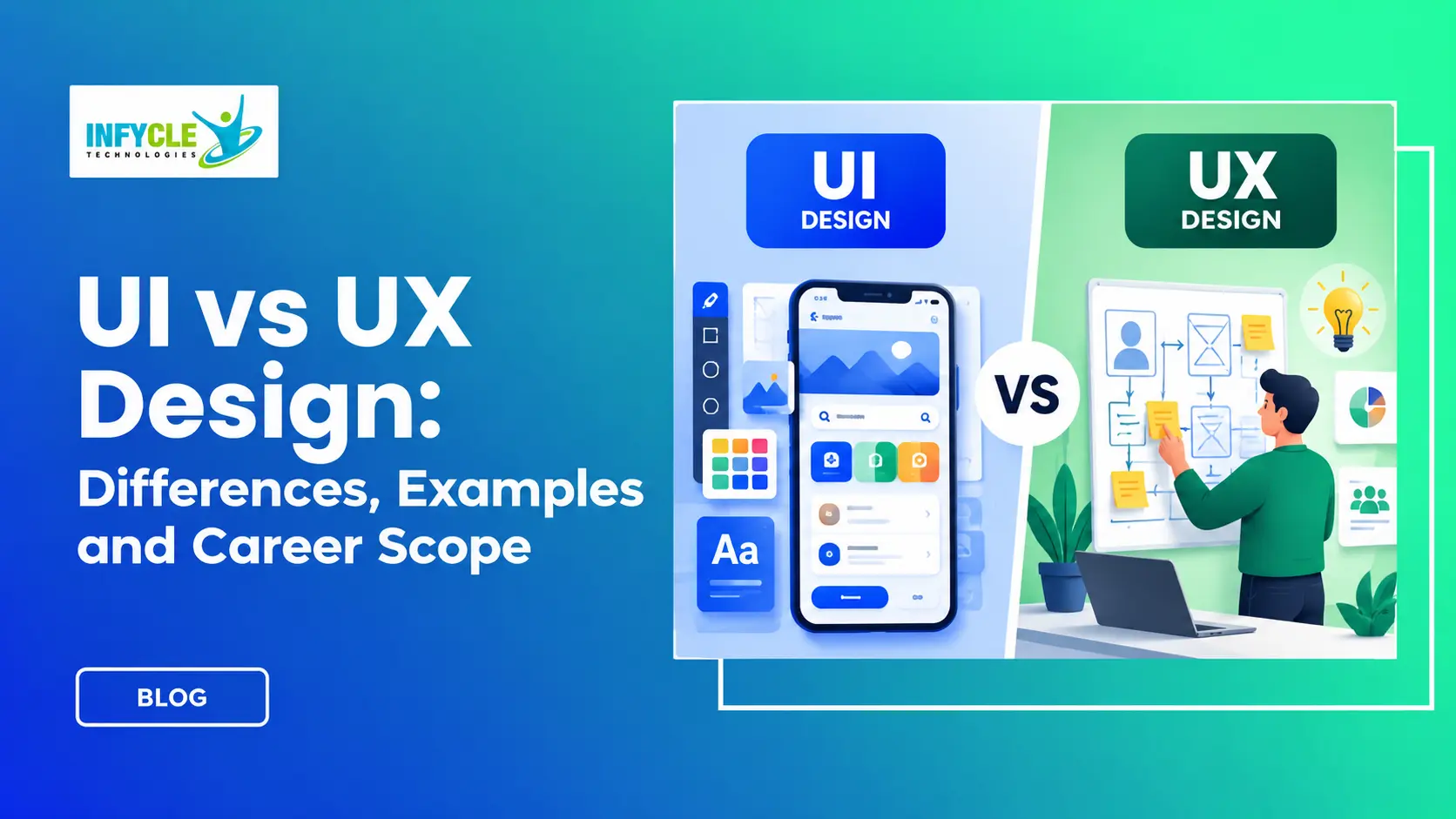
Introduction UI vs UX Design is an important topic for anyone interested in website design, mobile app development, and technology careers. Although these terms often appear together, […]
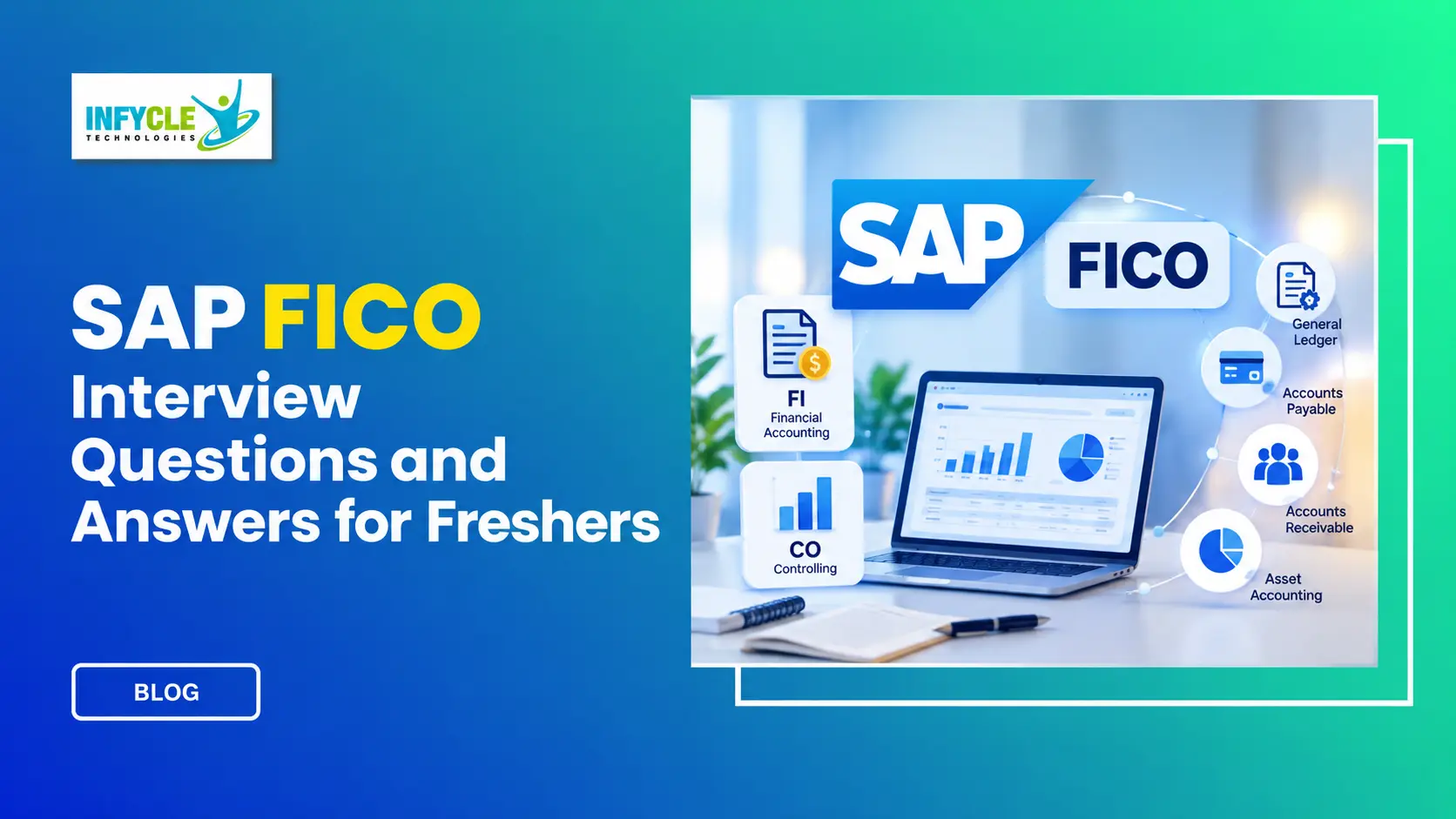
Starting a career in SAP FICO can be a good choice for fresh graduates who want to enter finance, accounting, or enterprise software. For beginners, SAP FICO […]
Student testimonials
Our Happiness comes from their Success. Short stories from our beloved Students of Infycle.
Trending Courses
| Oracle SQL | Oracle PLSQL | Oracle DBA | Big Data | AWS | Azure | DevOps | Java | Python | Digital Marketing | Data Science |
| Web Development | Full Stack Development | AngularJS | Dot Net | Selenium | Salesforce | Android | iOS | Mainframe |